Knowing the truth Quote by Thomas Nagel
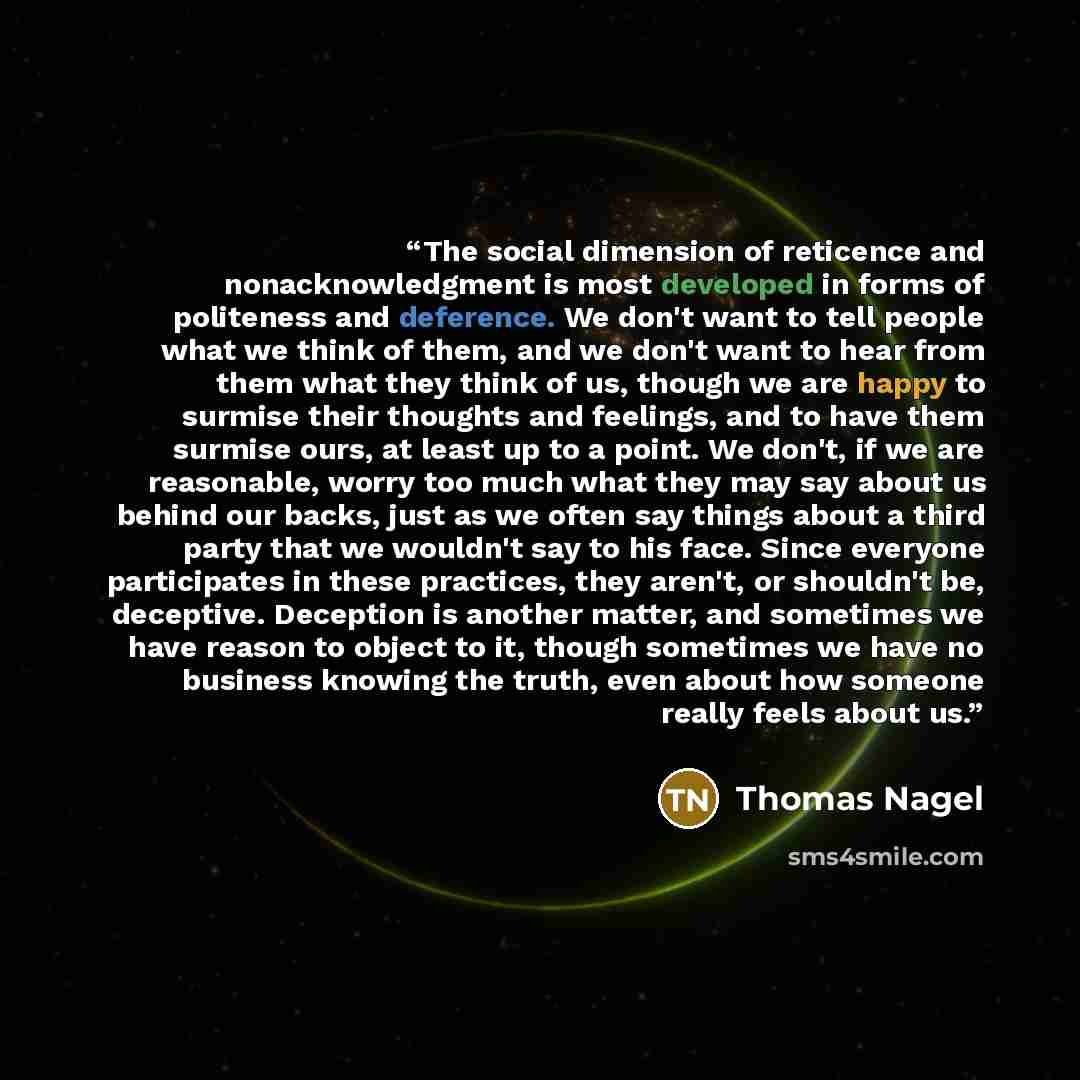
““The social dimension of reticence and nonacknowledgment is most developed in forms of politeness and deference. We don't want to tell people what we think of them, and we don't want to hear from them what they think of us, though we are happy to surmise their thoughts and feelings, and to have them surmise ours, at least up to a point. We don't, if we are reasonable, worry too much what they may say about us behind our backs, just as we often say things about a third party that we wouldn't say to his face. Since everyone participates in these practices, they aren't, or shouldn't be, deceptive. Deception is another matter, and sometimes we have reason to object to it, though sometimes we have no business knowing the truth, even about how someone really feels about us.””
About This Quote
Source Book: Mortal Questions by Thomas Nagel, 1979
Social etiquette often masks true feelings, allowing indirect communication while avoiding direct judgment.
In simple terms: Politeness hides real thoughts.
Key Takeaway
Recognize indirect cues and balance honesty.
Themes
politeness
communication
social norms
Mood
reflective
analytical
Type
philosophical
observational
When to use this quote
- workplace meetings
- family gatherings
- online interactions
- diplomatic negotiations
Key Concepts
self‑presentation
interpersonal perception
face‑saving
Questions to Reflect On
- How does indirect communication affect trust?
- When is it appropriate to be fully honest?
A Different Perspective
Politeness can prevent genuine understanding and foster misinterpretation.