Armed forces Quote by Thomas E Ricks

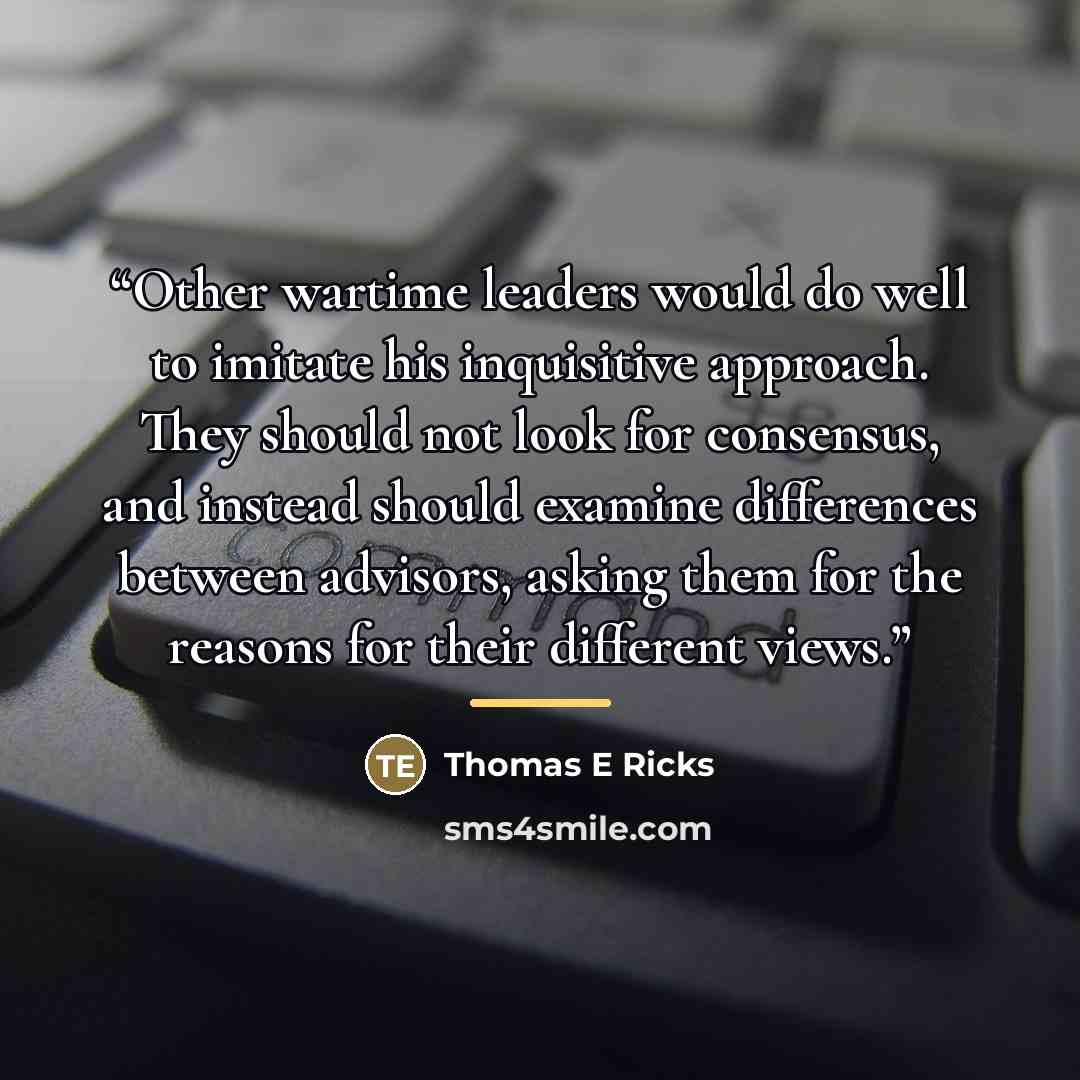
““Churchill, sensitive to class considerations in his conduct of the war, instructed his generals and admirals to be careful in how they governed the armed forces. Early on, he warned the navy to be “particularly careful that class prejudice does not enter into these decisions” about selection of cadets for officer training at the Royal Naval College in Dartmouth, England. “Unless some better reasons are given to me,” he vowed, he would investigate the matter. The navy resisted this direction, so he did as promised and intervened directly. He even met with some of the candidates who had scored well on entrance examinations but had still been rejected. “I have seen the three candidates,” he informed the navy’s top officers. “It is quite true that A has a slightly cockney accent, and that the other two are the sons of a chief petty officer and an engineer in the merchant service. But the whole intention of competitive examination is to open the service to ability, irrespective of class or fortune.” Concluding that an injustice had been done, he ordered that the three be admitted to officer training. This was a lot of effort for someone trying to run a war and stave off invasion.””
About This Quote
Source Speech: WWII leadership remarks, 1940s
Churchill intervened to prevent class bias in naval officer selection, emphasizing merit over birth.
In simple terms: He fought class prejudice in the navy.
Key Takeaway
Ensure fair selection based on ability.
Themes
leadership
equality
meritocracy
Mood
determined
principled
Type
historical
inspirational
When to use this quote
- naval officer training
- military promotions
- policy reviews
- organizational fairness
Key Concepts
social class
institutional bias
military recruitment
Questions to Reflect On
- How can leaders detect hidden biases?
- What mechanisms ensure meritocracy?
A Different Perspective
Resistance from entrenched interests can hinder reforms.





![“you weren’t that unhappy. “Contrast him with the Air Corps man of the same education and longevity,” Stouffer wrote. His chance of getting promoted to officer was greater than 50 percent. “If he had earned a [promotion], so had the majority of his fellows in the branch, and his achievement was…” quote by Malcolm Gladwell](https://sms4smile.com/quotes/img-quotes/24c/malcolm-gladwell-348_quote_you-weren-t-that-unhappy-contrast-him-wi_2019493.jpg)

![“The young officers who had come back [from WW1], hardened by their terrible experience and disgusted by the attitude of the younger generation to whom this experience meant just nothing, used to lecture us for our softness. Of course they could produce no argument that we were capable of…” quote by George Orwell](https://sms4smile.com/quotes/img-quotes/878/george-orwell-57_good-thing_the-young-officers-who-had-come-back-fro_1222290.jpg)