Affect Quote by Sandra Lee Dennis
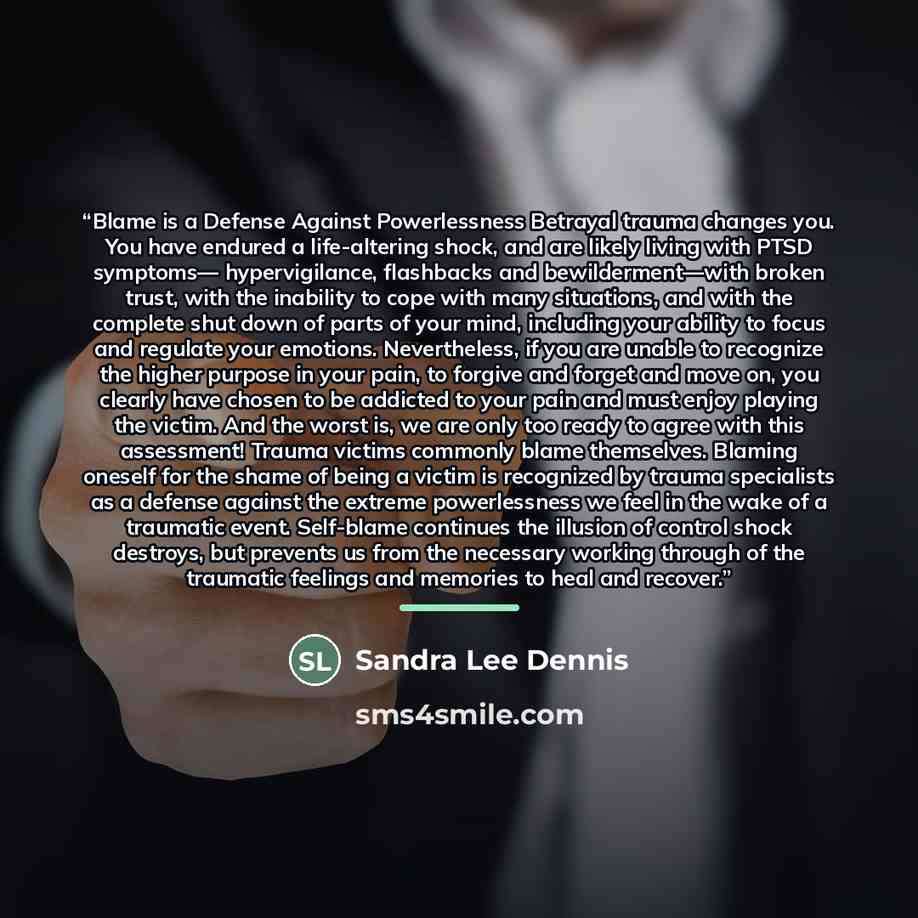
““Blame is a Defense Against Powerlessness Betrayal trauma changes you. You have endured a life-altering shock, and are likely living with PTSD symptoms— hypervigilance, flashbacks and bewilderment—with broken trust, with the inability to cope with many situations, and with the complete shut down of parts of your mind, including your ability to focus and regulate your emotions. Nevertheless, if you are unable to recognize the higher purpose in your pain, to forgive and forget and move on, you clearly have chosen to be addicted to your pain and must enjoy playing the victim. And the worst is, we are only too ready to agree with this assessment! Trauma victims commonly blame themselves. Blaming oneself for the shame of being a victim is recognized by trauma specialists as a defense against the extreme powerlessness we feel in the wake of a traumatic event. Self-blame continues the illusion of control shock destroys, but prevents us from the necessary working through of the traumatic feelings and memories to heal and recover.””
About This Quote
Source Book: Trauma Healing Guide, 2015
Blaming oneself after trauma creates an illusion of control but blocks true healing and recovery.
In simple terms: Self-blame hinders healing.
Key Takeaway
Recognize and release self-blame.
Themes
trauma
self-blame
healing
control
victimhood
Mood
reflective
somber
Type
motivational
inspirational
When to use this quote
- therapy sessions
- support groups
- personal reflection
- journaling
Key Concepts
psychology
defense mechanisms
post-traumatic growth
Questions to Reflect On
- How does self-blame protect you?
- What steps can you take to shift from blame to empowerment?
A Different Perspective
Self-blame may feel safer than confronting painful memories.