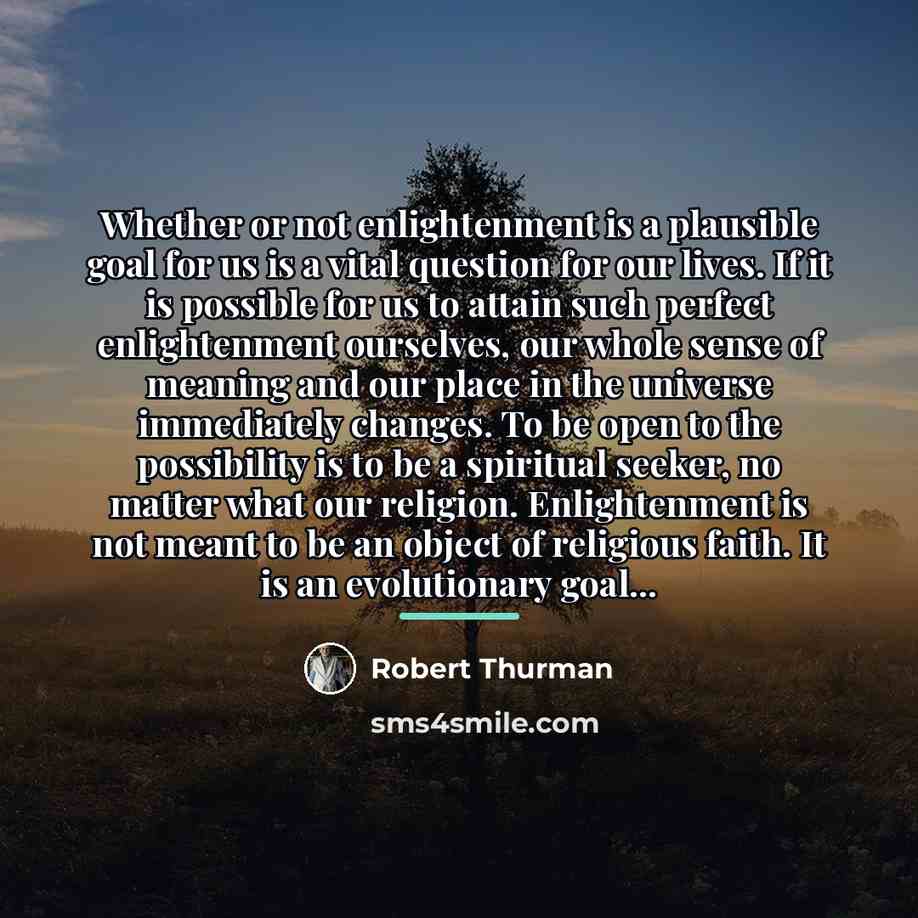
Becoming Quote by Robert Thurman
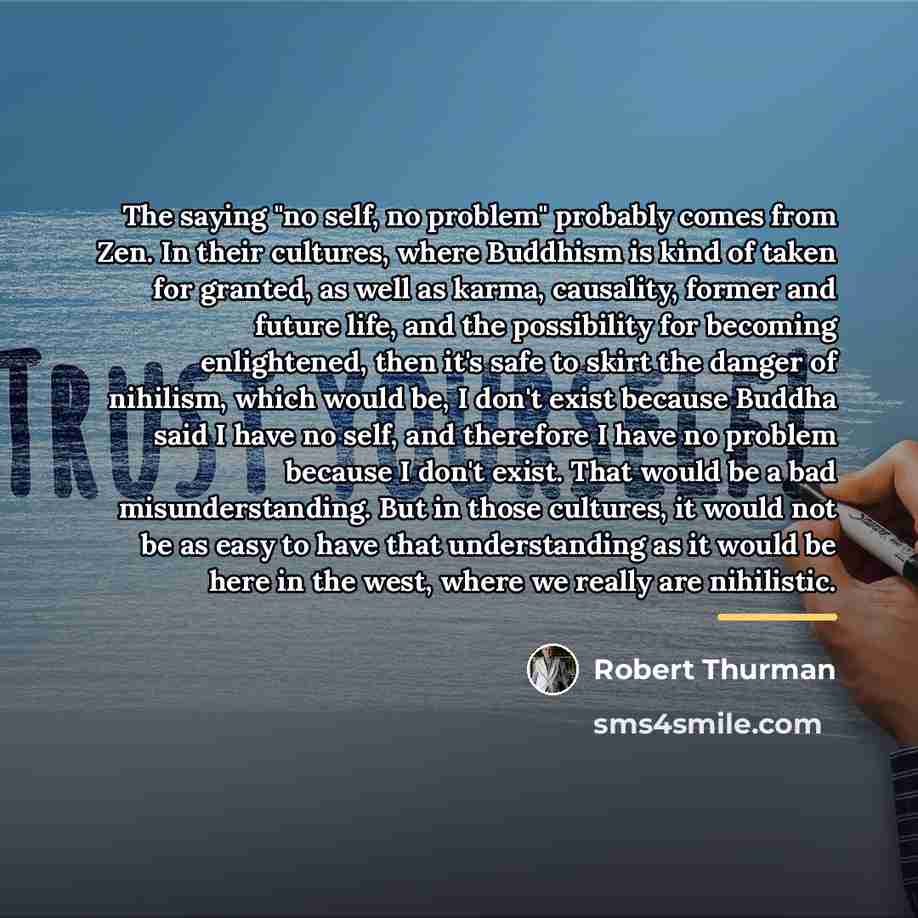
“The saying "no self, no problem" probably comes from Zen. In their cultures, where Buddhism is kind of taken for granted, as well as karma, causality, former and future life, and the possibility for becoming enlightened, then it's safe to skirt the danger of nihilism, which would be, I don't exist because Buddha said I have no self, and therefore I have no problem because I don't exist. That would be a bad misunderstanding. But in those cultures, it would not be as easy to have that understanding as it would be here in the west, where we really are nihilistic.”
About This Quote
The Zen phrase “no self, no problem” avoids nihilism by emphasizing non‑attachment, but Western cultures may misinterpret it as denying existence.
In simple terms: “No self, no problem” means non‑attachment, not non‑existence.
Key Takeaway
Embrace non‑attachment without denying self.
Themes
philosophy
spirituality
culture
misinterpretation
Mood
contemplative
critical
Type
philosophical
educational
When to use this quote
- Meditation practice
- academic study
- cross‑cultural dialogue
- personal introspection
Key Concepts
Non‑self
emptiness
nihilism
cultural context
Questions to Reflect On
- How can you practice non‑attachment responsibly?
- What cultural factors shape your view of self?
A Different Perspective
Risk of misreading as denial of personal responsibility.