Bible Quote by Robert G. Ingersoll
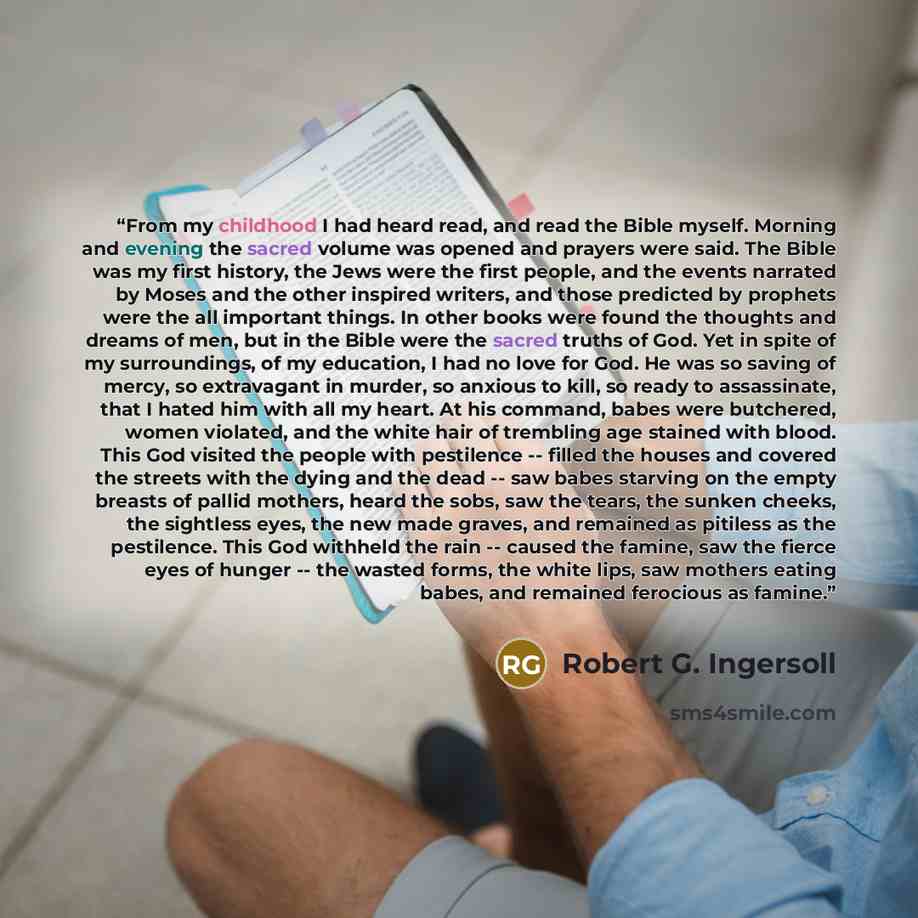
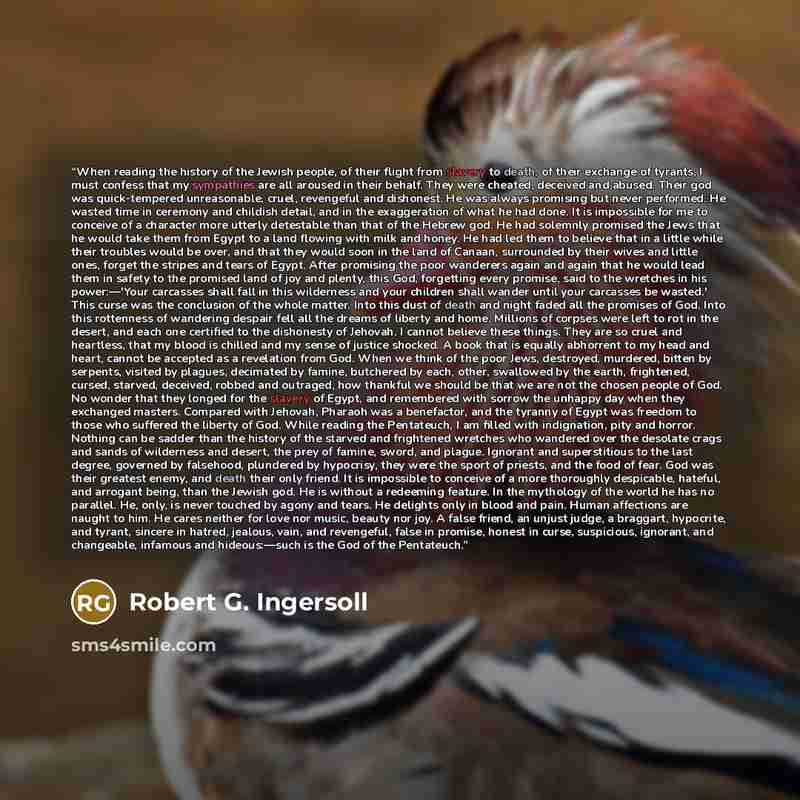
““From my childhood I had heard read, and read the Bible myself. Morning and evening the sacred volume was opened and prayers were said. The Bible was my first history, the Jews were the first people, and the events narrated by Moses and the other inspired writers, and those predicted by prophets were the all important things. In other books were found the thoughts and dreams of men, but in the Bible were the sacred truths of God. Yet in spite of my surroundings, of my education, I had no love for God. He was so saving of mercy, so extravagant in murder, so anxious to kill, so ready to assassinate, that I hated him with all my heart. At his command, babes were butchered, women violated, and the white hair of trembling age stained with blood. This God visited the people with pestilence -- filled the houses and covered the streets with the dying and the dead -- saw babes starving on the empty breasts of pallid mothers, heard the sobs, saw the tears, the sunken cheeks, the sightless eyes, the new made graves, and remained as pitiless as the pestilence. This God withheld the rain -- caused the famine, saw the fierce eyes of hunger -- the wasted forms, the white lips, saw mothers eating babes, and remained ferocious as famine.””
About This Quote
Source Speech: Public lecture, 1880s, United States
The speaker describes a childhood steeped in biblical teachings yet filled with hatred for a deity portrayed as violent and merciless, highlighting the clash between religious doctrine and personal moral perception.
In simple terms: A child raised on the Bible despises a violent God.
Key Takeaway
Question personal beliefs against harmful narratives.
Themes
religion
morality
violence
faith
history
Mood
conflicted
critical
thoughtful
Type
philosophical
controversial
When to use this quote
- personal reflection
- theological study
- ethical debates
Key Concepts
theodicy
moral conflict
religious trauma
Practical Applications
- faith communities
- family upbringing
- educational curricula
Questions to Reflect On
- How do we reconcile sacred texts with moral outrage?
- Can faith evolve beyond violent imagery?
A Different Perspective
The narrative may oversimplify complex theological interpretations.

![“He [Alexander von Humboldt] was to science what Shakespeare was to the drama.” quote by Robert G. Ingersoll](https://sms4smile.com/quotes/img-quotes/fb5/robert-g-ingersoll-4527_admiration_he-alexander-von-humboldt-was-to-science_233200.jpg)