Answers Quote by Rebecca Goldstein
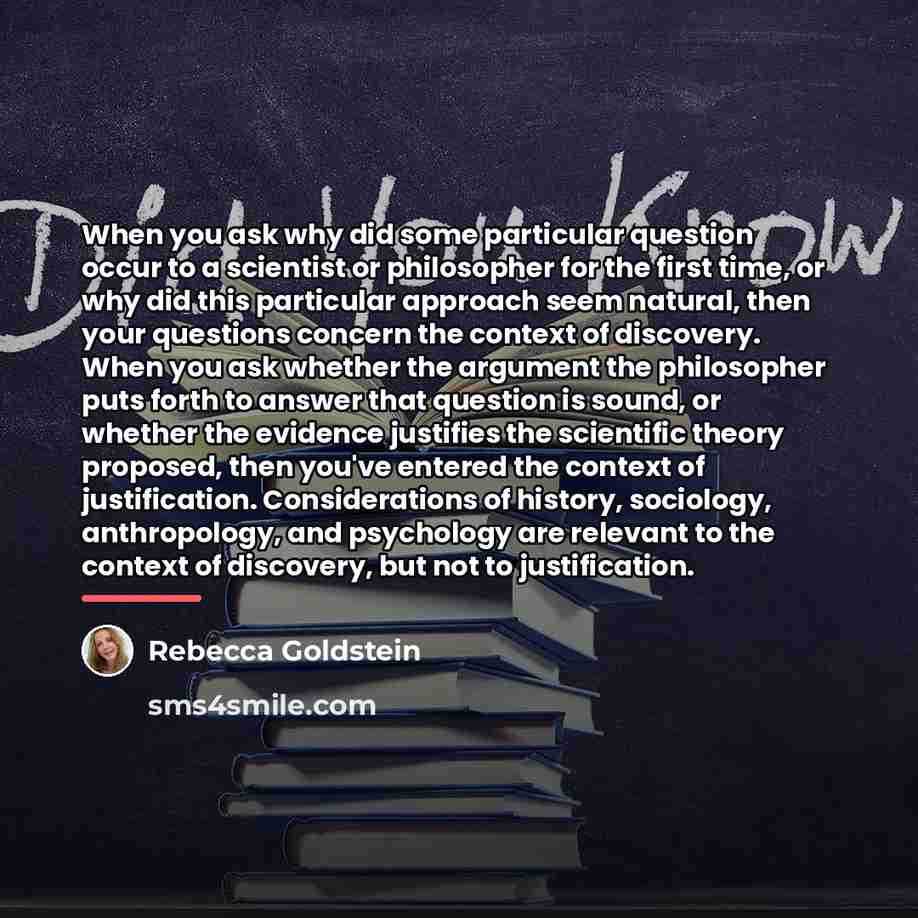
“When you ask why did some particular question occur to a scientist or philosopher for the first time, or why did this particular approach seem natural, then your questions concern the context of discovery. When you ask whether the argument the philosopher puts forth to answer that question is sound, or whether the evidence justifies the scientific theory proposed, then you've entered the context of justification. Considerations of history, sociology, anthropology, and psychology are relevant to the context of discovery, but not to justification.”
About This Quote
Discovery is shaped by personal and cultural context, while justification demands logical rigor independent of those influences.
In simple terms: Discovery vs. justification
Key Takeaway
Context informs ideas; proof must be objective
Themes
epistemology
history of science
philosophy of mind
methodology
bias
Mood
analytical
inquisitive
Type
academic
explanatory
When to use this quote
- research design
- academic curricula
- science policy
- philosophical seminars
Key Concepts
context of discovery
context of justification
history
sociology
psychology
Practical Applications
- research methodology courses
- critical thinking workshops
Questions to Reflect On
- How do personal experiences bias hypothesis formation?
- Can justification ever be truly context‑free?