Ancient greeks Quote by Plutarch
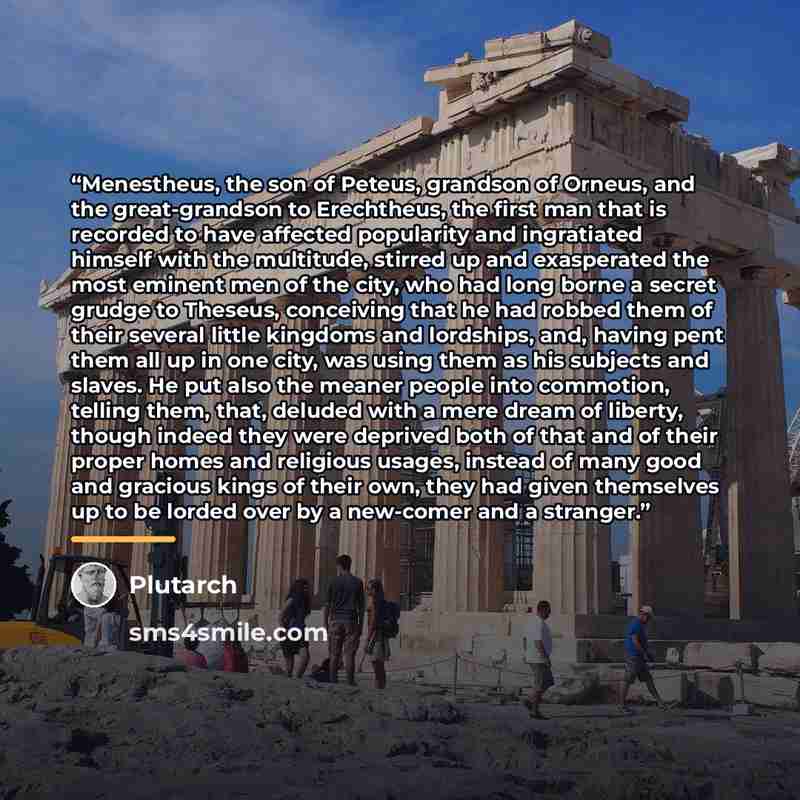
““Menestheus, the son of Peteus, grandson of Orneus, and the great-grandson to Erechtheus, the first man that is recorded to have affected popularity and ingratiated himself with the multitude, stirred up and exasperated the most eminent men of the city, who had long borne a secret grudge to Theseus, conceiving that he had robbed them of their several little kingdoms and lordships, and, having pent them all up in one city, was using them as his subjects and slaves. He put also the meaner people into commotion, telling them, that, deluded with a mere dream of liberty, though indeed they were deprived both of that and of their proper homes and religious usages, instead of many good and gracious kings of their own, they had given themselves up to be lorded over by a new-comer and a stranger.””
About This Quote
Source Historical Text: Parallel Lives, Plutarch, c. 100 AD
A charismatic leader manipulates the masses by promising liberty while consolidating power for himself.
In simple terms: Leaders can exploit freedom rhetoric for control.
Key Takeaway
Beware of leaders who promise liberty but centralize authority.
Themes
politics
leadership
manipulation
Mood
cautionary
thought‑provoking
Type
historical
philosophical
When to use this quote
- elections
- activism
- community organizing
- media consumption
Key Concepts
history
rhetoric
social psychology
Questions to Reflect On
- What signs indicate a leader’s true motives?
- How can citizens protect against manipulative rhetoric?
A Different Perspective
Such narratives may oversimplify complex political dynamics.

![“[Theseus] soon found himself involved in factions and troubles; those who long had hated him had now added to their hatred contempt; and the minds of the people were so generally corrupted, that, instead of obeying commands with silence, they expected to be flattered into their duty.” quote by Plutarch](https://sms4smile.com/quotes/img-quotes/127/plutarch-597_authority_theseus-soon-found-himself-involved-in-f_1143066.jpg)