Animal - rights Quote by Plutarch
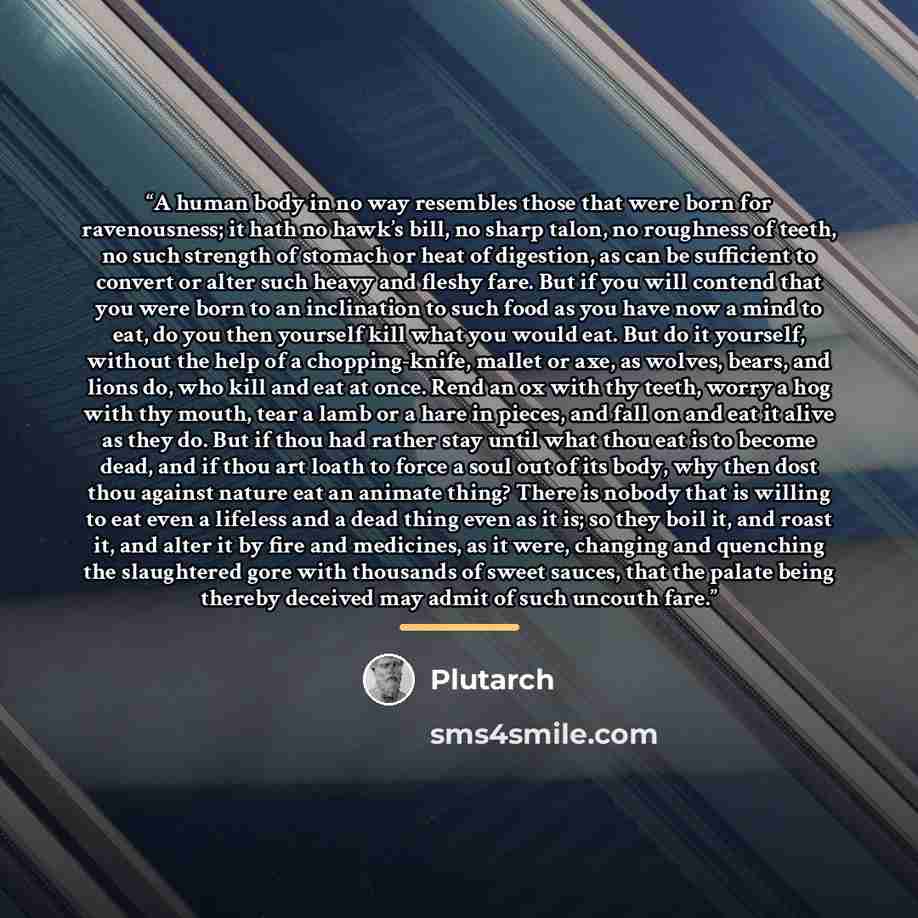
““A human body in no way resembles those that were born for ravenousness; it hath no hawk’s bill, no sharp talon, no roughness of teeth, no such strength of stomach or heat of digestion, as can be sufficient to convert or alter such heavy and fleshy fare. But if you will contend that you were born to an inclination to such food as you have now a mind to eat, do you then yourself kill what you would eat. But do it yourself, without the help of a chopping-knife, mallet or axe, as wolves, bears, and lions do, who kill and eat at once. Rend an ox with thy teeth, worry a hog with thy mouth, tear a lamb or a hare in pieces, and fall on and eat it alive as they do. But if thou had rather stay until what thou eat is to become dead, and if thou art loath to force a soul out of its body, why then dost thou against nature eat an animate thing? There is nobody that is willing to eat even a lifeless and a dead thing even as it is; so they boil it, and roast it, and alter it by fire and medicines, as it were, changing and quenching the slaughtered gore with thousands of sweet sauces, that the palate being thereby deceived may admit of such uncouth fare.””
About This Quote
Source Essay: Moralia, On the Nature of Food, 2nd century AD
The author argues that humans are not naturally equipped to consume raw meat like predators, and that cooking is a cultural adaptation to make food edible.
In simple terms: Humans need cooking because we aren't built to eat raw meat.
Key Takeaway
Embrace cooking as a civilizing practice.
Themes
ethics
food
culture
human nature
Mood
reflective
thoughtful
critical
Type
philosophical
historical
When to use this quote
- preparing meals
- teaching cooking
- food safety
- culinary traditions
- anthropology studies
Key Concepts
cooking
civilization
biological adaptation
dietary habits
Questions to Reflect On
- Why do we prefer cooked food?
- What does cooking say about humanity?
A Different Perspective
The argument overlooks modern raw food movements and ethical considerations.