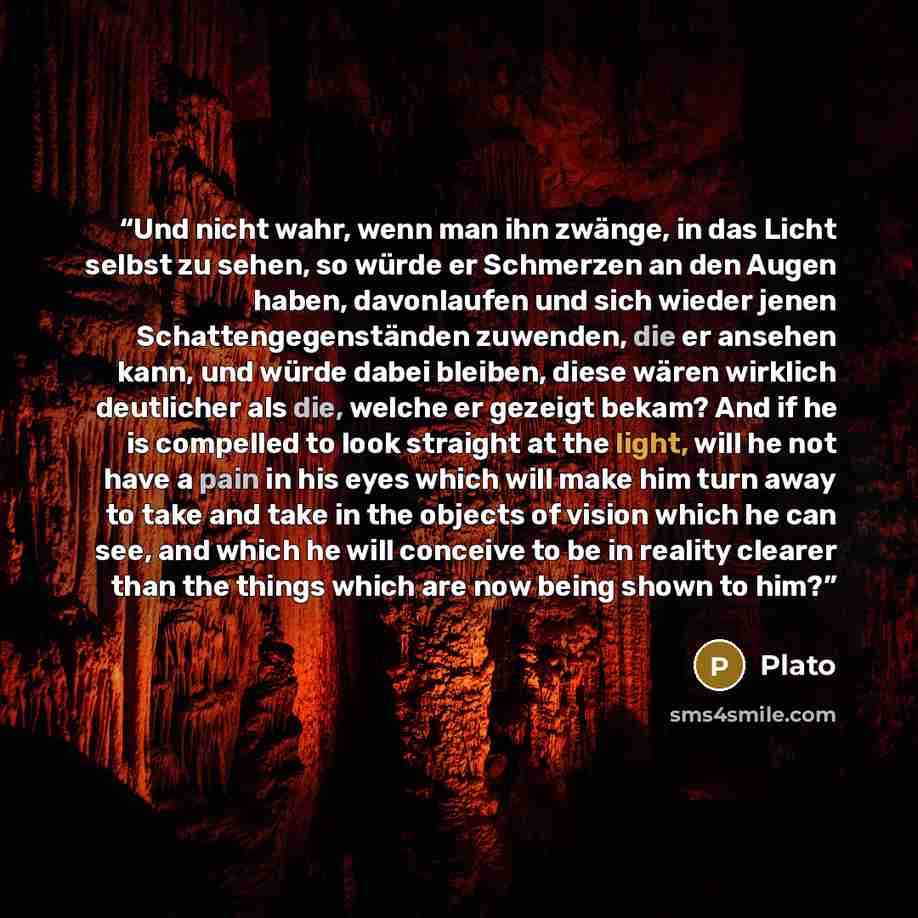
Allegory-of-the-cave Quote by Plato
““... when someone sees a soul disturbed and unable to see something, he won't laugh mindlessly, but he'll take into consideration whether it has come from a brighter life and is dimmed through not having yet become accustomed to the dark or whether it has come from greater ignorance into greater light and is dazzled by the increased brillance.””
About This Quote
Source Dialogue: The Republic, Book VII, Plato, c. 380 BC
The quote reflects on how we judge others' confusion, suggesting we consider whether it stems from unfamiliarity with darkness or from being overwhelmed by newfound insight.
In simple terms: Judge confusion with empathy, not mockery.
Key Takeaway
Seek to understand before judging.
Themes
empathy
judgment
knowledge
growth
Mood
thoughtful
reflective
Type
philosophical
ethical
inspirational
When to use this quote
- teaching
- counseling
- leadership
- conflict resolution
- personal development
Key Concepts
philosophy
epistemology
ethics
Questions to Reflect On
- How do you differentiate between ignorance and enlightenment in others?
- What steps can you take to respond compassionately to confusion?
A Different Perspective
If we misinterpret the source of confusion, we may respond harshly, hindering learning.