Books Quote by Paula Hawkins
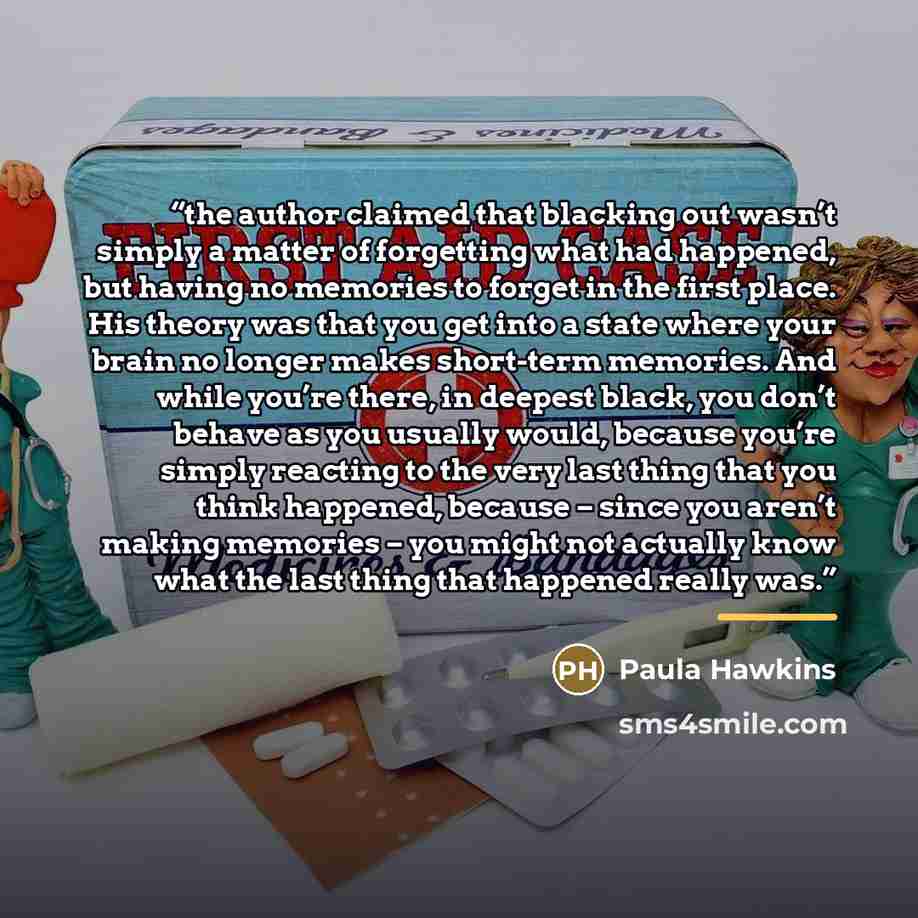
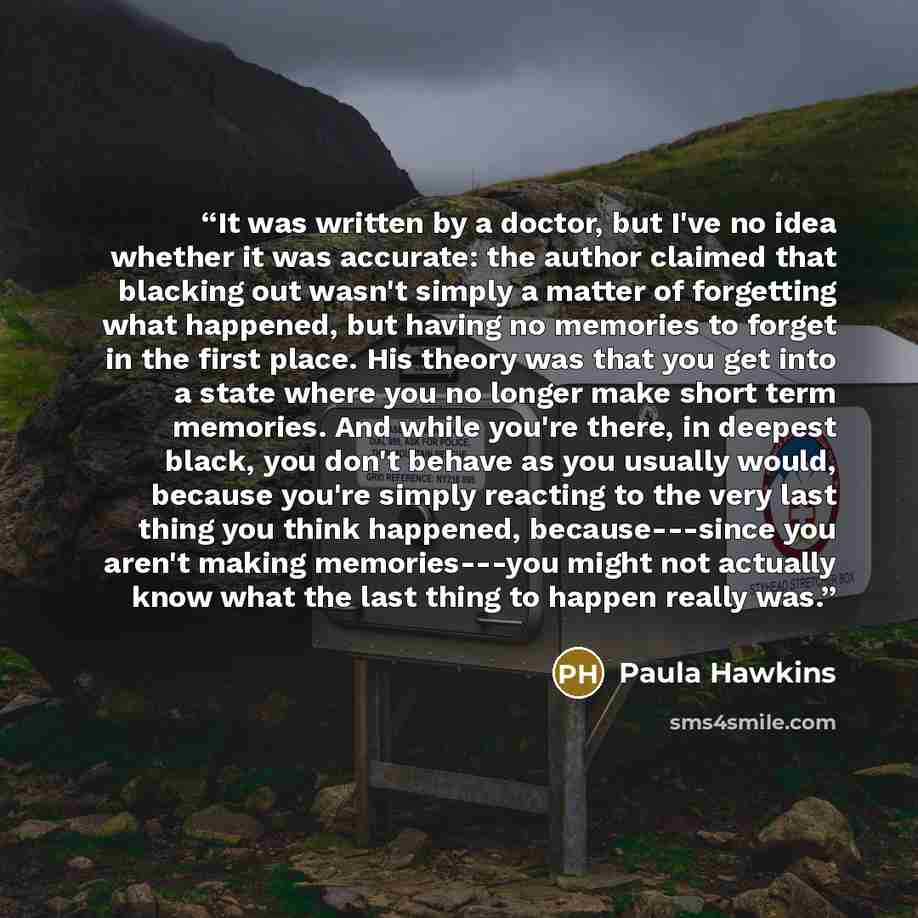
““the author claimed that blacking out wasn’t simply a matter of forgetting what had happened, but having no memories to forget in the first place. His theory was that you get into a state where your brain no longer makes short-term memories. And while you’re there, in deepest black, you don’t behave as you usually would, because you’re simply reacting to the very last thing that you think happened, because – since you aren’t making memories – you might not actually know what the last thing that happened really was.””
About This Quote
Source Novel: “The Girl on the Train” by Paula Hawkins, 2015
The narrator describes a state where the brain cannot form new short‑term memories, leading to disorientation and reliance on the last known event.
In simple terms: Memory loss creates confusion and reactive behavior.
Key Takeaway
Recognize the limits of memory.
Themes
memory
cognition
psychology
identity
Mood
uncertain
analytical
Type
cognitive
philosophical
When to use this quote
- clinical assessment
- therapy sessions
- stressful environments
- creative writing
Key Concepts
short‑term memory loss
perception
behavioral response
Questions to Reflect On
- What strategies help when memory fails?
- How does memory shape identity?
A Different Perspective
Memory gaps can cause inaccurate judgments and unsafe actions.