Accounts Quote by Paul Copan
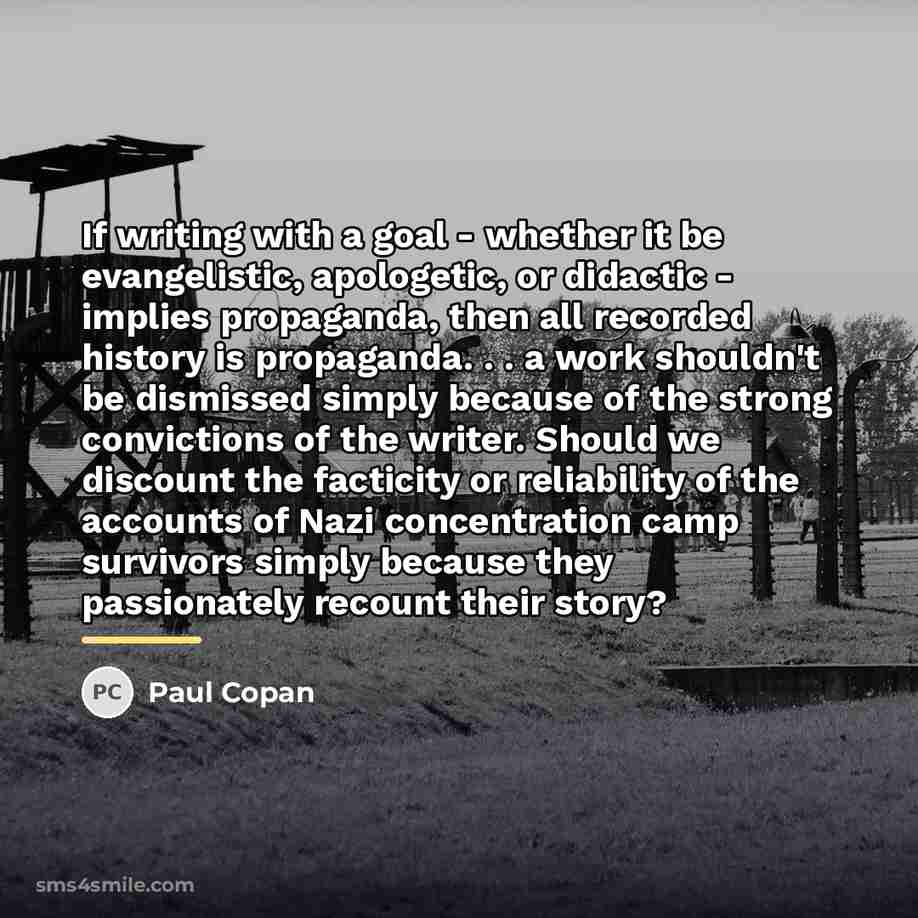
“If writing with a goal - whether it be evangelistic, apologetic, or didactic - implies propaganda, then all recorded history is propaganda. . . a work shouldn't be dismissed simply because of the strong convictions of the writer. Should we discount the facticity or reliability of the accounts of Nazi concentration camp survivors simply because they passionately recount their story?”
About This Quote
The quote argues that any purposeful writing is a form of propaganda, but that does not invalidate the factual truth of the content, using Holocaust testimonies as a test case.
In simple terms: Purposeful writing is propaganda, yet truth can remain.
Key Takeaway
Do not conflate bias with falsehood.
Themes
bias
truth
propaganda
historical testimony
ethical judgment
Mood
thoughtful
cautious
Type
philosophical
ethical
When to use this quote
- academic analysis of historical documents
- media criticism
- legal testimony evaluation
Key Concepts
authorial intent
evidence reliability
moral authority
Practical Applications
- critical reading of persuasive texts
- educational curricula on source evaluation
Questions to Reflect On
- How can we separate a writer's agenda from the factual core of their account?
- What criteria should we use to assess the reliability of emotionally charged testimonies?
A Different Perspective
Some argue that any persuasive intent inevitably distorts facts, making all such accounts suspect.







![“This important theme of Abraham’s deep trust in God’s promise and faithfulness helped shape Israel’s own self-understanding and identity. So it’s not surprising to hear Moses’s words to Israel at Sinai: “Do not be afraid; for God has come in order to test [the Hebrew verb is nasah] you, and in…” quote by Paul Copan](https://sms4smile.com/quotes/img-quotes/568/paul-copan-38798_fear-of-god_this-important-theme-of-abraham-s-deep-t_1809378.jpg)