Allan poe Quote by Oscar Wilde
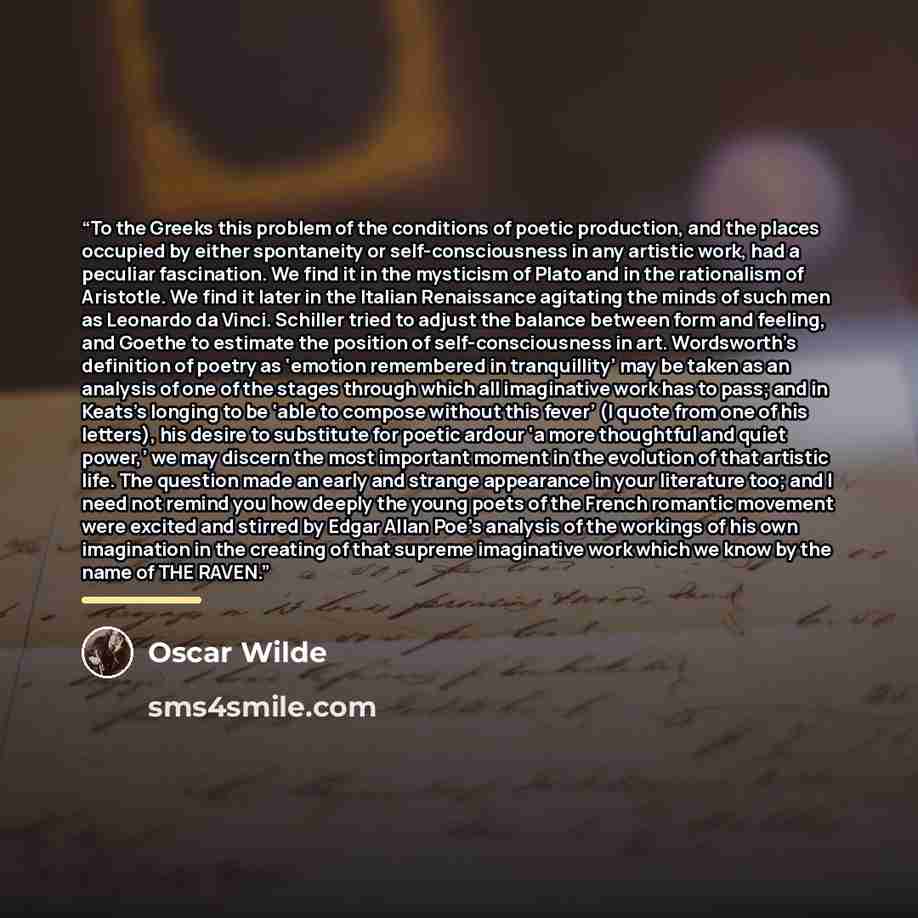
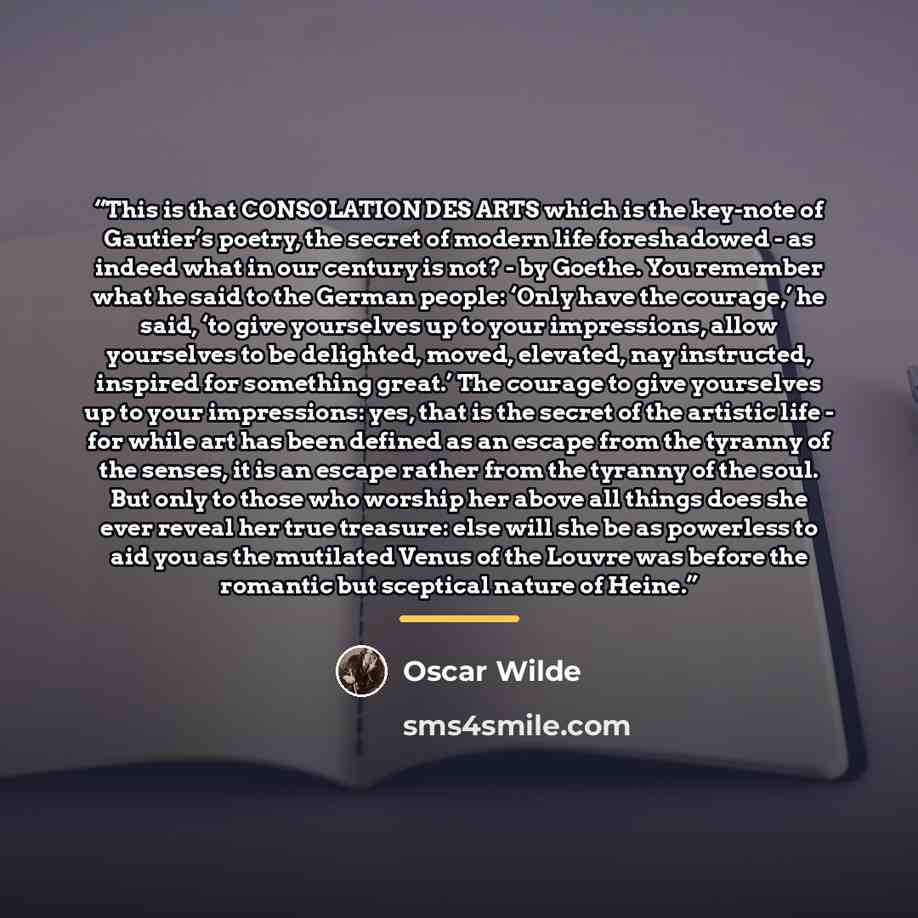
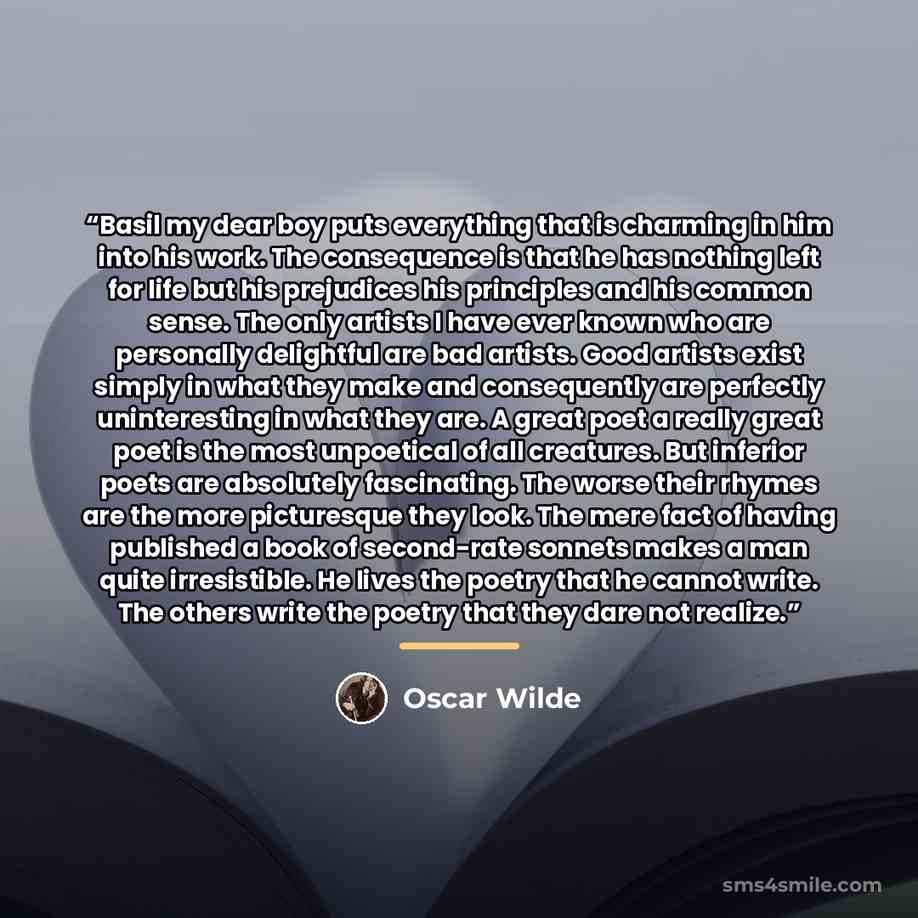
““To the Greeks this problem of the conditions of poetic production, and the places occupied by either spontaneity or self-consciousness in any artistic work, had a peculiar fascination. We find it in the mysticism of Plato and in the rationalism of Aristotle. We find it later in the Italian Renaissance agitating the minds of such men as Leonardo da Vinci. Schiller tried to adjust the balance between form and feeling, and Goethe to estimate the position of self-consciousness in art. Wordsworth’s definition of poetry as ‘emotion remembered in tranquillity’ may be taken as an analysis of one of the stages through which all imaginative work has to pass; and in Keats’s longing to be ‘able to compose without this fever’ (I quote from one of his letters), his desire to substitute for poetic ardour ‘a more thoughtful and quiet power,’ we may discern the most important moment in the evolution of that artistic life. The question made an early and strange appearance in your literature too; and I need not remind you how deeply the young poets of the French romantic movement were excited and stirred by Edgar Allan Poe’s analysis of the workings of his own imagination in the creating of that supreme imaginative work which we know by the name of THE RAVEN.””
About This Quote
Source Essay: The Soul of Man under Socialism, Oscar Wilde, 1891
Explores how poets balance spontaneity and self‑consciousness, tracing this tension from Plato to Romantic poets and its impact on artistic creation.
In simple terms: Poetry mixes instinct and reflection, evolving over time.
Key Takeaway
Recognize both instinct and thought in creative work.
Themes
art
creativity
philosophy
history
self‑consciousness
Mood
contemplative
introspective
Type
analytical
philosophical
When to use this quote
- literary analysis
- art criticism
- creative writing
- teaching art
- personal reflection
Key Concepts
aesthetic theory
creative process
historical influence
Questions to Reflect On
- How do you balance instinct and analysis in your work?
- What historical examples illustrate this tension?
A Different Perspective
The balance can be disrupted by over‑intellectualization, stifling raw expression.



![“To me [Edgar Allan Poe's] prose is unreadable—like Jane Austin's [sic]. No there is a difference. I could read his prose on salary, but not Jane's. Jane is entirely impossible. It seems a great pity that they allowed her to die a natural death.” quote by Mark Twain](https://sms4smile.com/quotes/img-quotes/370/mark-twain-22_allan-poe_to-me-edgar-allan-poe-s-prose-is-unreada_175729.jpg)
![“I would say that Edgar Allan Poe, [Georges] Perec, Thomas Pynchon, and [Jorge Luis] Borges are all boy-writers. These are writers who take... a kind of demonic joy in writing.” quote by Paul Auster](https://sms4smile.com/quotes/img-quotes/c94/paul-auster-351_allan-poe_i-would-say-that-edgar-allan-poe-georges_292858.jpg)