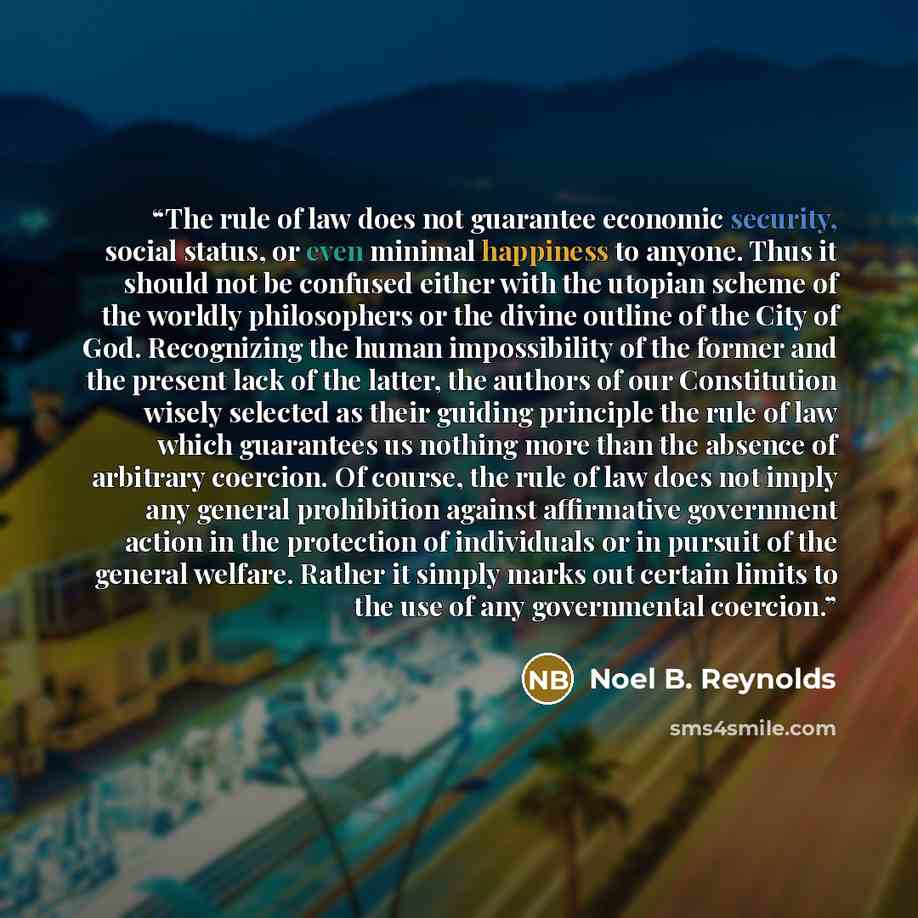
““The inspired principles in the Constitution are the principles of the rule of law which, if preserved, guarantee liberty to every man. These principles are assumed in the Constitution because they had come to be assumed by Americans generally, as they struggled through several generations to find institutional safeguards for the liberty that they prized so highly. Many theoreticians of law and politics have rejected such a tenuous and fragile basis for a nation's freedom. They dream of constitutional arrangements based on clear libertarian principles which would maximize individual liberty whether or not the people understood or supported the basic principles. Their objection does raise the important secondary problem of preserving the liberty we have obtained. The early Americans themselves recognized the necessity of "public virtue" for the continuing security of their liberty. . . . The radicals of the left today seek freedom from social and material deprivation through the application of government power. On the right, according to your preferences in political taxonomy, we have either those libertarians who would go far beyond the classically liberal views of the Founding Fathers in restricting the role of government, or those reactionaries who would be willing to invoke arbitrarily the power of government to reshape moral society in their own image. Modern prophets seem to reject both the reactionary and radical left views. And in clearly recognizing a positive role for limited government, they refuse to join the libertarians.””



![“Vote for Donald Trump. You're going to see something and you'll be so happy, you'll be so thrilled. This [presidential] election is about every man, woman and child in our country who deserves to live in safety, prosperity and peace, so true.” quote by Donald Trump](https://sms4smile.com/quotes/img-quotes/18e/donald-trump-18_children_vote-for-donald-trump-you-re-going-to-se_1553.jpg)