Bible Quote by N.T. Wright
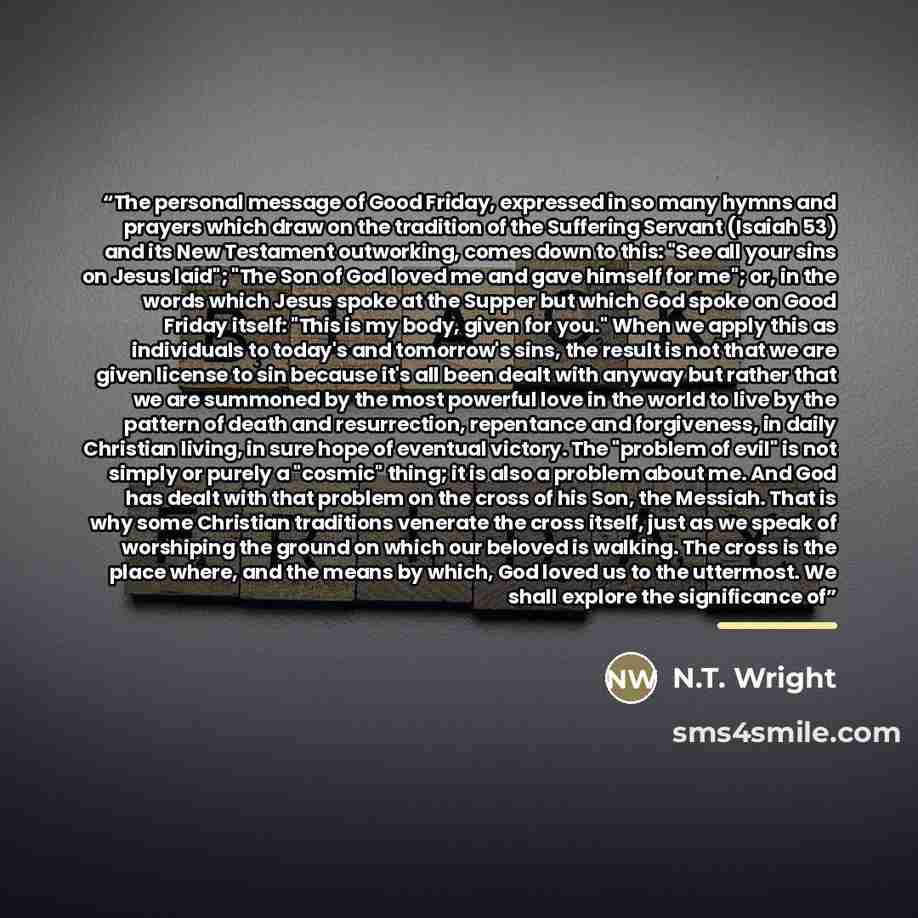
““The personal message of Good Friday, expressed in so many hymns and prayers which draw on the tradition of the Suffering Servant (Isaiah 53) and its New Testament outworking, comes down to this: "See all your sins on Jesus laid"; "The Son of God loved me and gave himself for me"; or, in the words which Jesus spoke at the Supper but which God spoke on Good Friday itself: "This is my body, given for you." When we apply this as individuals to today's and tomorrow's sins, the result is not that we are given license to sin because it's all been dealt with anyway but rather that we are summoned by the most powerful love in the world to live by the pattern of death and resurrection, repentance and forgiveness, in daily Christian living, in sure hope of eventual victory. The "problem of evil" is not simply or purely a "cosmic" thing; it is also a problem about me. And God has dealt with that problem on the cross of his Son, the Messiah. That is why some Christian traditions venerate the cross itself, just as we speak of worshiping the ground on which our beloved is walking. The cross is the place where, and the means by which, God loved us to the uttermost. We shall explore the significance of””
About This Quote
Good Friday’s message invites believers to respond to divine love with repentance, forgiveness, and a hopeful, resurrected life, rather than using the cross as a license to sin.
In simple terms: Christ’s sacrifice calls us to live repentant, hopeful lives.
Key Takeaway
The cross inspires transformation, not moral exemption.
Themes
theology
redemption
forgiveness
hope
Christian ethics
Mood
reverent
hopeful
serious
Type
theological
expository
When to use this quote
- personal confession and repentance
- community worship focusing on the cross
- ethical decisions guided by Christian love
Key Concepts
sacrifice meaning
moral responsibility
Practical Applications
- Integrate cross‑centered reflection in daily devotion
- Use the narrative of sacrifice to motivate social justice work
Questions to Reflect On
- How does the cross shape everyday moral choices?
- In what ways can the message of sacrifice influence societal structures?
A Different Perspective
Interpretations of the cross vary; some may see it as a legalistic atonement rather than relational love.