First place Quote by N.K. Jemisin
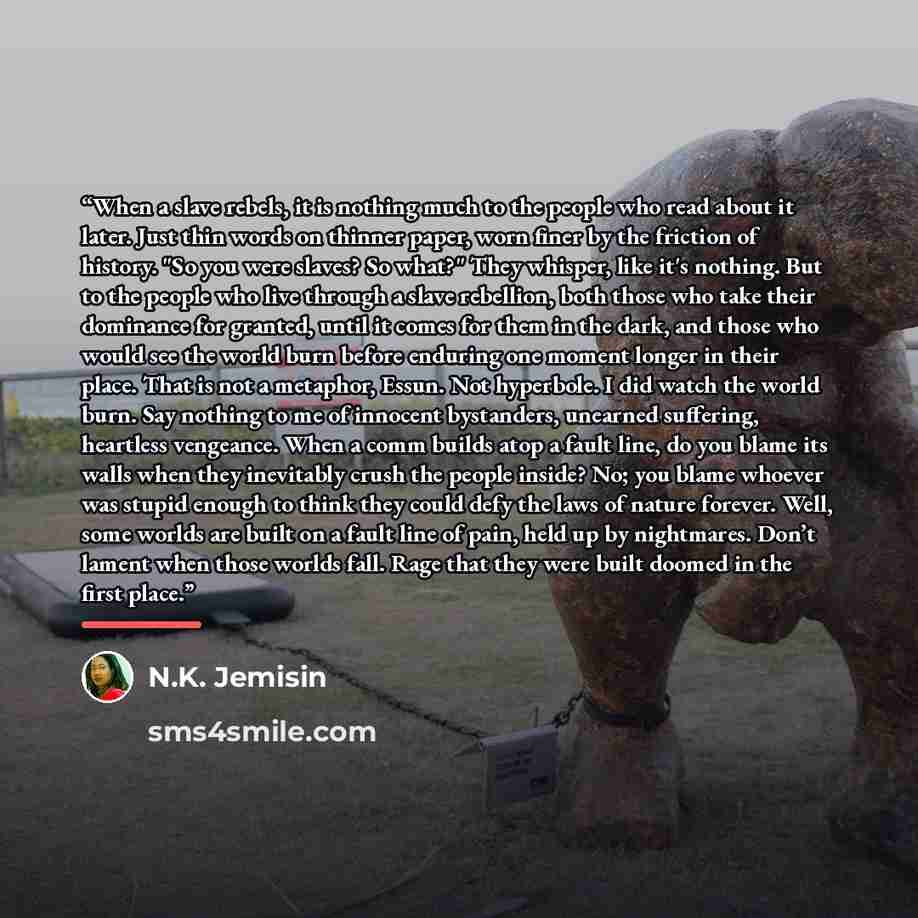
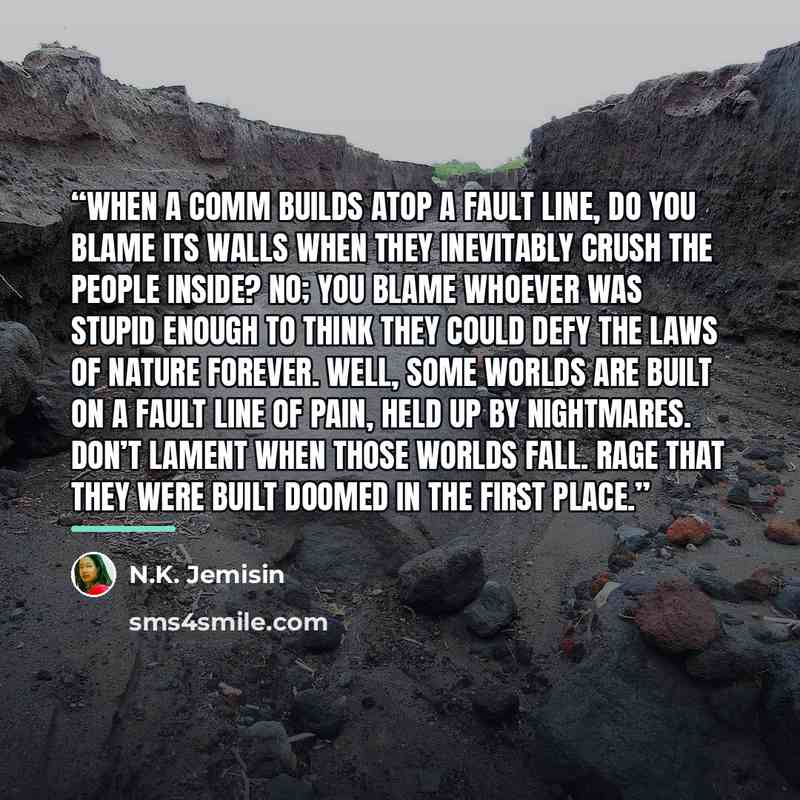
““When a slave rebels, it is nothing much to the people who read about it later. Just thin words on thinner paper, worn finer by the friction of history. "So you were slaves? So what?" They whisper, like it's nothing. But to the people who live through a slave rebellion, both those who take their dominance for granted, until it comes for them in the dark, and those who would see the world burn before enduring one moment longer in their place. That is not a metaphor, Essun. Not hyperbole. I did watch the world burn. Say nothing to me of innocent bystanders, unearned suffering, heartless vengeance. When a comm builds atop a fault line, do you blame its walls when they inevitably crush the people inside? No; you blame whoever was stupid enough to think they could defy the laws of nature forever. Well, some worlds are built on a fault line of pain, held up by nightmares. Don’t lament when those worlds fall. Rage that they were built doomed in the first place.””
About This Quote
Source Novel: The Broken Earth Trilogy, 2015–2017
The quote highlights how historical narratives trivialize slave rebellions, while those living through them feel profound oppression and inevitable collapse of unjust systems.
In simple terms: History downplays rebellion; lived oppression feels inevitable.
Key Takeaway
Recognize and confront systemic oppression.
Themes
oppression
history
rebellion
justice
power dynamics
Mood
defiant
somber
reflective
Type
political
philosophical
When to use this quote
- activism
- education
- policy reform
- community solidarity
Key Concepts
colonialism
systemic injustice
historical memory
Questions to Reflect On
- How do we honor lived experiences in historical accounts?
- What responsibilities do we have to challenge oppressive narratives?
A Different Perspective
The metaphor may oversimplify complex causes of suffering.






![“[...] the kind of healer who knows that sometimes one must inflict terrible agony - rebreak a bone, carve off a limb, kill the weak - in order to make the whole stronger.” quote by N.K. Jemisin](https://sms4smile.com/quotes/img-quotes/b79/n-k-jemisin-1466_difficult-decisions_the-kind-of-healer-who-knows-that-someti_50107.jpg)