Middle ages Quote by Mikhail Bakunin
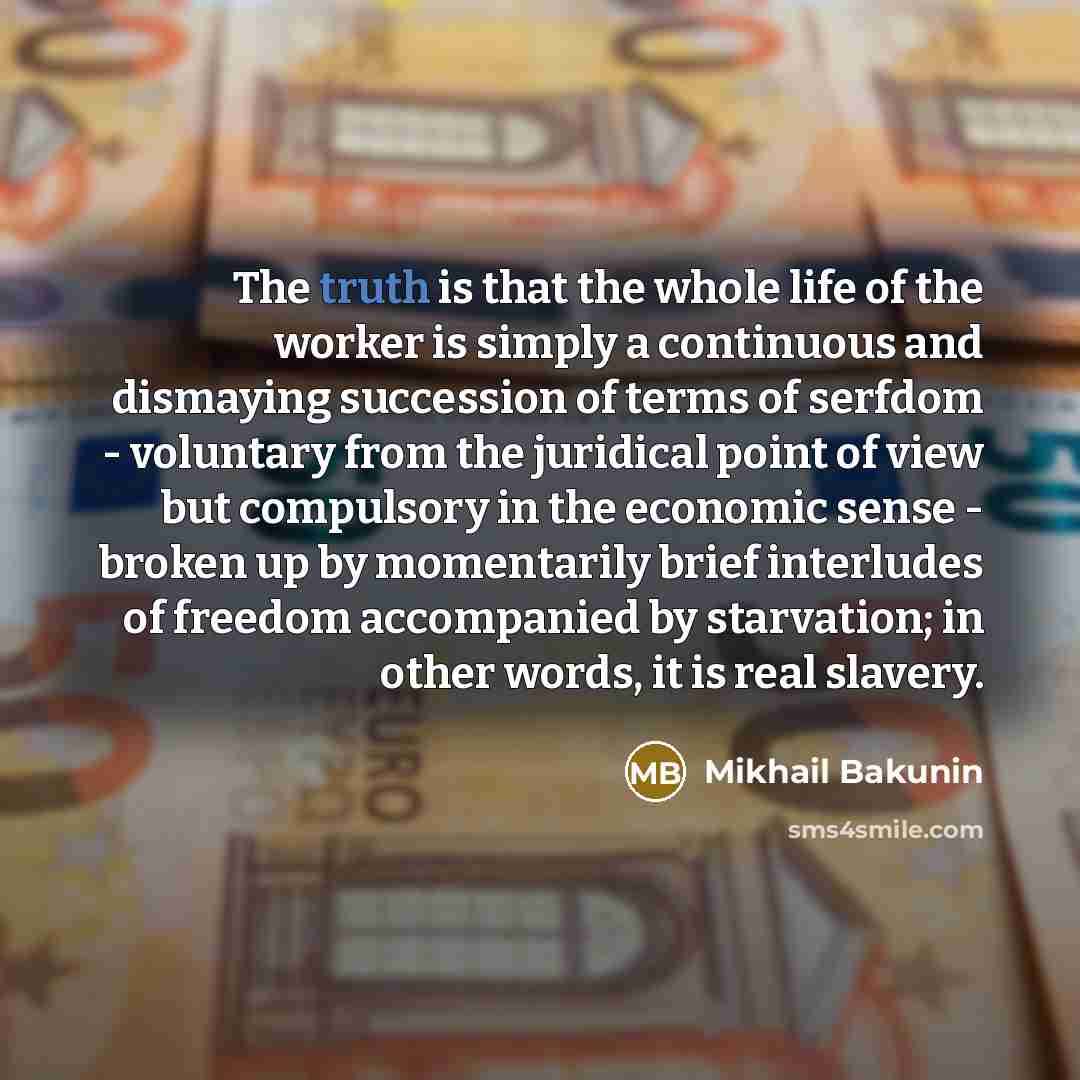
““Slavery may change its form or its name—its essence remains the same. Its essence may be expressed in these words: to be a slave is to he forced to work for someone else, just as to he a master is to live on someone else's work In antiquity, just as in Asia and in Africa today, as well as even in a part of America, slaves were, in all honesty, called slaves. In the Middle Ages, they took the name of serfs: nowadays they are called wage earners. The position of tins latter group has a great deal more dignity attached to it, and it is less hard than that of slaves, but they are nonetheless forced, by hunger as well as by political and social institutions, to maintain other people in complete or relative idleness, through their own exceedingly hard labor. Consequently they arc slaves. And in general, no state, ancient or modern, has ever managed or will ever manage to get along without the forced labor of the masses, either wage earners or slaves, as a principal and absolutely necessary foundation for the leisure, the liberty, and the civilization of the political class—the citizens.””
About This Quote
Source Essay: The Political Economy of Slavery, 1865
The quote argues that slavery persists under different names and forms, with wage labor essentially a modern form of forced labor that sustains elite leisure and civilization.
In simple terms: Slavery continues today as wage labor, supporting the privileged.
Key Takeaway
Recognize and challenge hidden forms of exploitation.
Themes
exploitation
class
labor
freedom
history
Mood
reflective
critical
thoughtful
Type
philosophical
political
historical
When to use this quote
- modern workplaces
- gig economy
- global supply chains
- immigration labor
- public policy
Key Concepts
Marxism
political economy
social hierarchy
Questions to Reflect On
- How does modern wage work compare to historical slavery?
- What responsibilities do consumers have?
A Different Perspective
It may overlook voluntary aspects of modern employment and agency of workers.