Core beliefs Quote by Max Barry
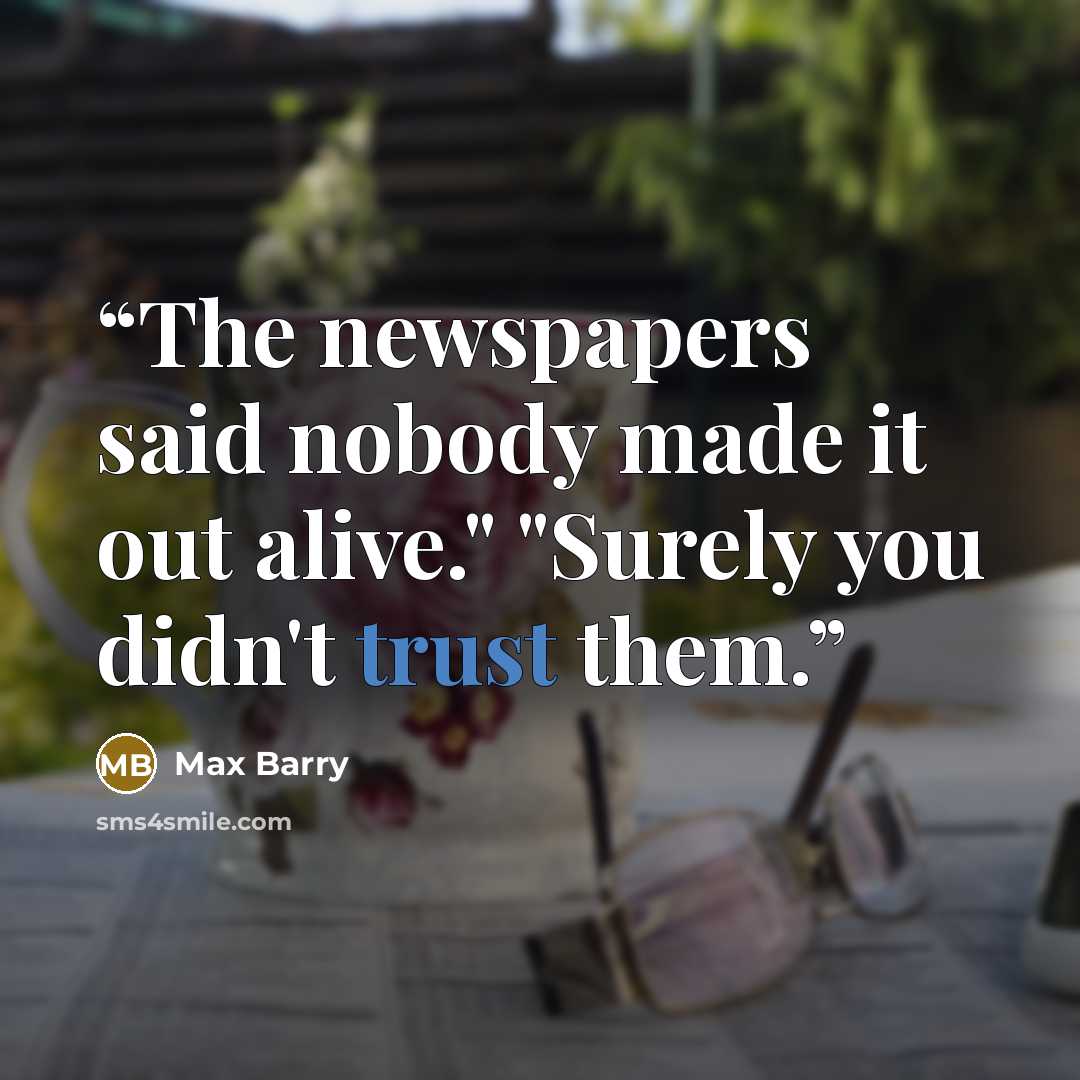
““ Your site isn't static. It's dynamically generated. Do you know what that means ?" "No." "It means the site looks different to different people. Let's say you chose the poll option that said you're in favor of tax cuts. Well there's a cookie on your machine now, and when you look at the site again, the articles are about how the government is wasting your money. The site is dynamically selecting content based on what you want. I mean, not what you want. What will piss you off. What will engage your attention and reinforce your beliefs, make you trust the site. And if you said you were against tax cuts, we'll show you stories of Republicans blocking social programs or whatever. It works every which way. Your site is made of mirrors, reflecting everyone's thoughts back at them..." "And we haven't even started talking about keywords. This is just the beginning. Third major advantage: People who use a site like this tend to ramp up their dependence on it. Suddenly all those other news sources, the ones that aren't framing every story in terms of the user's core beliefs, they start to seem confusing and strange. They start to seem biased, actually, which is kind of funny. So now you've got a user who not only trusts you, you're his major source of information on what's happening in the world. Boom, you own that guy. You can tell him whatever you like and no one's contradicting you.””
About This Quote
Source Book: “The End of the World” by Max Barry, 2015
The passage describes how personalized content mirrors users’ beliefs, reinforcing bias and increasing dependence on a single source.
In simple terms: Tailored content traps users in echo chambers.
Key Takeaway
Beware of echo chambers and seek diverse sources.
Themes
media
bias
personalization
manipulation
Mood
cautious
critical
Type
cautionary
analytical
When to use this quote
- news consumption
- social media
- political discourse
- marketing strategies
Key Concepts
information theory
psychology
technology
Questions to Reflect On
- What sources challenge your views?
- How can you diversify your information diet?
A Different Perspective
Personalization can limit exposure to opposing views, reducing critical thinking.





![“One [project of Teddy Cruz's] is titled Living Rooms at the Border. it takes a piece of land with an unused church zoned for three units and carefully arrays on it twelve affordable housing units, a community center (the converted church), offices for Casa in the church's attic, and a garden that…” quote by Rebecca Solnit](https://sms4smile.com/quotes/img-quotes/446/rebecca-solnit-569_109_one-project-of-teddy-cruz-s-is-titled-li_109840.jpg)