Poetry Quote by Mary Oliver Download Open image ““Who can guess the impatience of stone to be ground down, to be a part of something livelier?”” — Mary Oliver ★ ★ ★ ★ ★ 3.2 out of 5 (6 ratings) Copy quoteShare Poetry
“The stone has no uncertainties, no urge to communicate, and is eternally the same for thousands of years, while I am only a passing… — C.G. Jung Copy Share Image
“If someone throws stone at you,then raise yourself so high that the stone could reach you...” — intaj rahaman Copy Share Image
“Each individual's life starts with a new rough stone waiting to be discovered by a willing Apprentice.” — Stevan V. Nikolic Copy Share Image
“The drop excavates the stone, not with force but by falling often.” — Publius Ovidius Naso Copy Share Image
“If someone throws stone at you,then raise yourself so high that it could not reach you.” — Intaj rahaman Copy Share Image
“You can build something beautiful from stones that are put in your way.” — Erich Kästner Copy Share Image
“Remember that on any world the wind eventually wears away the stone, because the stone can only crumble; the wind can change.” — A.C. Crispin Copy Share Image
Belief isn't always easy. But this much I have learned--- if not enough else--- to live with my eyes open. — Mary Oliver Copy Share Image
In this universe we are given two gifts: the ability to love and the ability to question. Which are, at the same time, the… — Mary Oliver Copy Share Image
Poetry is one of the original arts, and it began, as did all the fine arts, within the original wilderness of the earth. — Mary Oliver Copy Share Image
The dream of my life is to lie down by a slow river and stare at the light in the trees - to learn… — Mary Oliver Copy Share Image
Tell me, what is it you plan to do with your one wild and precious life? — Mary Oliver Copy Share Image
“All important ideas must include the trees, the mountains, and the rivers. • To understand many things you must reach out of your own condition.” — Mary Oliver Copy Share Image
“Sometimes I think, were I just a little rougher made, I would go altogether to the woods—to my work entirely, and solitude, a few… — Mary Oliver Copy Share Image
“First Snow The snow began here this morning and all day continued, its white rhetoric everywhere calling us back to why, how, whence such beauty… — mary oliver Copy Share Image
“What can I say that I have not said before? So I’ll say it again. The leaf has a song in it. Stone is… — Mary Oliver Copy Share Image
There is nothing better than work. Work is also play; children know that. Children play earnestly as if it were work. But people grow… — Mary Oliver Copy Share Image
The name Phenomenal Woman was inspired by Maya Angelo, who wrote 'Phenomenal Woman', a favorite poem of mine. — Meena Harris Copy Share Image
A poet is wounded into speech, and he examines these wounds, meticulously, to discover how to heal them. The bad poet harangues at the… — Samuel R. Delany Copy Share Image
The poetry from the eighteenth century was prose; the prose from the seventeenth century was poetry. — David Hare Copy Share Image
“It took me years to learn to sit at my desk for more than two minutes at a time, to put up with the… — Erica Jong Copy Share Image
The word 'mundane' has come to mean 'boring' and 'dull', and it really shouldn't - it should mean the opposite. Because it comes from… — Richard Dawkins Copy Share Image
“In the streets, the children scream, the lovers cried, and the poets dreamed,” he crooned, putting down the metal grill tongs to take my… — Alexandria Clarke Copy Share Image
Some minds corrode and grow inactive under the loss of personal liberty; others grow morbid and irritable; but it is the nature of the… — Washington Irving Copy Share Image
You don’t read or overhear the voice in the poem, you are the voice in the poem. — Helen Vendler Copy Share Image
All lyrical work must, as a whole, be perfectly intelligible, but in some particulars a little unintelligible. — Johann Wolfgang von Goethe Copy Share Image
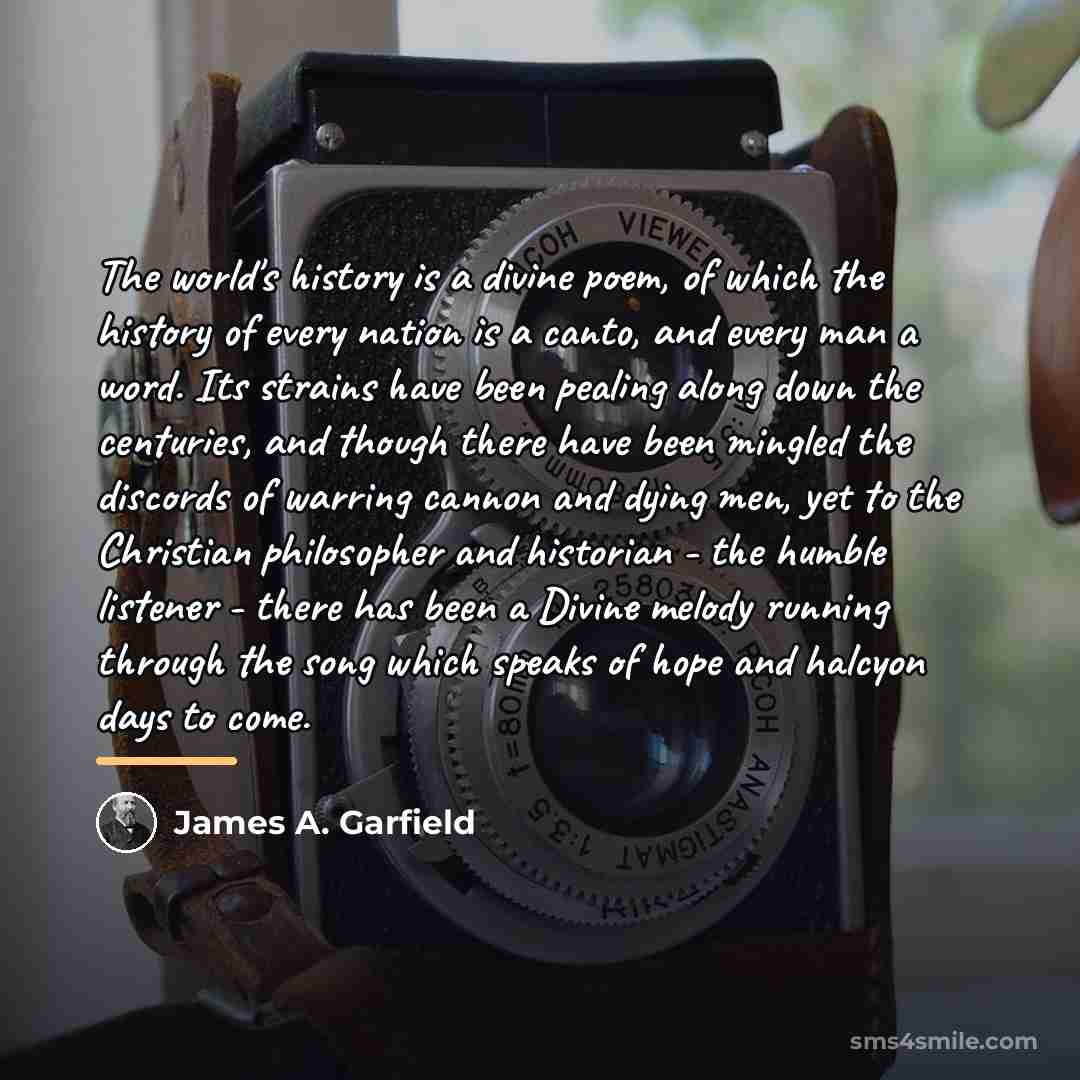
The world's history is a divine poem, of which the history of every nation is a canto, and every man a word. Its strains… — James A. Garfield Copy Share Image