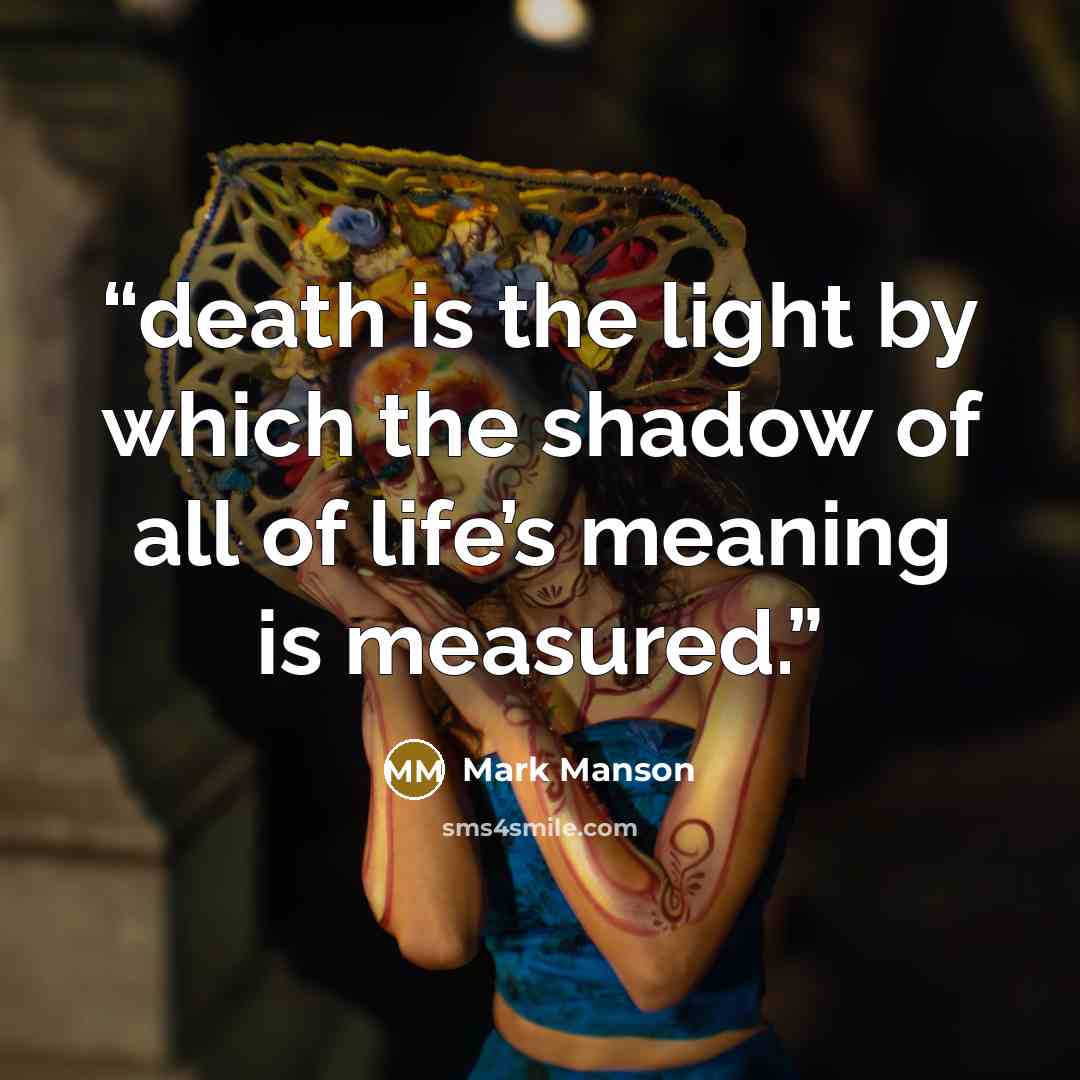
Economic system Quote by Mark Manson
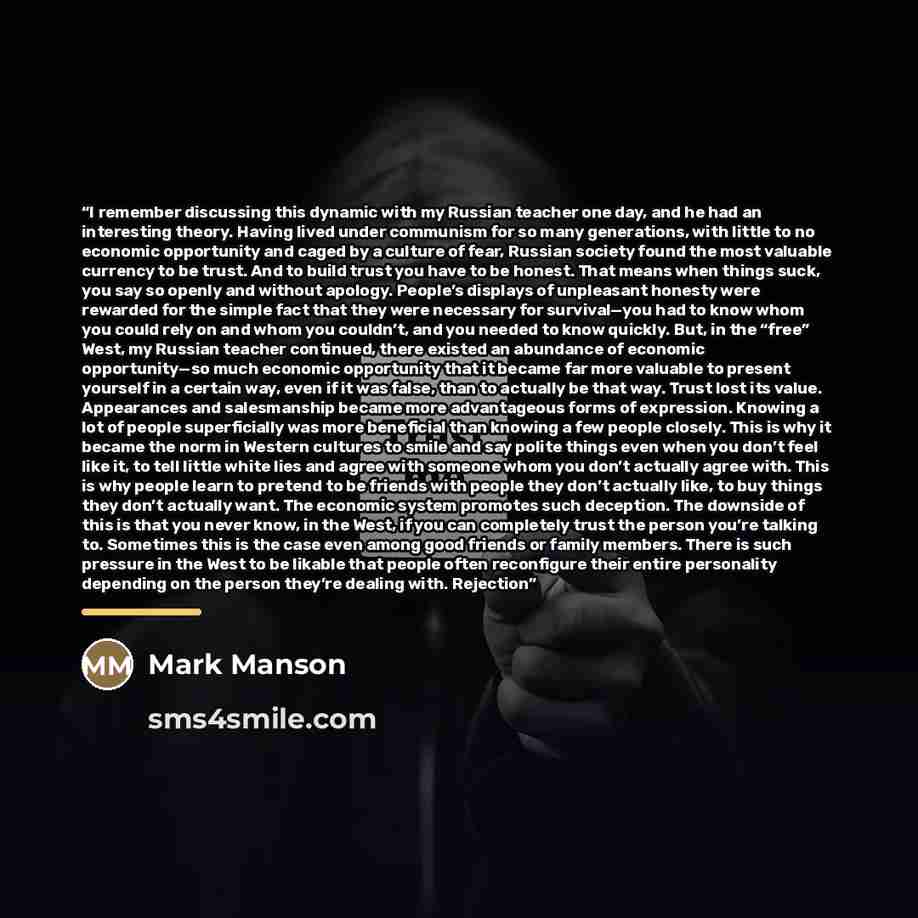
““I remember discussing this dynamic with my Russian teacher one day, and he had an interesting theory. Having lived under communism for so many generations, with little to no economic opportunity and caged by a culture of fear, Russian society found the most valuable currency to be trust. And to build trust you have to be honest. That means when things suck, you say so openly and without apology. People’s displays of unpleasant honesty were rewarded for the simple fact that they were necessary for survival—you had to know whom you could rely on and whom you couldn’t, and you needed to know quickly. But, in the “free” West, my Russian teacher continued, there existed an abundance of economic opportunity—so much economic opportunity that it became far more valuable to present yourself in a certain way, even if it was false, than to actually be that way. Trust lost its value. Appearances and salesmanship became more advantageous forms of expression. Knowing a lot of people superficially was more beneficial than knowing a few people closely. This is why it became the norm in Western cultures to smile and say polite things even when you don’t feel like it, to tell little white lies and agree with someone whom you don’t actually agree with. This is why people learn to pretend to be friends with people they don’t actually like, to buy things they don’t actually want. The economic system promotes such deception. The downside of this is that you never know, in the West, if you can completely trust the person you’re talking to. Sometimes this is the case even among good friends or family members. There is such pressure in the West to be likable that people often reconfigure their entire personality depending on the person they’re dealing with. Rejection””
About This Quote
Source Interview: The Subtle Art of Not Giving a F*, 2016
In societies with scarce resources, honesty is vital for survival, while wealthier cultures often value polished appearances over frankness, leading to superficial trust.
In simple terms: Economic scarcity forces honesty; abundance encourages façade.
Key Takeaway
Recognize when honesty is valued and when façade dominates.
Themes
trust
honesty
culture
economics
social dynamics
Mood
reflective
critical
analytical
Type
philosophical
observational
When to use this quote
- business negotiations
- personal relationships
- team building
- networking
- customer service
Key Concepts
social capital
survival
authenticity
social exchange
reputation
Questions to Reflect On
- How do you balance authenticity with social expectations?
- When is it strategic to conceal true feelings?
A Different Perspective
Superficial trust can erode deep connections and lead to mistrust.