Empathy Quote by Lawrence C. Becker
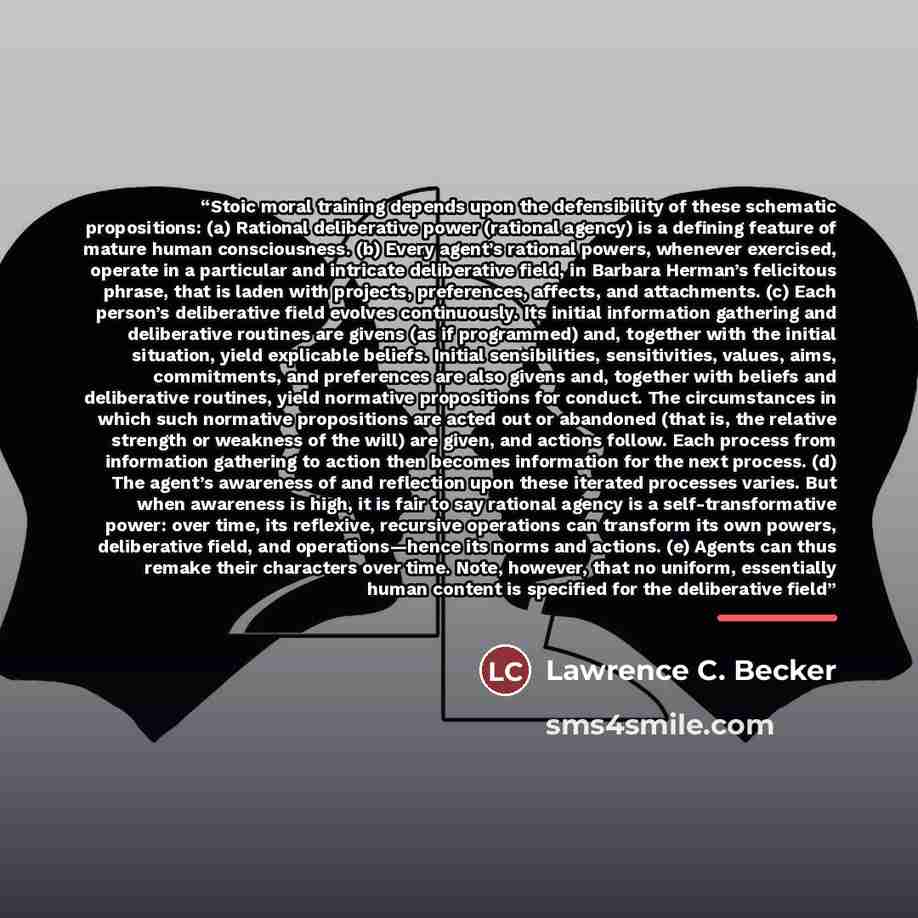
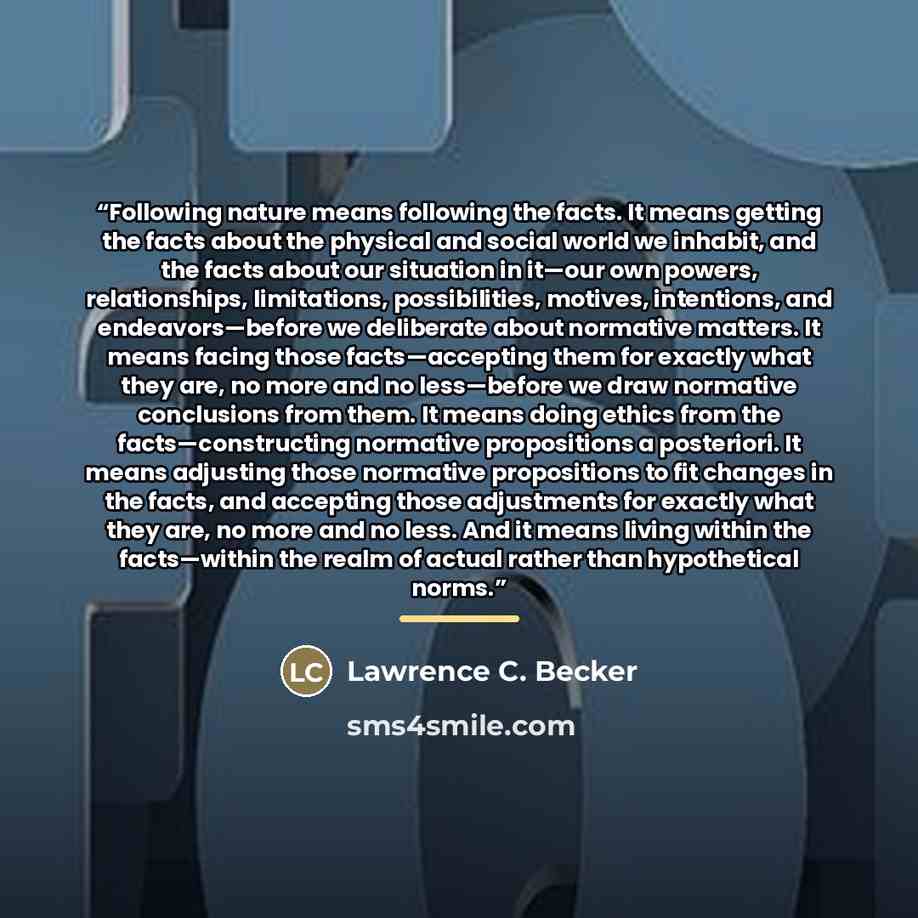
““Stoic moral training depends upon the defensibility of these schematic propositions: (a) Rational deliberative power (rational agency) is a defining feature of mature human consciousness. (b) Every agent’s rational powers, whenever exercised, operate in a particular and intricate deliberative field, in Barbara Herman’s felicitous phrase, that is laden with projects, preferences, affects, and attachments. (c) Each person’s deliberative field evolves continuously. Its initial information gathering and deliberative routines are givens (as if programmed) and, together with the initial situation, yield explicable beliefs. Initial sensibilities, sensitivities, values, aims, commitments, and preferences are also givens and, together with beliefs and deliberative routines, yield normative propositions for conduct. The circumstances in which such normative propositions are acted out or abandoned (that is, the relative strength or weakness of the will) are given, and actions follow. Each process from information gathering to action then becomes information for the next process. (d) The agent’s awareness of and reflection upon these iterated processes varies. But when awareness is high, it is fair to say rational agency is a self-transformative power: over time, its reflexive, recursive operations can transform its own powers, deliberative field, and operations—hence its norms and actions. (e) Agents can thus remake their characters over time. Note, however, that no uniform, essentially human content is specified for the deliberative field””
About This Quote
Source Book: The Moral Psychology of Rational Agency, 2005
Rational agency is a self‑transformative power that evolves through reflective deliberation, allowing individuals to reshape their character and norms over time.
In simple terms: Rational thought can change who you are.
Key Takeaway
Cultivate reflective thinking to transform yourself.
Themes
ethics
philosophy
self‑development
agency
reflection
Mood
analytical
introspective
Type
philosophical
educational
When to use this quote
- personal counseling
- ethical training
- leadership development
- academic study
Key Concepts
rationality
normative theory
self‑transformation
Questions to Reflect On
- How do you recognize hidden biases in your reasoning?
- What practices enhance reflective awareness?
A Different Perspective
Self‑reflection can be limited by bias or lack of insight.







![“That is another theme in the book [Dreams from My Father]. How do we exercise more empathy in our public discourse? How do we get the black to see through the eyes of the white? Or the citizen to see through the eyes of the immigrant? Or the straight to see through the eyes of the gay? That has…” quote by Barack Obama](https://sms4smile.com/quotes/img-quotes/00d/barack-obama-17_black_that-is-another-theme-in-the-book-dreams_10185.jpg)