Wife and daughter Quote by Kristen Stieffel
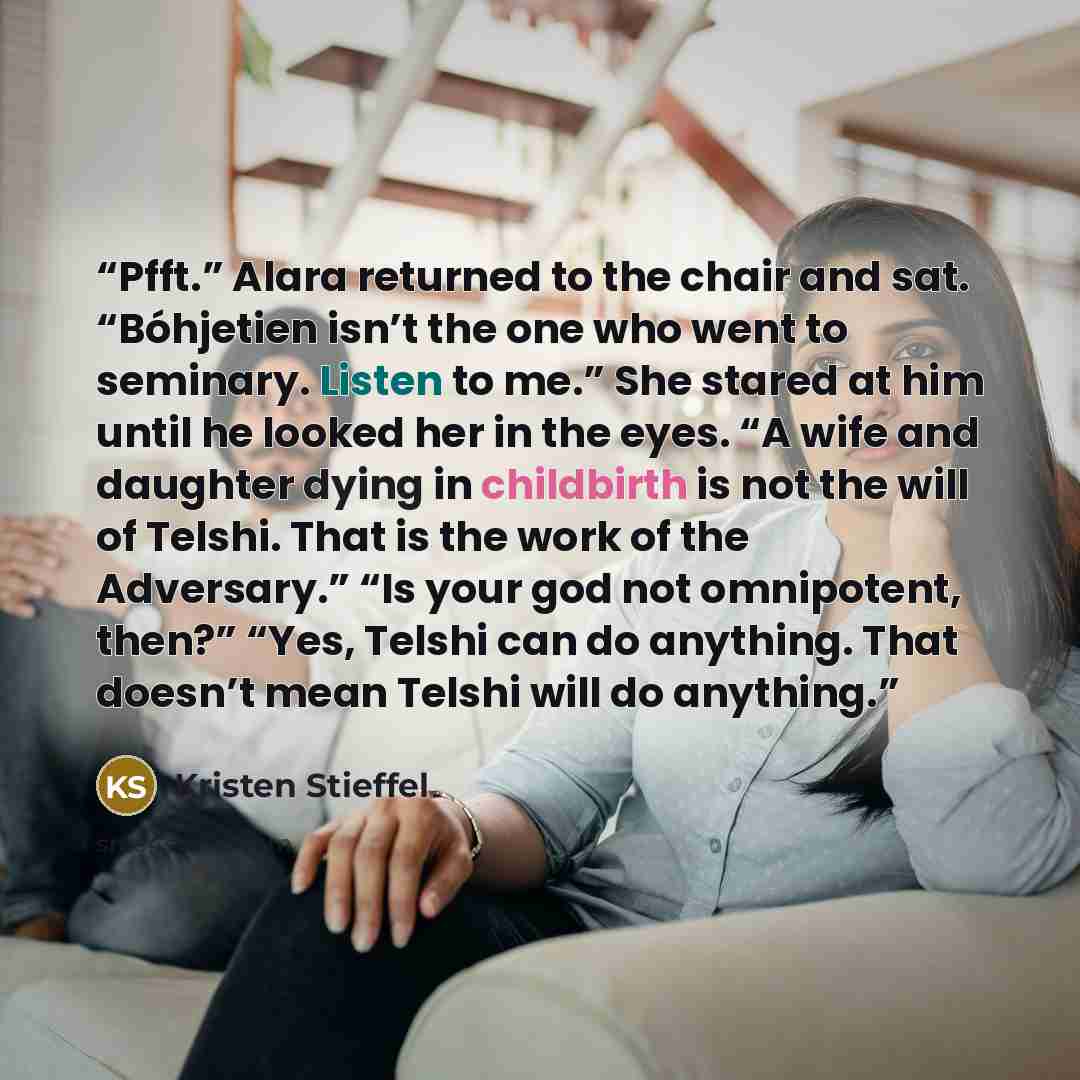
““Pfft.” Alara returned to the chair and sat. “Bóhjetien isn’t the one who went to seminary. Listen to me.” She stared at him until he looked her in the eyes. “A wife and daughter dying in childbirth is not the will of Telshi. That is the work of the Adversary.” “Is your god not omnipotent, then?” “Yes, Telshi can do anything. That doesn’t mean Telshi will do anything.””
About This Quote
Source Novel: The Unseen World by Kristen Stieffel, 2023
The speaker argues that suffering is not caused by a benevolent deity but by an opposing evil force, and that divine power does not guarantee divine will.
In simple terms: Evil, not God, causes tragedy; God can act but may not.
Key Takeaway
Recognize that not all misfortune is divine will.
Themes
theology
free will
evil
divine power
human suffering
Mood
conflicted
thoughtful
Type
philosophical
theological
When to use this quote
- religious debate
- personal crisis
- ethical counseling
Key Concepts
Theodicy
omnipotence
moral agency
Questions to Reflect On
- What does it mean for faith when suffering is attributed to an adversary?
- How do we reconcile divine power with apparent indifference?
A Different Perspective
Divine inaction may be a narrative device, not a theological truth.
![“He [God] made us free, and He respects that. It is two different spheres of causality. Interdependent, though. It is not two boxes looking at one another without any kind of direct connections. There are very direct connections. That's why the question of "how are we free if God is omnipotent?" is…” quote by Francis George](https://sms4smile.com/quotes/img-quotes/c45/francis-george-23460_boxes_he-god-made-us-free-and-he-respects-that_906125.jpg)
![“The first sign of love is when love asks nothing, [when it] gives everything. This is the real spiritual worship, the worship through love. Whether God is merciful is no longer questioned. He is God; He is my love. Whether God is omnipotent and almighty, limited or unlimited, is no longer…” quote by Swami Vivekananda](https://sms4smile.com/quotes/img-quotes/294/swami-vivekananda-53_almighty_the-first-sign-of-love-is-when-love-asks_551325.jpg)