Good and evil Quote by Joseph Campbell
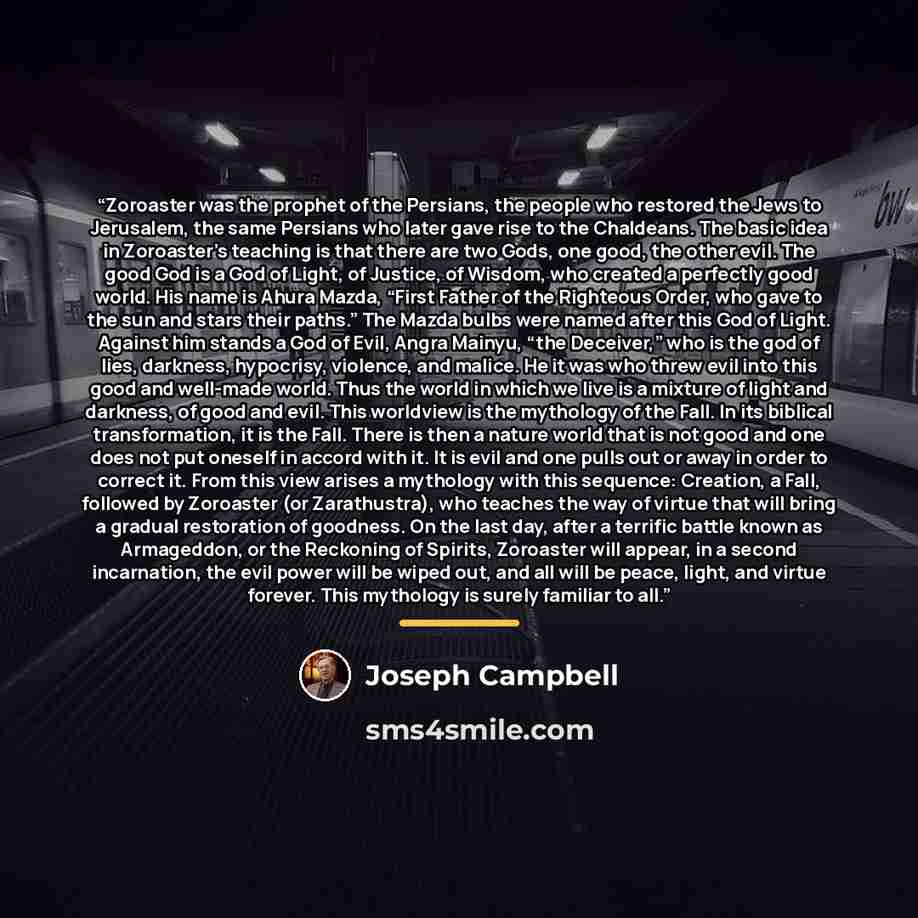
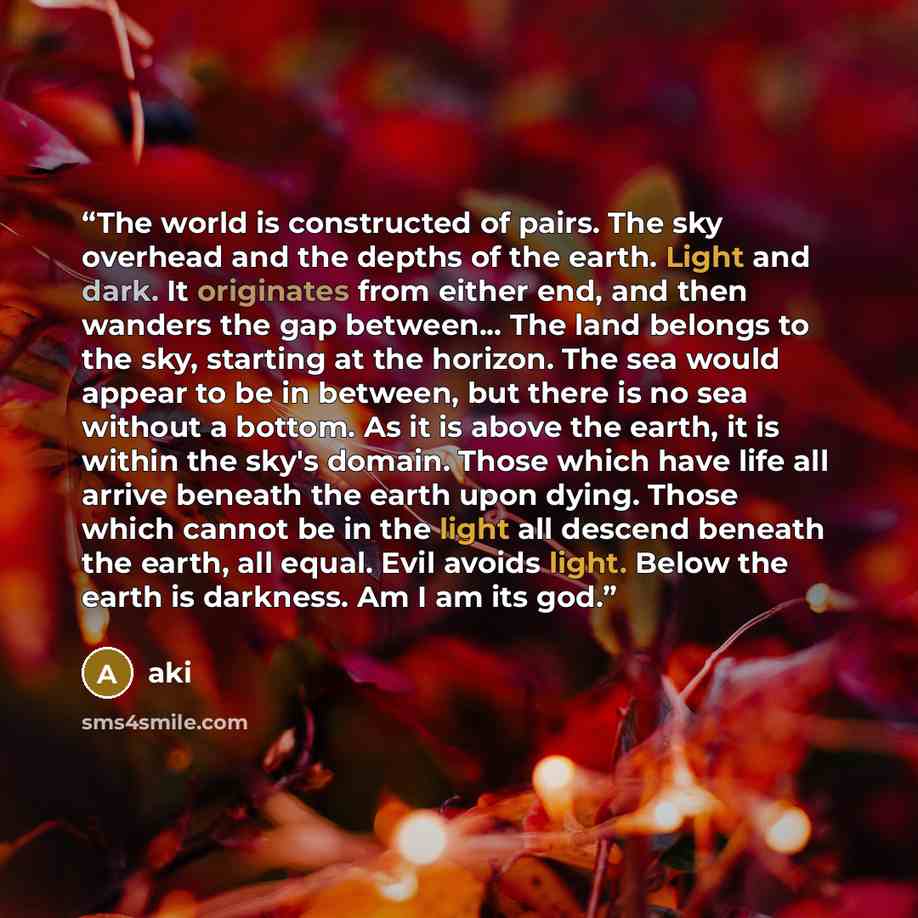
““Zoroaster was the prophet of the Persians, the people who restored the Jews to Jerusalem, the same Persians who later gave rise to the Chaldeans. The basic idea in Zoroaster’s teaching is that there are two Gods, one good, the other evil. The good God is a God of Light, of Justice, of Wisdom, who created a perfectly good world. His name is Ahura Mazda, “First Father of the Righteous Order, who gave to the sun and stars their paths.” The Mazda bulbs were named after this God of Light. Against him stands a God of Evil, Angra Mainyu, “the Deceiver,” who is the god of lies, darkness, hypocrisy, violence, and malice. He it was who threw evil into this good and well-made world. Thus the world in which we live is a mixture of light and darkness, of good and evil. This worldview is the mythology of the Fall. In its biblical transformation, it is the Fall. There is then a nature world that is not good and one does not put oneself in accord with it. It is evil and one pulls out or away in order to correct it. From this view arises a mythology with this sequence: Creation, a Fall, followed by Zoroaster (or Zarathustra), who teaches the way of virtue that will bring a gradual restoration of goodness. On the last day, after a terrific battle known as Armageddon, or the Reckoning of Spirits, Zoroaster will appear, in a second incarnation, the evil power will be wiped out, and all will be peace, light, and virtue forever. This mythology is surely familiar to all.””
About This Quote
The quote outlines Zoroastrian dualism, describing a cosmic battle between the good deity Ahura Mazda and the evil Angra Mainyu, and a eschatological restoration of virtue.
In simple terms: Zoroastrianism teaches a struggle between light and darkness, ending in ultimate good.
Key Takeaway
Recognize the dual forces in life and strive for virtue.
Themes
mythology
duality
cosmic battle
restoration
eschatology
Mood
reflective
thoughtful
Type
philosophical
mythological
When to use this quote
- personal moral choices
- spiritual practice
- cultural studies
- interfaith dialogue
Key Concepts
Zoroastrian dualism
good vs evil
mythic narrative
final judgment
Questions to Reflect On
- How do you see light and darkness in your own decisions?
- What practices help you cultivate virtue?
A Different Perspective
The binary view may oversimplify complex moral realities.





![“The fall [of your soul] from perfection into duality...was naturally followed by the discovery of the duality of good and evil...This is the Biblical version of a myth known to many lands.” quote by Joseph Campbell](https://sms4smile.com/quotes/img-quotes/9ff/joseph-campbell-300_biblical_the-fall-of-your-soul-from-perfection-in_22526.jpg)