Bubbles Quote by John Stuart Mill
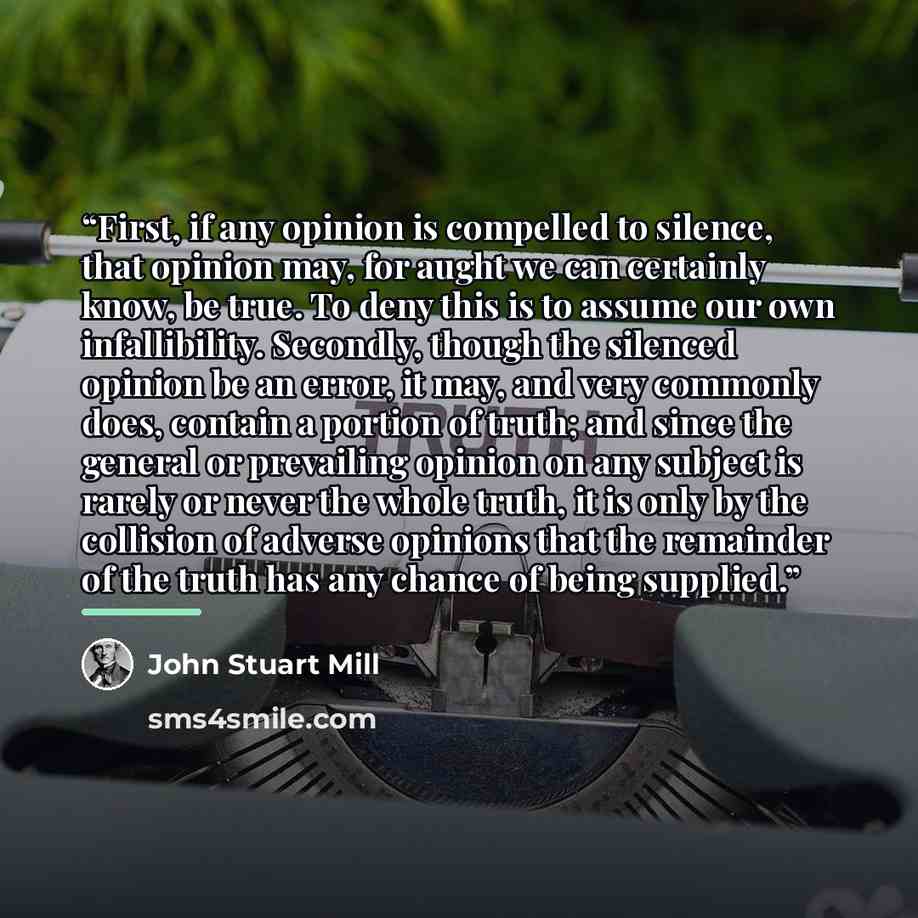
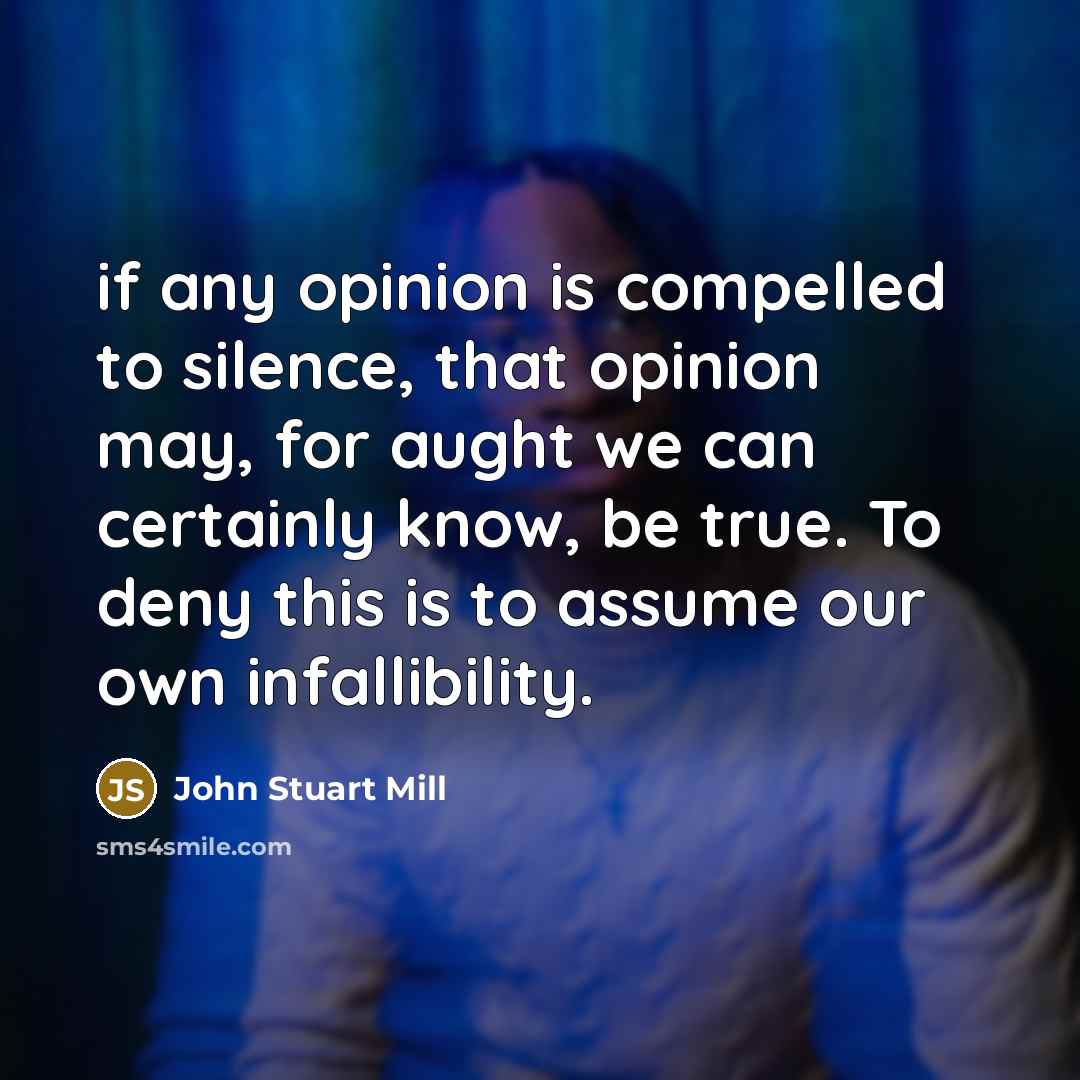
““First, if any opinion is compelled to silence, that opinion may, for aught we can certainly know, be true. To deny this is to assume our own infallibility. Secondly, though the silenced opinion be an error, it may, and very commonly does, contain a portion of truth; and since the general or prevailing opinion on any subject is rarely or never the whole truth, it is only by the collision of adverse opinions that the remainder of the truth has any chance of being supplied.””
About This Quote
Source Book: On Liberty, John Stuart Mill, 1859
Silencing opinions prevents truth from emerging; even false views may contain partial truth, and only clash of ideas reveals full truth.
In simple terms: Suppressing ideas blocks truth; conflict reveals truth.
Key Takeaway
Encourage open debate.
Themes
free speech
truth
dialogue
Mood
thoughtful
analytical
Type
philosophical
inspirational
When to use this quote
- political discourse
- academic debate
- media commentary
- legal policy
Key Concepts
philosophy
epistemology
Questions to Reflect On
- How can we balance free speech with preventing harm?
- What mechanisms ensure false ideas are challenged constructively?
A Different Perspective
Silencing may protect harmful misinformation.


![“The main obstacle to a stable and just world order is the United States. [This idea] happens to coincide with the prevailing opinion in the world. And I think that's rather shocking for Americans to hear.” quote by George Soros](https://sms4smile.com/quotes/img-quotes/d81/george-soros-1593_happens_the-main-obstacle-to-a-stable-and-just-w_2672227.jpg)





![“[For people] to refuse a hearing to an opinion, because they are sure that it is false, is to assume that their certainty is the same thing as absolute certainty. All silencing of discussion is an assumption of infallibility.” quote by John Stuart Mill](https://sms4smile.com/quotes/img-quotes/c53/john-stuart-mill-477_doubt_for-people-to-refuse-a-hearing-to-an-opi_63929.jpg)