Blame Quote by John Steinbeck
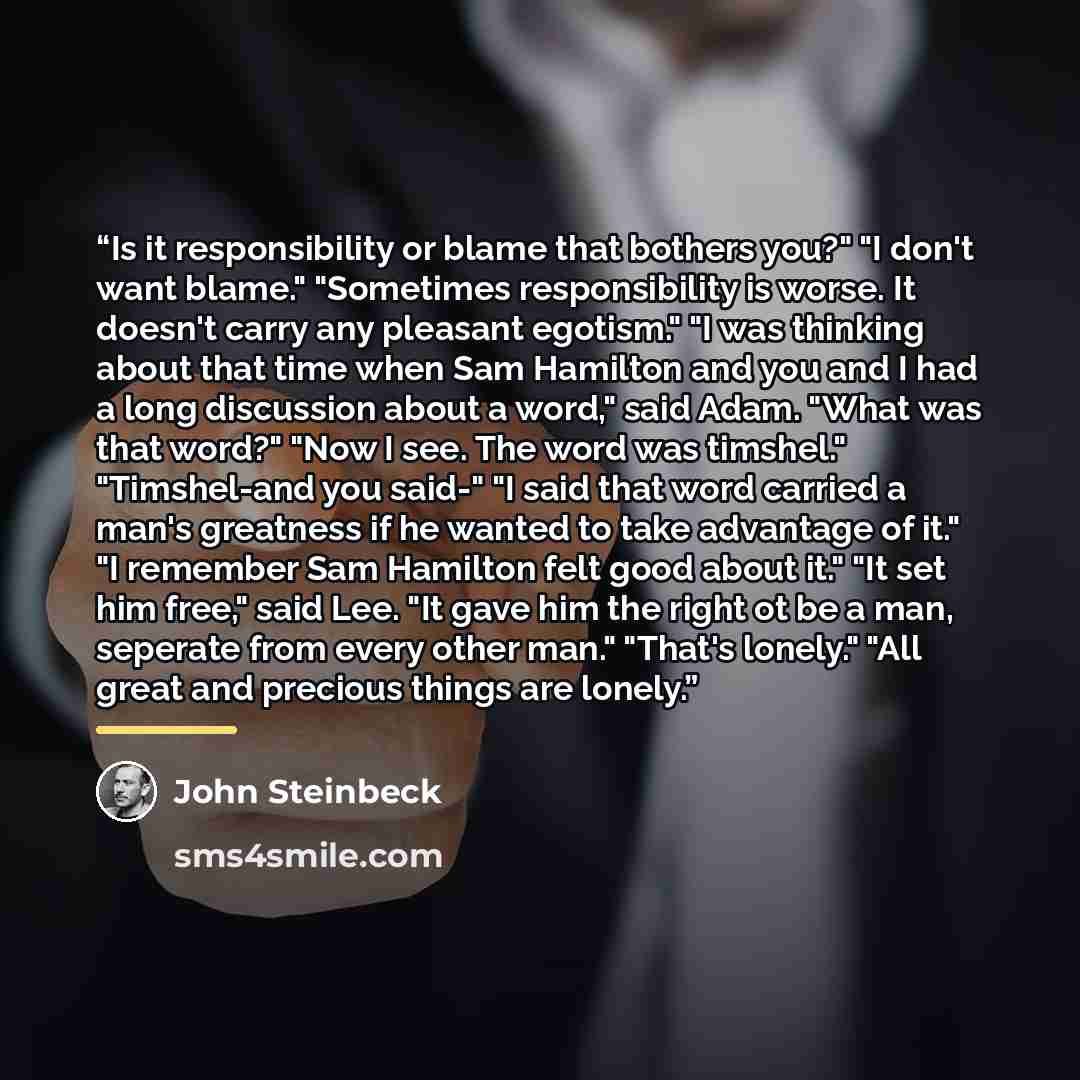
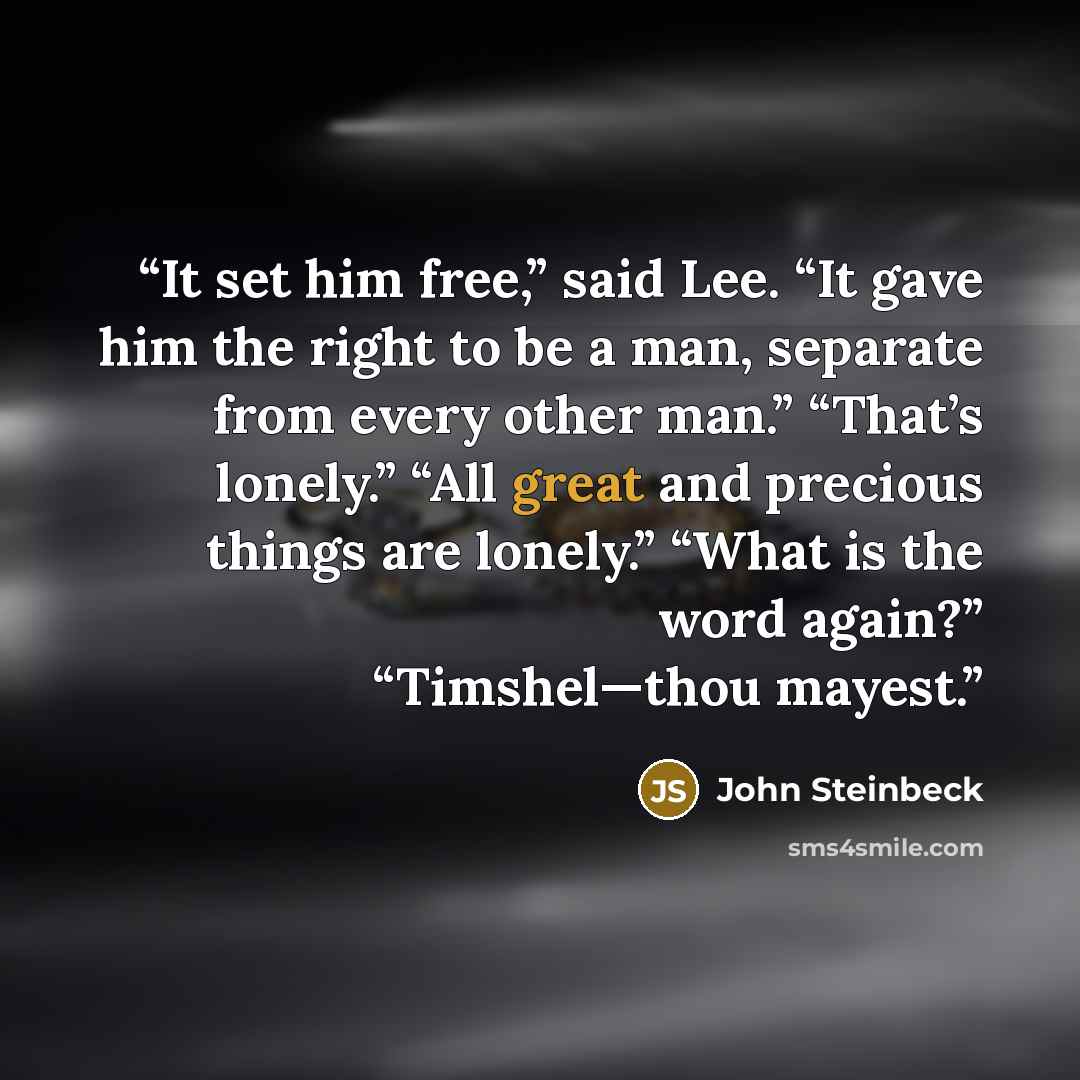
““Is it responsibility or blame that bothers you?" "I don't want blame." "Sometimes responsibility is worse. It doesn't carry any pleasant egotism." "I was thinking about that time when Sam Hamilton and you and I had a long discussion about a word," said Adam. "What was that word?" "Now I see. The word was timshel." "Timshel-and you said-" "I said that word carried a man's greatness if he wanted to take advantage of it." "I remember Sam Hamilton felt good about it." "It set him free," said Lee. "It gave him the right ot be a man, seperate from every other man." "That's lonely." "All great and precious things are lonely.””
About This Quote
Source Novel: East of Eden, 1952
The concept of “timshel” signifies human choice between good and evil, emphasizing personal responsibility over blame.
In simple terms: Timshel means we choose our path, not destiny.
Key Takeaway
Embrace responsibility as a path to freedom.
Themes
choice
responsibility
freedom
loneliness
Mood
thoughtful
philosophical
Type
literary
reflective
When to use this quote
- personal growth
- ethical decision making
- literary analysis
Key Concepts
existentialism
free will
moral agency
Questions to Reflect On
- What choices define your identity?
- How does responsibility shape your relationships?
A Different Perspective
Responsibility can be burdensome and isolating.


![“Teaching might even be the greatest of the arts since the medium is the human mind and spirit. My three [great teachers] did not tell - they catalyzed a burning desire to know. Under their influence, the horizons sprung wide and fear went away and the unknown became knowable. But most important of…” quote by John Steinbeck](https://sms4smile.com/quotes/img-quotes/84c/john-steinbeck-71_art_teaching-might-even-be-the-greatest-of-t_1738.jpg)