Children Quote by Janet Fitch
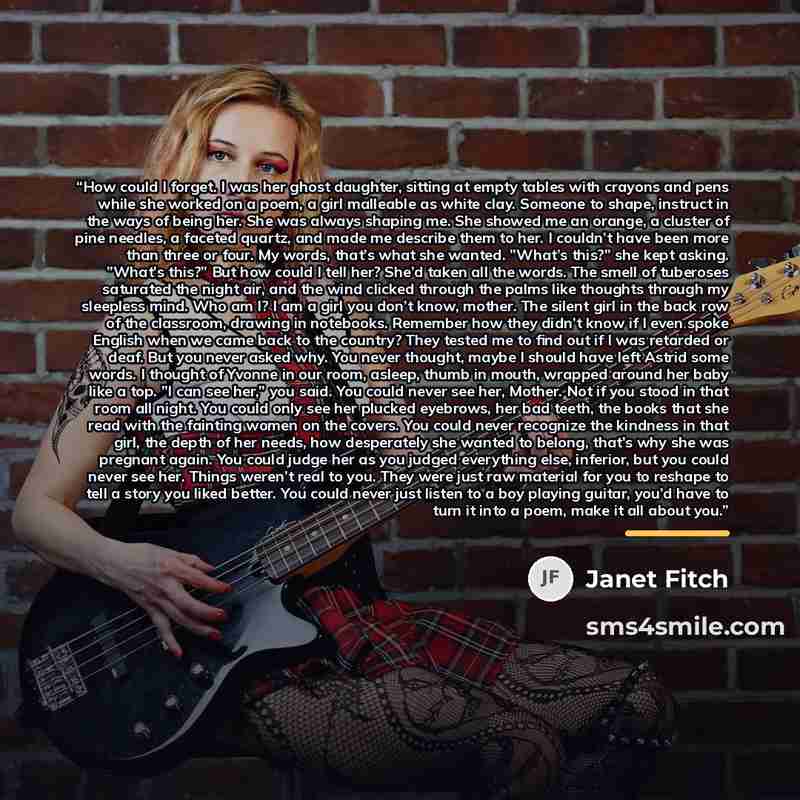
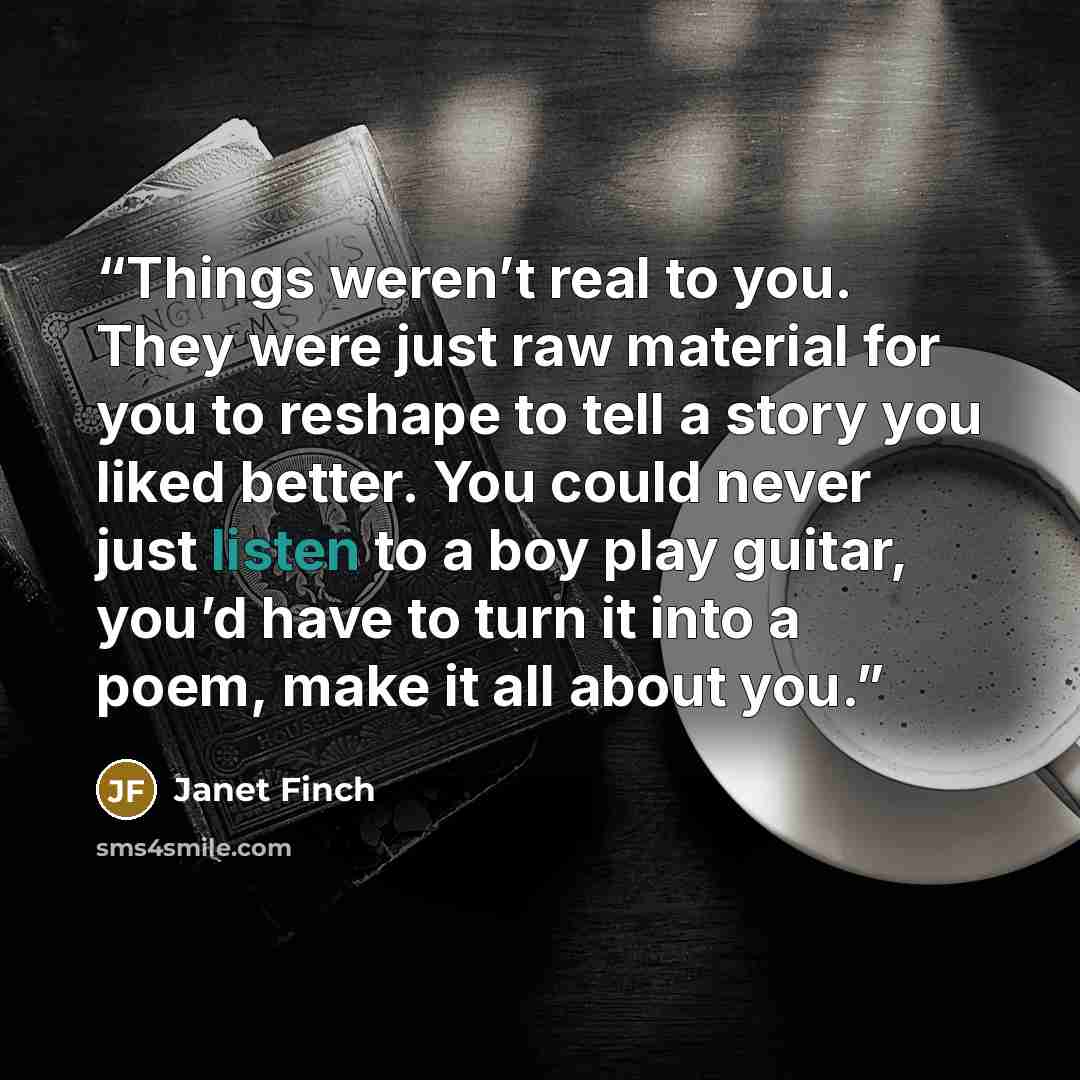
““How could I forget. I was her ghost daughter, sitting at empty tables with crayons and pens while she worked on a poem, a girl malleable as white clay. Someone to shape, instruct in the ways of being her. She was always shaping me. She showed me an orange, a cluster of pine needles, a faceted quartz, and made me describe them to her. I couldn’t have been more than three or four. My words, that’s what she wanted. ”What’s this?” she kept asking. ”What’s this?” But how could I tell her? She’d taken all the words. The smell of tuberoses saturated the night air, and the wind clicked through the palms like thoughts through my sleepless mind. Who am I? I am a girl you don’t know, mother. The silent girl in the back row of the classroom, drawing in notebooks. Remember how they didn’t know if I even spoke English when we came back to the country? They tested me to find out if I was retarded or deaf. But you never asked why. You never thought, maybe I should have left Astrid some words. I thought of Yvonne in our room, asleep, thumb in mouth, wrapped around her baby like a top. ”I can see her,” you said. You could never see her, Mother. Not if you stood in that room all night. You could only see her plucked eyebrows, her bad teeth, the books that she read with the fainting women on the covers. You could never recognize the kindness in that girl, the depth of her needs, how desperately she wanted to belong, that’s why she was pregnant again. You could judge her as you judged everything else, inferior, but you could never see her. Things weren’t real to you. They were just raw material for you to reshape to tell a story you liked better. You could never just listen to a boy playing guitar, you’d have to turn it into a poem, make it all about you.””
About This Quote
Source Novel: White Oleander by Janet Fitch, 1999
A child feels invisible and shaped by a mother who only sees her as material for her own stories, highlighting loss of identity and yearning for recognition.
In simple terms: A girl feels unseen and used by her mother.
Key Takeaway
Seek authentic self‑expression beyond others' narratives.
Themes
identity
parental influence
voice
belonging
Mood
lonely
reflective
Type
literary
emotional
When to use this quote
- classroom
- family gatherings
- creative writing
- therapy sessions
Key Concepts
psychology
power dynamics
trauma
Questions to Reflect On
- How can one reclaim a lost voice?
- What does it mean to be truly seen?
A Different Perspective
The mother’s perspective is absent, limiting empathy.