Poem Quote by Jane Hirshfield
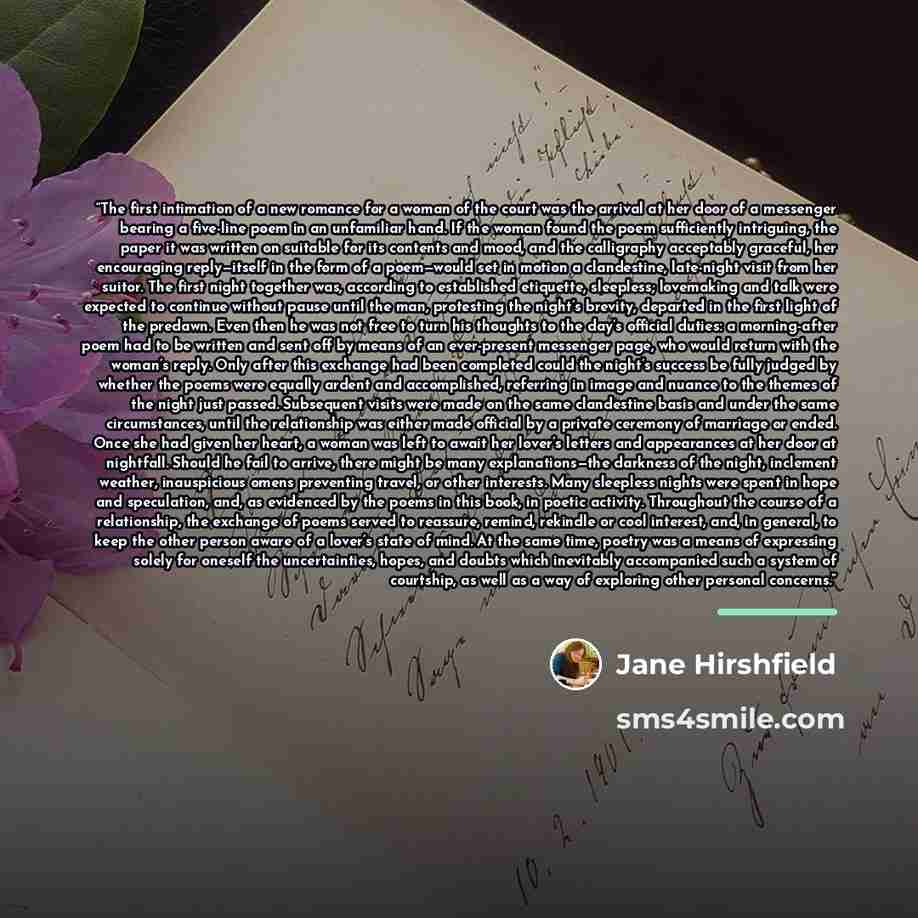
““The first intimation of a new romance for a woman of the court was the arrival at her door of a messenger bearing a five-line poem in an unfamiliar hand. If the woman found the poem sufficiently intriguing, the paper it was written on suitable for its contents and mood, and the calligraphy acceptably graceful, her encouraging reply—itself in the form of a poem—would set in motion a clandestine, late-night visit from her suitor. The first night together was, according to established etiquette, sleepless; lovemaking and talk were expected to continue without pause until the man, protesting the night’s brevity, departed in the first light of the predawn. Even then he was not free to turn his thoughts to the day’s official duties: a morning-after poem had to be written and sent off by means of an ever-present messenger page, who would return with the woman’s reply. Only after this exchange had been completed could the night’s success be fully judged by whether the poems were equally ardent and accomplished, referring in image and nuance to the themes of the night just passed. Subsequent visits were made on the same clandestine basis and under the same circumstances, until the relationship was either made official by a private ceremony of marriage or ended. Once she had given her heart, a woman was left to await her lover’s letters and appearances at her door at nightfall. Should he fail to arrive, there might be many explanations—the darkness of the night, inclement weather, inauspicious omens preventing travel, or other interests. Many sleepless nights were spent in hope and speculation, and, as evidenced by the poems in this book, in poetic activity. Throughout the course of a relationship, the exchange of poems served to reassure, remind, rekindle or cool interest, and, in general, to keep the other person aware of a lover’s state of mind. At the same time, poetry was a means of expressing solely for oneself the uncertainties, hopes, and doubts which inevitably accompanied such a system of courtship, as well as a way of exploring other personal concerns.””
About This Quote
Source Book: The Poetry of Love in the Courtly Tradition, unknown author, 2020
Poetry acted as a secret communication system governing courtly romance, where verses replaced direct speech to convey desire, status, and emotional state.
In simple terms: Poems were used to negotiate love and intimacy in a highly ritualized way.
Key Takeaway
Recognize the power of artistic expression in relationships.
Themes
courtly love
communication
ritual
poetry
gender roles
Mood
romantic
reflective
Type
historical
cultural
romantic.
When to use this quote
- courtship
- secret meetings
- nighttime visits
- poetic correspondence
- marriage negotiations
Key Concepts
symbolic exchange
social hierarchy
emotional intelligence
Questions to Reflect On
- How does artistic expression shape intimacy?
- What risks arise when emotions are conveyed indirectly?
A Different Perspective
Poetic exchange could be misinterpreted, leading to false expectations or emotional hurt.