Change Quote by James Fenimore Cooper
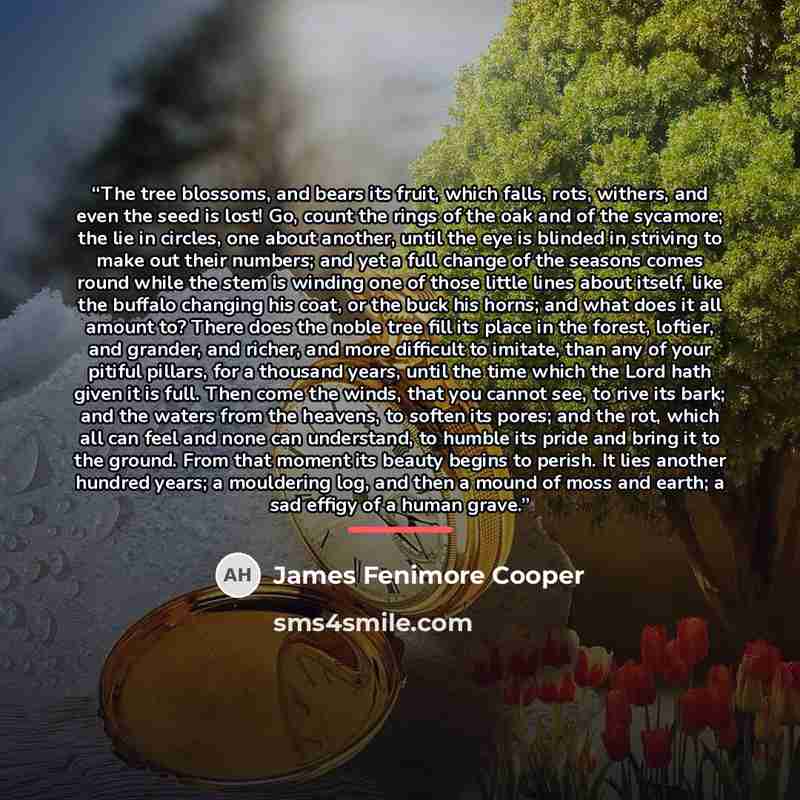
““The tree blossoms, and bears its fruit, which falls, rots, withers, and even the seed is lost! Go, count the rings of the oak and of the sycamore; the lie in circles, one about another, until the eye is blinded in striving to make out their numbers; and yet a full change of the seasons comes round while the stem is winding one of those little lines about itself, like the buffalo changing his coat, or the buck his horns; and what does it all amount to? There does the noble tree fill its place in the forest, loftier, and grander, and richer, and more difficult to imitate, than any of your pitiful pillars, for a thousand years, until the time which the Lord hath given it is full. Then come the winds, that you cannot see, to rive its bark; and the waters from the heavens, to soften its pores; and the rot, which all can feel and none can understand, to humble its pride and bring it to the ground. From that moment its beauty begins to perish. It lies another hundred years; a mouldering log, and then a mound of moss and earth; a sad effigy of a human grave.””
About This Quote
Source Essay: Reflections on Nature, 1835
He uses the tree’s life cycle to illustrate the fleeting nature of existence and the inevitability of decay despite grandeur.
In simple terms: Life is temporary; even great things eventually decay.
Key Takeaway
Accept impermanence and find humility.
Themes
nature
impermanence
humility
transience
pride
Mood
contemplative
melancholic
Type
poetic
philosophical
When to use this quote
- forest observation
- personal reflection
- spiritual contemplation
Key Concepts
ecology
philosophy of life
mortality
Questions to Reflect On
- What can we learn from nature’s cycles?
- How does recognizing impermanence affect our ambitions?
A Different Perspective
Focusing solely on decay can lead to nihilism.