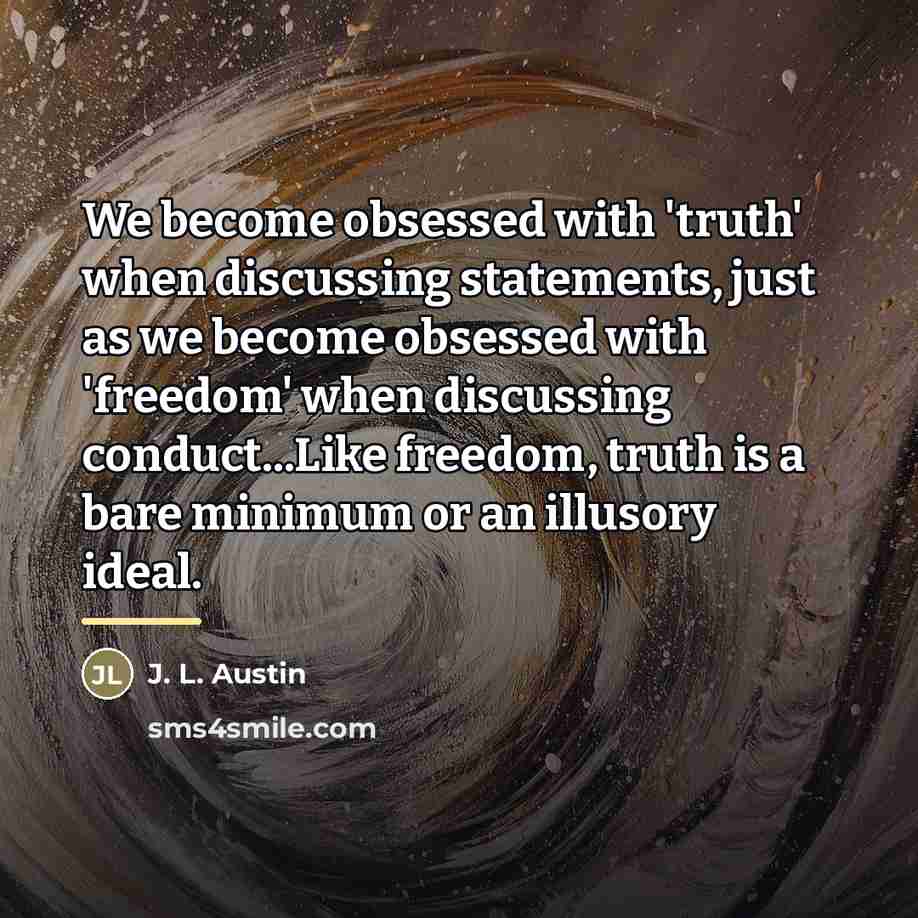
Abstract Quote by J. L. Austin
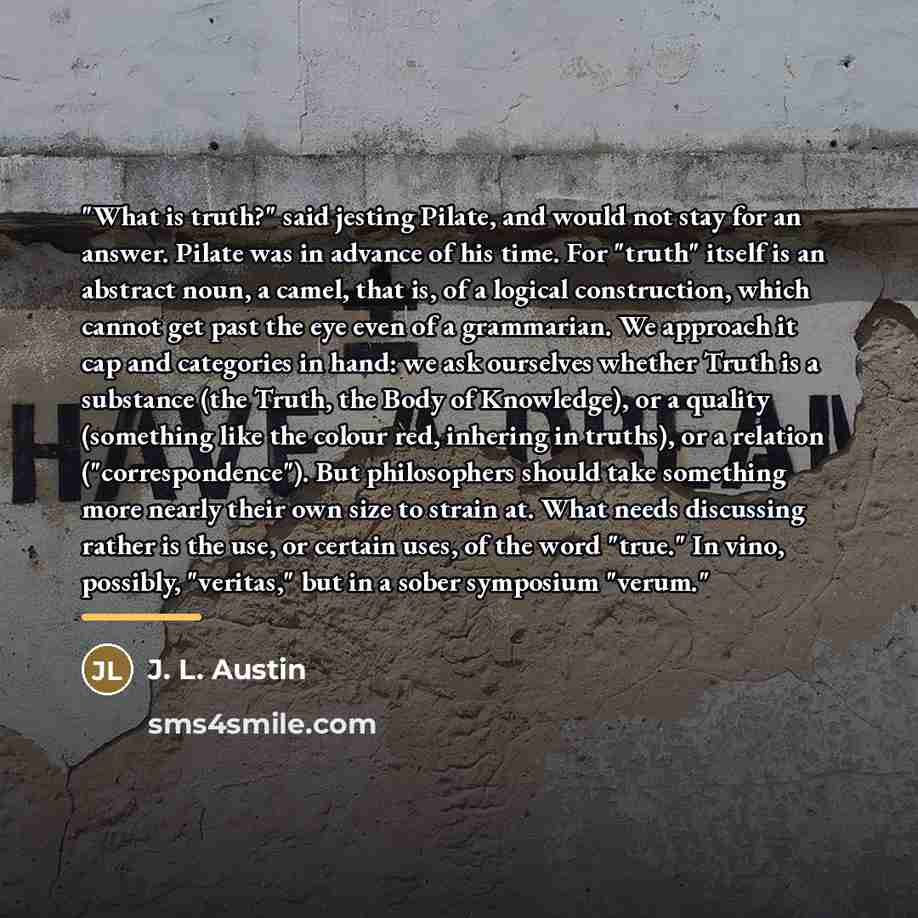
“What is truth?" said jesting Pilate, and would not stay for an answer. Pilate was in advance of his time. For "truth" itself is an abstract noun, a camel, that is, of a logical construction, which cannot get past the eye even of a grammarian. We approach it cap and categories in hand: we ask ourselves whether Truth is a substance (the Truth, the Body of Knowledge), or a quality (something like the colour red, inhering in truths), or a relation ("correspondence"). But philosophers should take something more nearly their own size to strain at. What needs discussing rather is the use, or certain uses, of the word "true." In vino, possibly, "veritas," but in a sober symposium "verum.”
About This Quote
An exploration of how the concept of truth is abstract and context‑dependent, urging focus on its practical uses rather than metaphysical definitions.
In simple terms: Truth is abstract; focus on how we use it.
Key Takeaway
Consider truth’s practical applications.
Themes
philosophy
language
semantics
Mood
analytical
thought‑provoking
Type
philosophical
educational
When to use this quote
- academic debate
- legal reasoning
- media analysis
- everyday communication
- ethical discussions
Key Concepts
abstract nouns
truth concepts
pragmatic analysis
Questions to Reflect On
- How do you apply truth in daily decisions?
- When does defining truth hinder progress?
A Different Perspective
Overemphasis on definition can stall action.