Black and white Quote by Howard Zinn
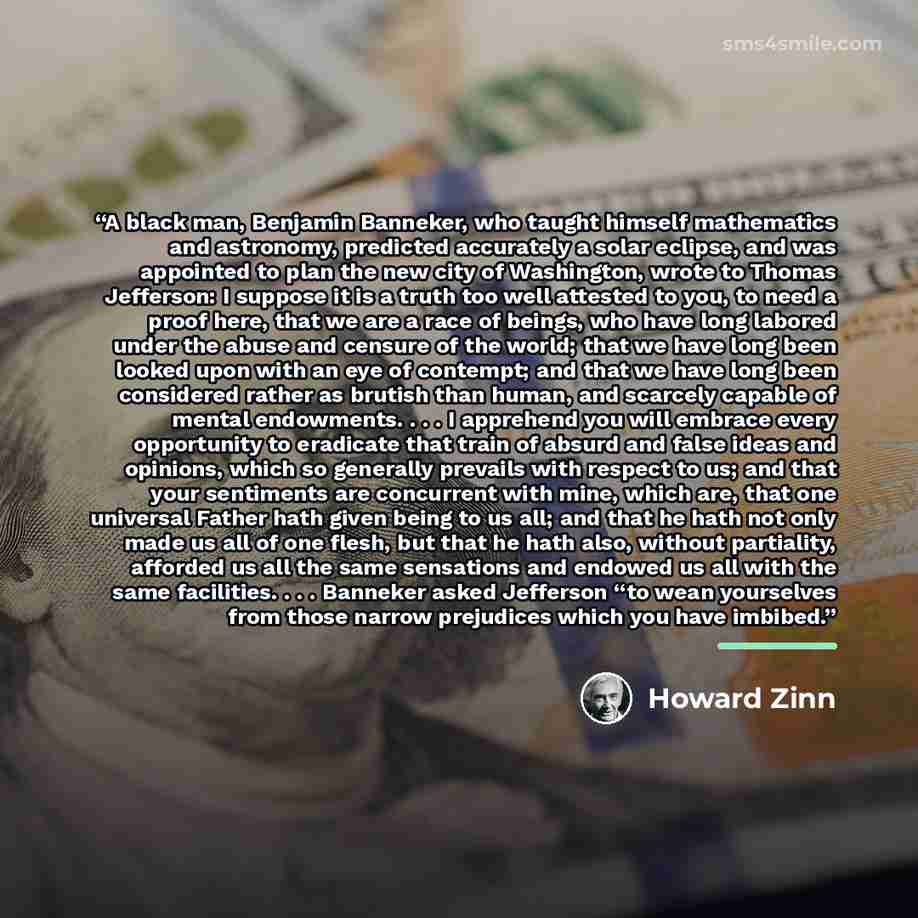
““What made Bacon’s Rebellion especially fearsome for the rulers of Virginia was that black slaves and white servants joined forces. The final surrender was by “four hundred English and Negroes in Armes” at one garrison, and three hundred “freemen and African and English bondservants” in another garrison. The naval commander who subdued the four hundred wrote: “Most of them I persuaded to go to their Homes, which accordingly they did, except about eighty Negroes and twenty English which would not deliver their Armes.” All through those early years, black and white slaves and servants ran away together, as shown both by the laws passed to stop this and the records of the courts. In 1698, South Carolina passed a “deficiency law” requiring plantation owners to have at least one white servant for every six male adult Negroes. A letter from the southern colonies in 1682 complained of “no white men to superintend our negroes, or repress an insurrection of negroes. . . .” In 1691, the House of Commons received “a petition of divers merchants, masters of ships, planters and others, trading to foreign plantations . . . setting forth, that the plantations cannot be maintained without a considerable number of white servants, as well to keep the blacks in subjection, as to bear arms in case of invasion.””
About This Quote
Source Book: A People’s History of the United States, 1980
Early American rebellions showed black and white laborers uniting against oppression, challenging racial divisions.
In simple terms: Black and white workers sometimes fought together against authority.
Key Takeaway
Recognize solidarity across racial lines in resistance.
Themes
solidarity
race
rebellion
colonialism
Mood
analytical
critical
Type
historical
political
When to use this quote
- labor movements
- civil rights activism
- historical analysis
- policy making
Key Concepts
intersectionality
class struggle
racial unity
Questions to Reflect On
- What factors enable cross‑racial alliances?
- Can modern movements learn from these examples?
A Different Perspective
Historical accounts may oversimplify complex motivations.