Black Quote by Hiroshi Fujiwara
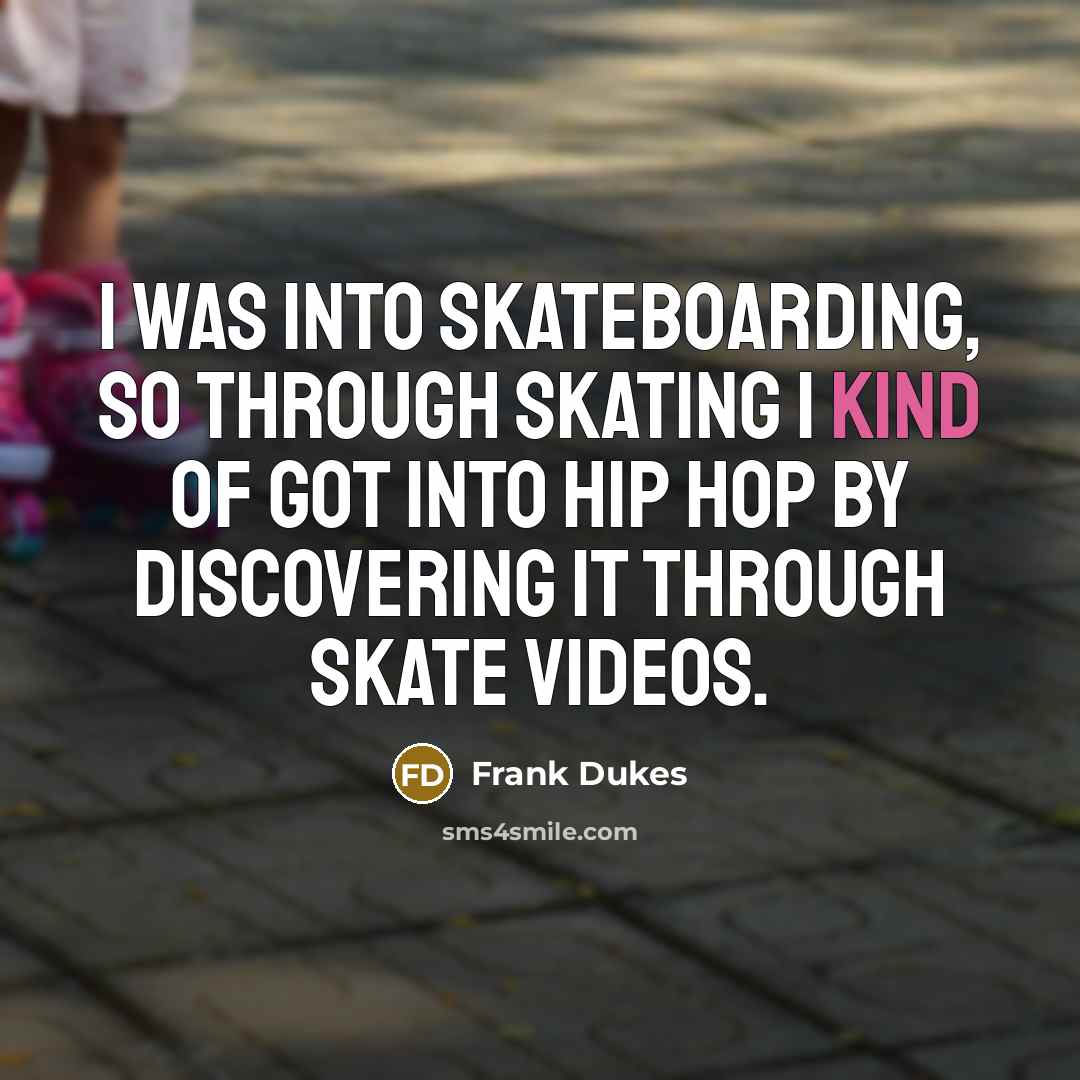
“I used to skate a lot when I was a kid. I loved it and was quite good. When I came back to London in around '85, I got really into skating again. But at the time, it had no influence from hip-hop. It was just thrash rock, hardcore rock, and skulls and all black - that kind of style. In Japan, the skaters were also strictly into rock culture, too, but I was coming from the hip-hop side, so for a while it was difficult to mix both interests.”
About This Quote
Source Interview: Skateboarding culture discussion, 2020
The speaker reflects on early skate experiences, noting a clash between rock‑centric skate style and emerging hip‑hop influences, highlighting cultural tension in skateboarding scenes.
In simple terms: Early skate life was rock‑focused; hip‑hop later conflicted.
Key Takeaway
Recognize and bridge cultural differences.
Themes
culture
identity
music
subculture
conflict
Mood
nostalgic
reflective
curious
Type
personal anecdote
cultural observation
When to use this quote
- Skateboarding events
- music festivals
- community workshops
- cross‑genre collaborations
Key Concepts
subcultural identity
genre fusion
social dynamics
Questions to Reflect On
- How can subcultures evolve without losing roots?
- What benefits arise from blending distinct music styles?
A Different Perspective
Balancing authenticity with new influences can be challenging.