Family Quote by Guy Standing
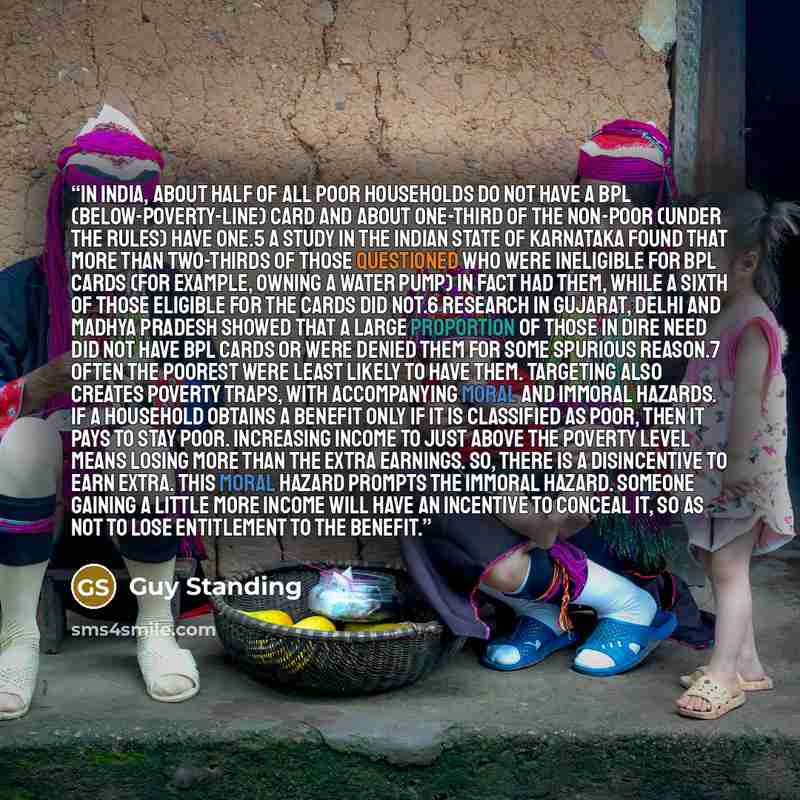
““In India, about half of all poor households do not have a BPL (below-poverty-line) card and about one-third of the non-poor (under the rules) have one.5 A study in the Indian state of Karnataka found that more than two-thirds of those questioned who were ineligible for BPL cards (for example, owning a water pump) in fact had them, while a sixth of those eligible for the cards did not.6 Research in Gujarat, Delhi and Madhya Pradesh showed that a large proportion of those in dire need did not have BPL cards or were denied them for some spurious reason.7 Often the poorest were least likely to have them. Targeting also creates poverty traps, with accompanying moral and immoral hazards. If a household obtains a benefit only if it is classified as poor, then it pays to stay poor. Increasing income to just above the poverty level means losing more than the extra earnings. So, there is a disincentive to earn extra. This moral hazard prompts the immoral hazard. Someone gaining a little more income will have an incentive to conceal it, so as not to lose entitlement to the benefit.””
About This Quote
Source Report: Poverty and Social Protection Studies, India, various years
The quote highlights how means‑tested welfare creates perverse incentives, causing eligible poor to lack benefits while ineligible non‑poor obtain them, and discourages income growth due to fear of losing aid.
In simple terms: Means‑tested aid can trap people in poverty and encourage concealment of income.
Key Takeaway
Design welfare that avoids disincentives and ensures fair access.
Themes
poverty traps
policy design
social welfare
incentives
inequality
Mood
concerned
analytical
critical
Type
policy
analytical
critical
When to use this quote
- government aid programs
- NGO outreach
- community surveys
- policy reform
- income reporting
Key Concepts
targeting
moral hazard
immoral hazard
benefit cliff
Questions to Reflect On
- How can welfare be structured to encourage upward mobility?
- What safeguards prevent abuse while protecting the needy?
A Different Perspective
If benefits are too tightly linked to poverty status, people may hide earnings, reducing program effectiveness.