Dreams Quote by Glen Duncan
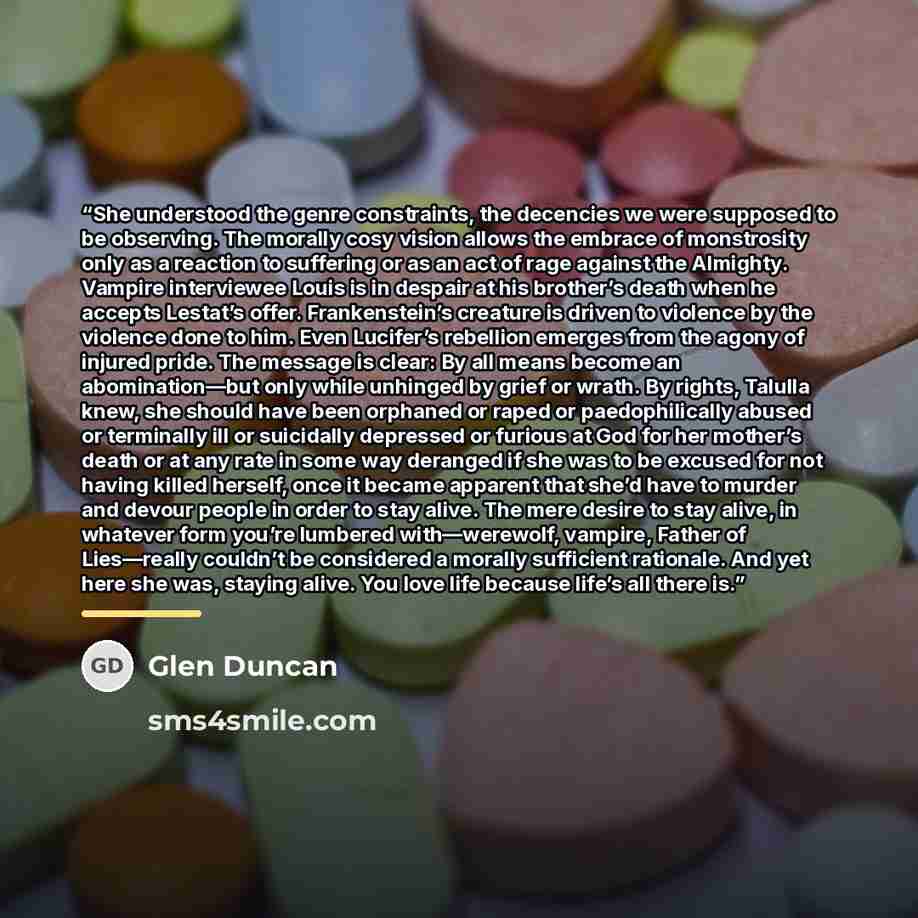
““She understood the genre constraints, the decencies we were supposed to be observing. The morally cosy vision allows the embrace of monstrosity only as a reaction to suffering or as an act of rage against the Almighty. Vampire interviewee Louis is in despair at his brother’s death when he accepts Lestat’s offer. Frankenstein’s creature is driven to violence by the violence done to him. Even Lucifer’s rebellion emerges from the agony of injured pride. The message is clear: By all means become an abomination—but only while unhinged by grief or wrath. By rights, Talulla knew, she should have been orphaned or raped or paedophilically abused or terminally ill or suicidally depressed or furious at God for her mother’s death or at any rate in some way deranged if she was to be excused for not having killed herself, once it became apparent that she’d have to murder and devour people in order to stay alive. The mere desire to stay alive, in whatever form you’re lumbered with—werewolf, vampire, Father of Lies—really couldn’t be considered a morally sufficient rationale. And yet here she was, staying alive. You love life because life’s all there is.””
About This Quote
Monstrous beings are justified only when their existence is driven by profound suffering or rage; survival alone is insufficient moral excuse for becoming a monster.
In simple terms: Only extreme grief can excuse monstrous actions.
Key Takeaway
Suffering can rationalize, but not excuse, moral transgression.
Themes
moral ambiguity
monster archetype
grief as motive
ethical justification
Mood
somber
reflective
tense
Type
philosophical essay
fictional world‑building
ethical critique
When to use this quote
- a soldier committing war crimes after losing family
- a survivor turning to crime to protect loved ones
- a scientist crossing ethical lines after personal tragedy
Key Concepts
existential despair
moral relativism
Practical Applications
- examine personal motives before drastic actions
- seek compassionate alternatives to violent retaliation
Questions to Reflect On
- When does grief stop being a valid excuse for harming others?
- Can one find redemption after acting monstrously under duress?
A Different Perspective
It risks normalizing harmful behavior by attributing it to trauma, potentially excusing accountability.