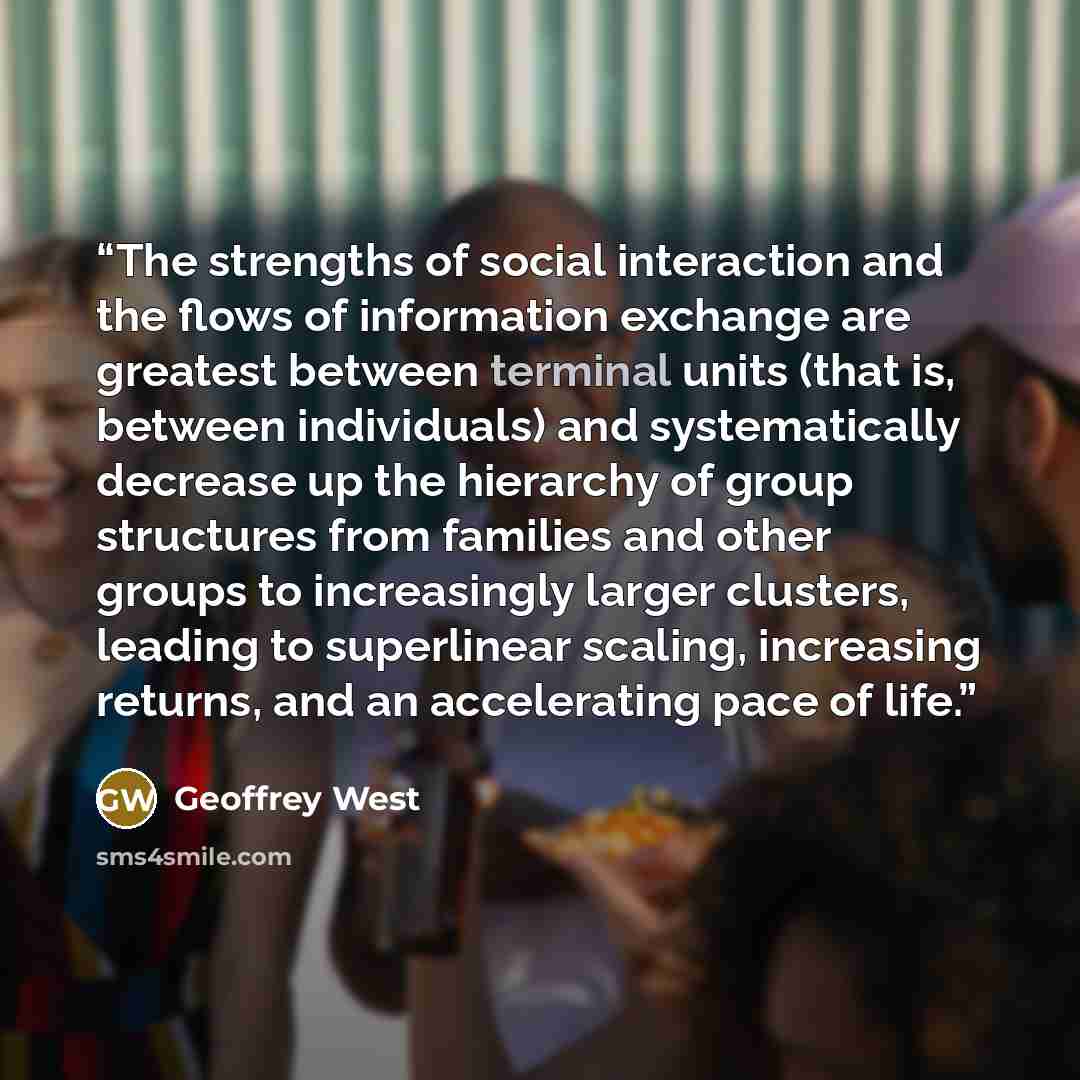
Change Quote by Geoffrey West
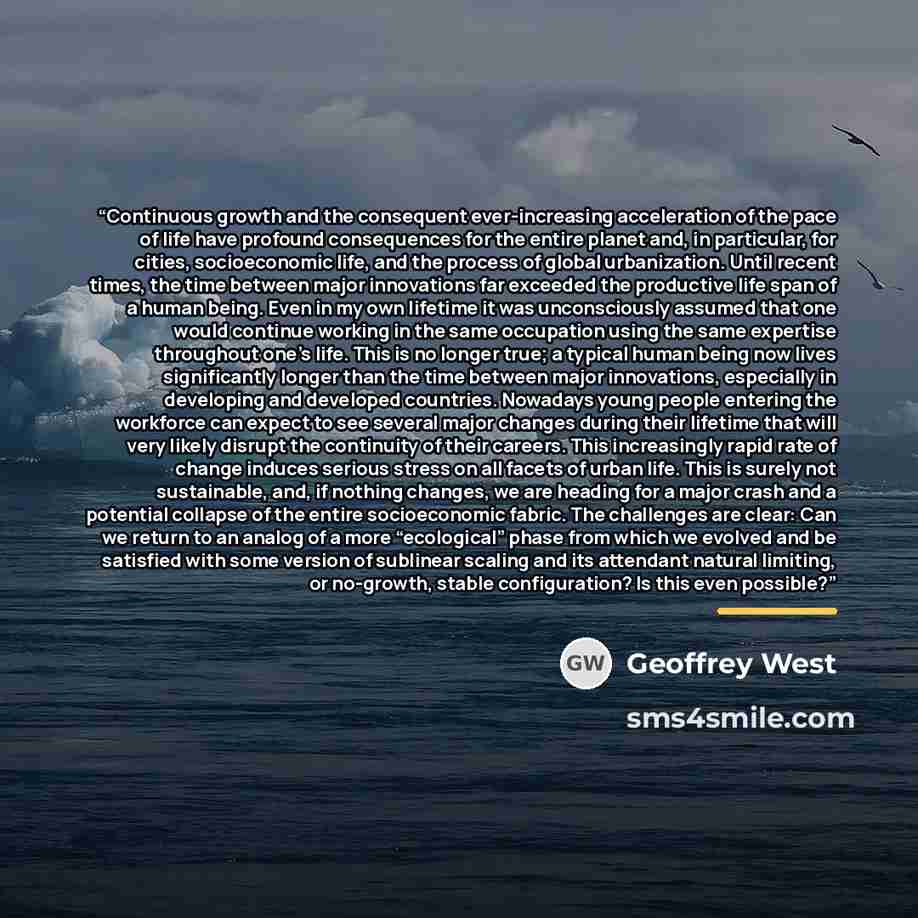
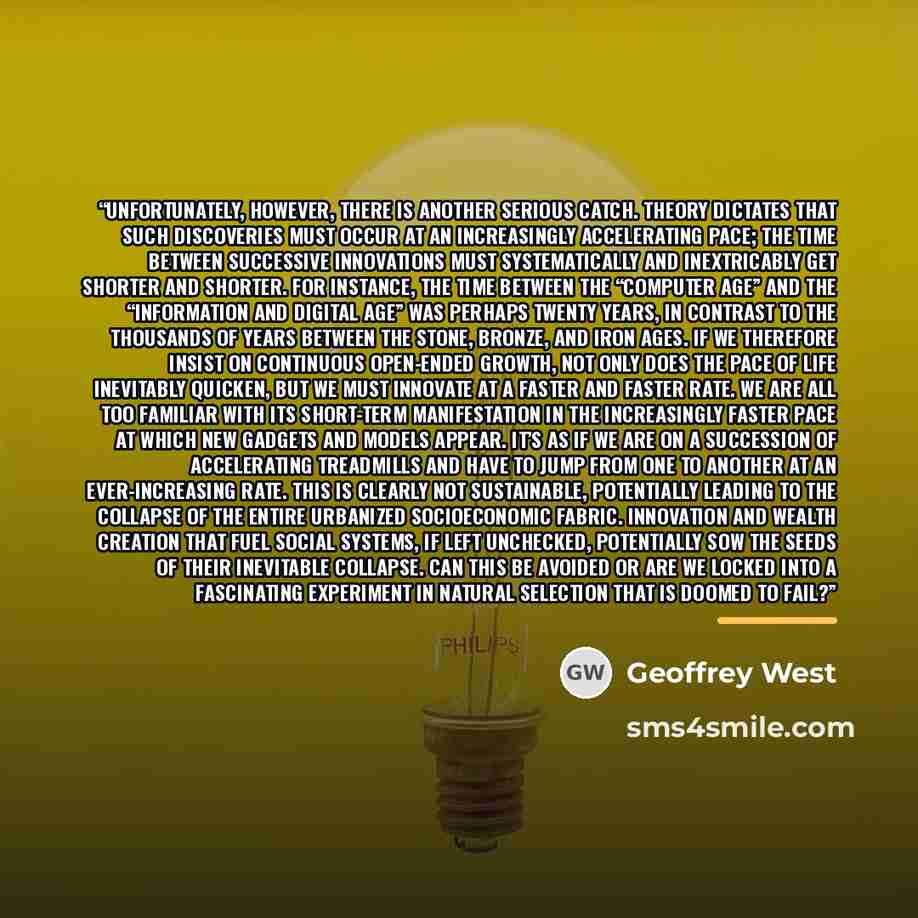
““Continuous growth and the consequent ever-increasing acceleration of the pace of life have profound consequences for the entire planet and, in particular, for cities, socioeconomic life, and the process of global urbanization. Until recent times, the time between major innovations far exceeded the productive life span of a human being. Even in my own lifetime it was unconsciously assumed that one would continue working in the same occupation using the same expertise throughout one’s life. This is no longer true; a typical human being now lives significantly longer than the time between major innovations, especially in developing and developed countries. Nowadays young people entering the workforce can expect to see several major changes during their lifetime that will very likely disrupt the continuity of their careers. This increasingly rapid rate of change induces serious stress on all facets of urban life. This is surely not sustainable, and, if nothing changes, we are heading for a major crash and a potential collapse of the entire socioeconomic fabric. The challenges are clear: Can we return to an analog of a more “ecological” phase from which we evolved and be satisfied with some version of sublinear scaling and its attendant natural limiting, or no-growth, stable configuration? Is this even possible?””
About This Quote
Source Speech: TED Talk on Urbanization and Innovation, 2015
Rapid innovation cycles outpace human lifespans, causing stress and unsustainable urban growth, urging a shift to slower, ecological development.
In simple terms: Fast change stresses societies; need slower growth.
Key Takeaway
Consider sustainable, slower-paced development models.
Themes
urbanization
innovation
sustainability
stress
economic stability
Mood
concerned
thoughtful
Type
analytical
persuasive
When to use this quote
- urban planning
- career counseling
- policy making
- education curricula
- corporate strategy
Key Concepts
systems theory
ecological economics
technological acceleration
career dynamics
Questions to Reflect On
- What policies could balance innovation speed with societal well‑being?
- Can individuals thrive amid rapid change?
A Different Perspective
May underestimate human adaptability and technological mitigation.