Immortality Quote by Fyodor Dostoyevsky
![“[The Devil] 'The question now,' my young thinker reflected, 'is whether or not it is possible for such a period ever to come. If it does come, then everything will be resolved and mankind will finally be settled. But since, in view of man's inveterate stupidity, it may not be settled for another…” quote by Fyodor Dostoyevsky](https://sms4smile.com/quotes/img-quotes/f58/fyodor-dostoyevsky-94_thousand-years_the-devil-the-question-now-my-young-thin_1928098.jpg)
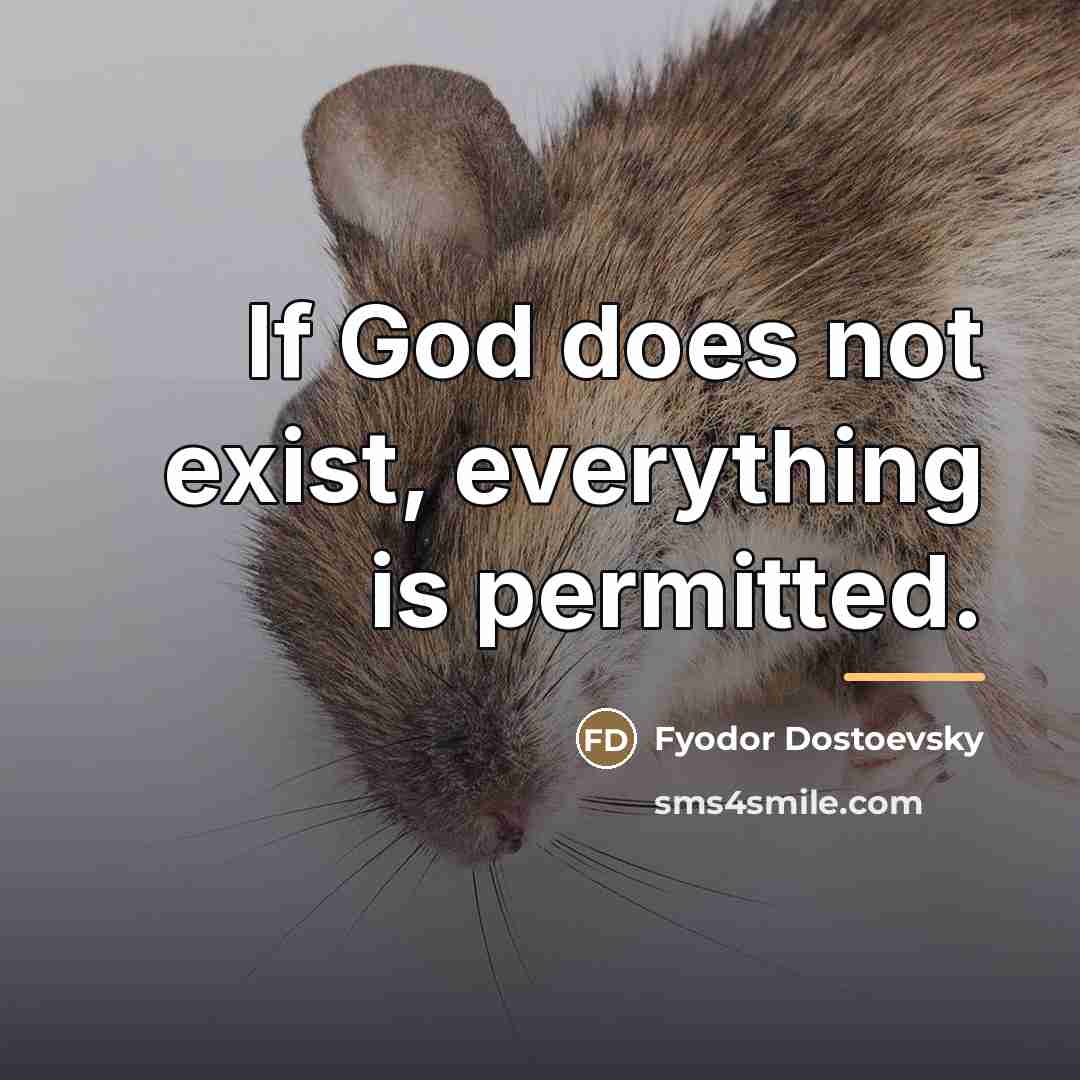
““[The Devil] 'The question now,' my young thinker reflected, 'is whether or not it is possible for such a period ever to come. If it does come, then everything will be resolved and mankind will finally be settled. But since, in view of man's inveterate stupidity, it may not be settled for another thousand years, anyone who already knows the truth is permitted to settle things for himself, absolutely as he wishes, on the new principles. In this sense, "everything is permitted" to him. Moreover, since God and immortality do not exist in any case, even if this period should never come, the new man is allowed to become a man-god, though it be he alone in the whole world, and of course, in this new rank, to jump lightheartedly over any former moral obstacle of the former slave-man, if need be. There is no law for God! Where God stand--there is the place of God! Where I stand, there at once will be the foremost place..."everything is permitted," and that's that!' It's all very nice; only if one wants to swindle, why, I wonder, should one also need the sanction of truth? But such is the modern little Russian man: without such a sanction, he doesn't even dare to swindle, so much does he love the truth...””
About This Quote
Source Novel: The Brothers Karamazov, 1880
The passage explores nihilism, the collapse of moral absolutes, and the freedom that arises when traditional authority and divine law are rejected.
In simple terms: When old rules disappear, individuals claim absolute freedom, even to become godlike.
Key Takeaway
Question moral foundations and consider personal responsibility.
Themes
nihilism
freedom
morality
existentialism
Mood
thoughtful
critical
philosophical
Type
literary
philosophical
When to use this quote
- philosophical debates
- personal ethics
- literary analysis
- psychological introspection
Key Concepts
existential freedom
moral relativism
human autonomy
Questions to Reflect On
- What moral compass guides you without external authority?
- Can absolute freedom exist without societal harm?
A Different Perspective
The claim that “everything is permitted” can lead to chaos and abuse of power.
![“[The Devil] In my opinion, there is no need to destroy anything, one needs only destroy the idea of God in mankind, that's where the business should start! One should begin with that, with that--oh, blind men, of no understanding! Once mankind has renounced God, one and all (and I believe that…” quote by Fyodor Dostoyevsky](https://sms4smile.com/quotes/img-quotes/8a0/fyodor-dostoyevsky-94_business_the-devil-in-my-opinion-there-is-no-need_986728.jpg)


![“if [God] doesn't exist, man is the chief of the earth, of the universe. Magnificent! Only how is he going to be good without God?” quote by Fyodor Dostoyevsky](https://sms4smile.com/quotes/img-quotes/09b/fyodor-dostoyevsky-94_ethics_if-god-doesn-t-exist-man-is-the-chief-of_16023.jpg)