Children Quote by Fyodor Dostoevsky
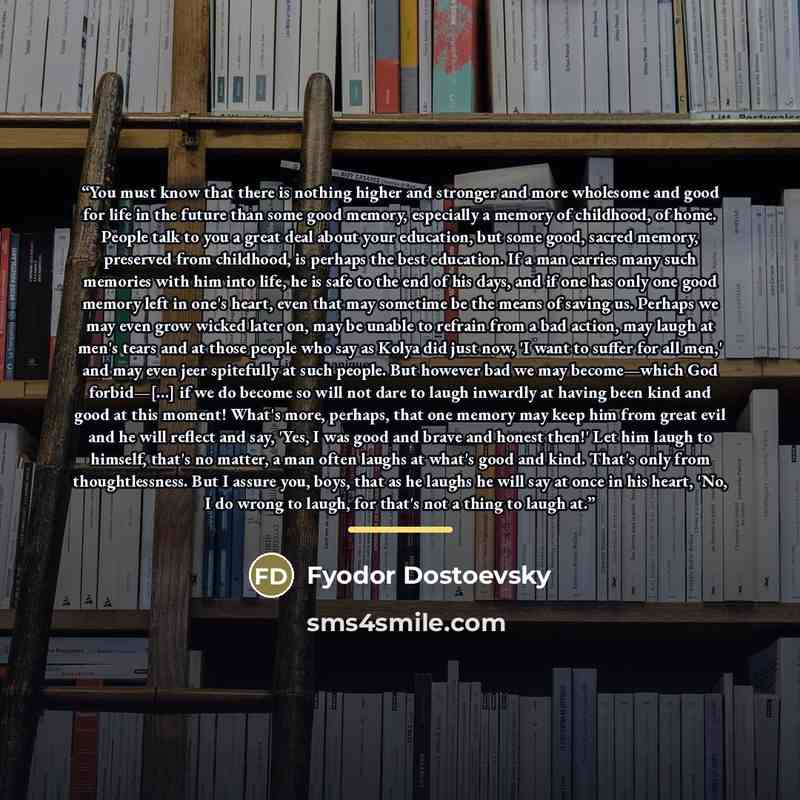
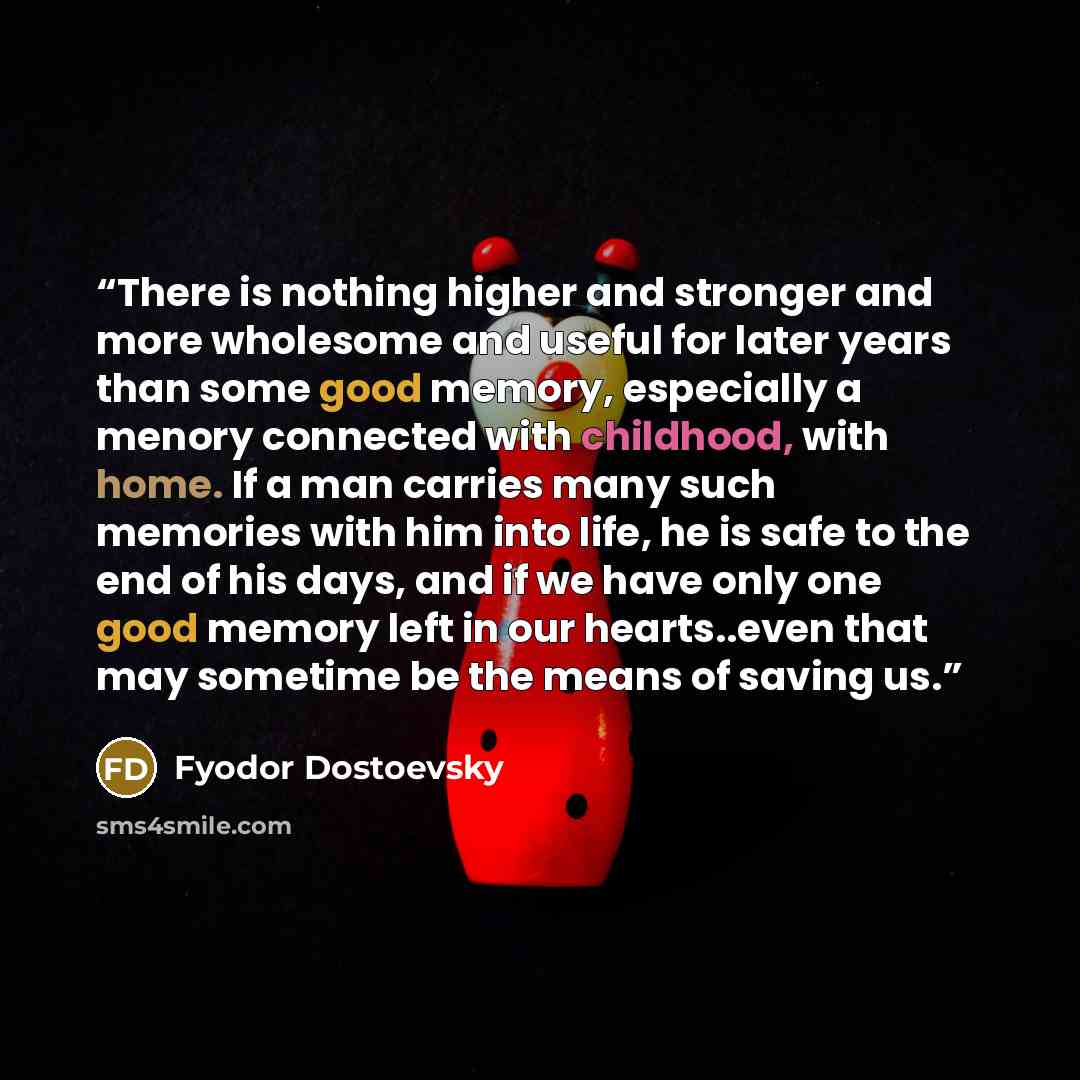
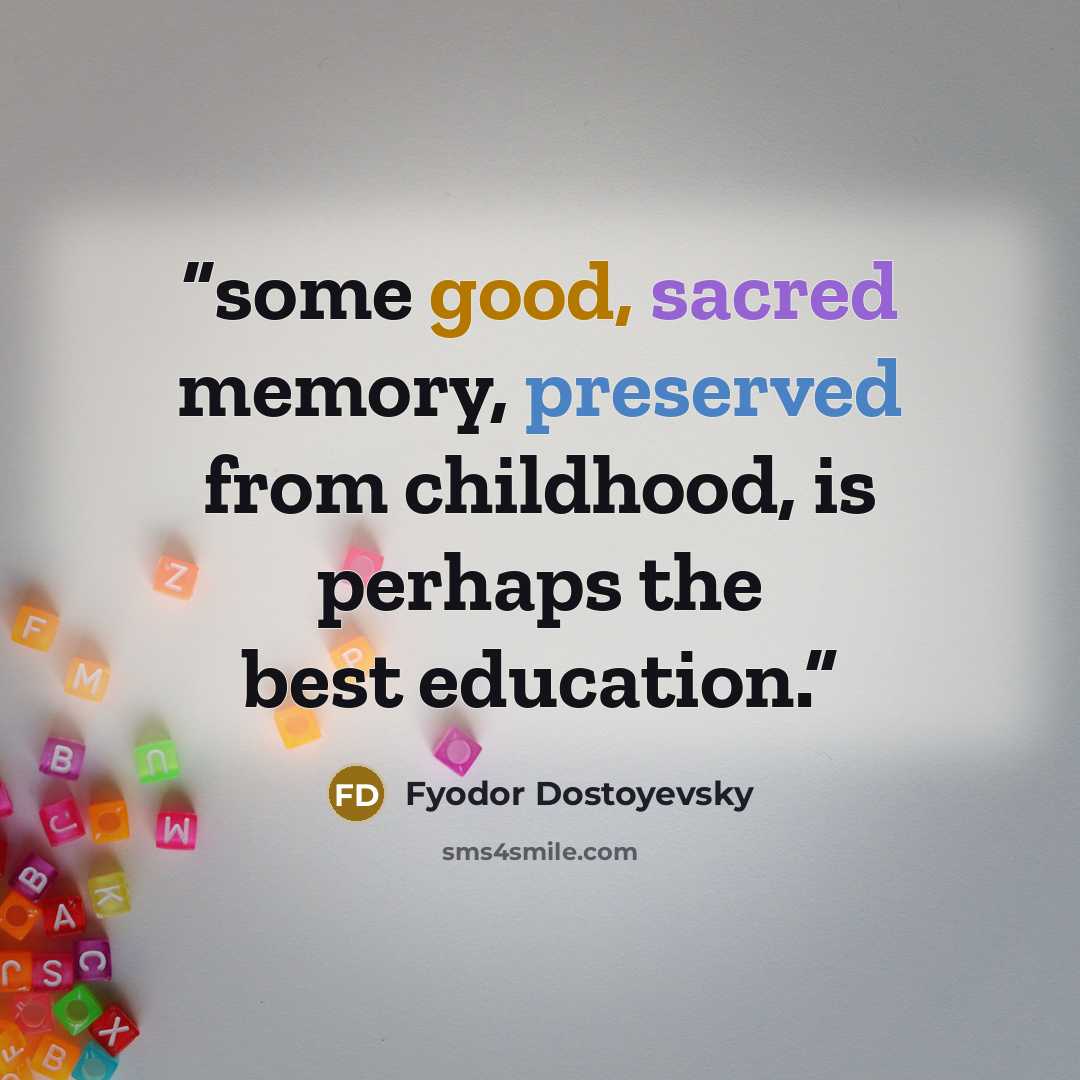
““You must know that there is nothing higher and stronger and more wholesome and good for life in the future than some good memory, especially a memory of childhood, of home. People talk to you a great deal about your education, but some good, sacred memory, preserved from childhood, is perhaps the best education. If a man carries many such memories with him into life, he is safe to the end of his days, and if one has only one good memory left in one's heart, even that may sometime be the means of saving us. Perhaps we may even grow wicked later on, may be unable to refrain from a bad action, may laugh at men's tears and at those people who say as Kolya did just now, 'I want to suffer for all men,' and may even jeer spitefully at such people. But however bad we may become—which God forbid—[…] if we do become so will not dare to laugh inwardly at having been kind and good at this moment! What's more, perhaps, that one memory may keep him from great evil and he will reflect and say, 'Yes, I was good and brave and honest then!' Let him laugh to himself, that's no matter, a man often laughs at what's good and kind. That's only from thoughtlessness. But I assure you, boys, that as he laughs he will say at once in his heart, 'No, I do wrong to laugh, for that's not a thing to laugh at.””
About This Quote
Source Novel: Crime and Punishment, 1866
Cherished childhood memories serve as a moral compass, protecting against future wrongdoing.
In simple terms: Good memories guide us away from evil.
Key Takeaway
Hold onto positive memories for moral strength.
Themes
memory
morality
redemption
Mood
reflective
serious
Type
philosophical
inspirational
When to use this quote
- personal reflection
- ethical decision making
- overcoming temptation
Key Concepts
nostalgia
ethical guidance
Questions to Reflect On
- What memory anchors your values?
- Can nostalgia hinder growth?
A Different Perspective
Memory alone cannot prevent all misdeeds.