Attributes Quote by Epictetus
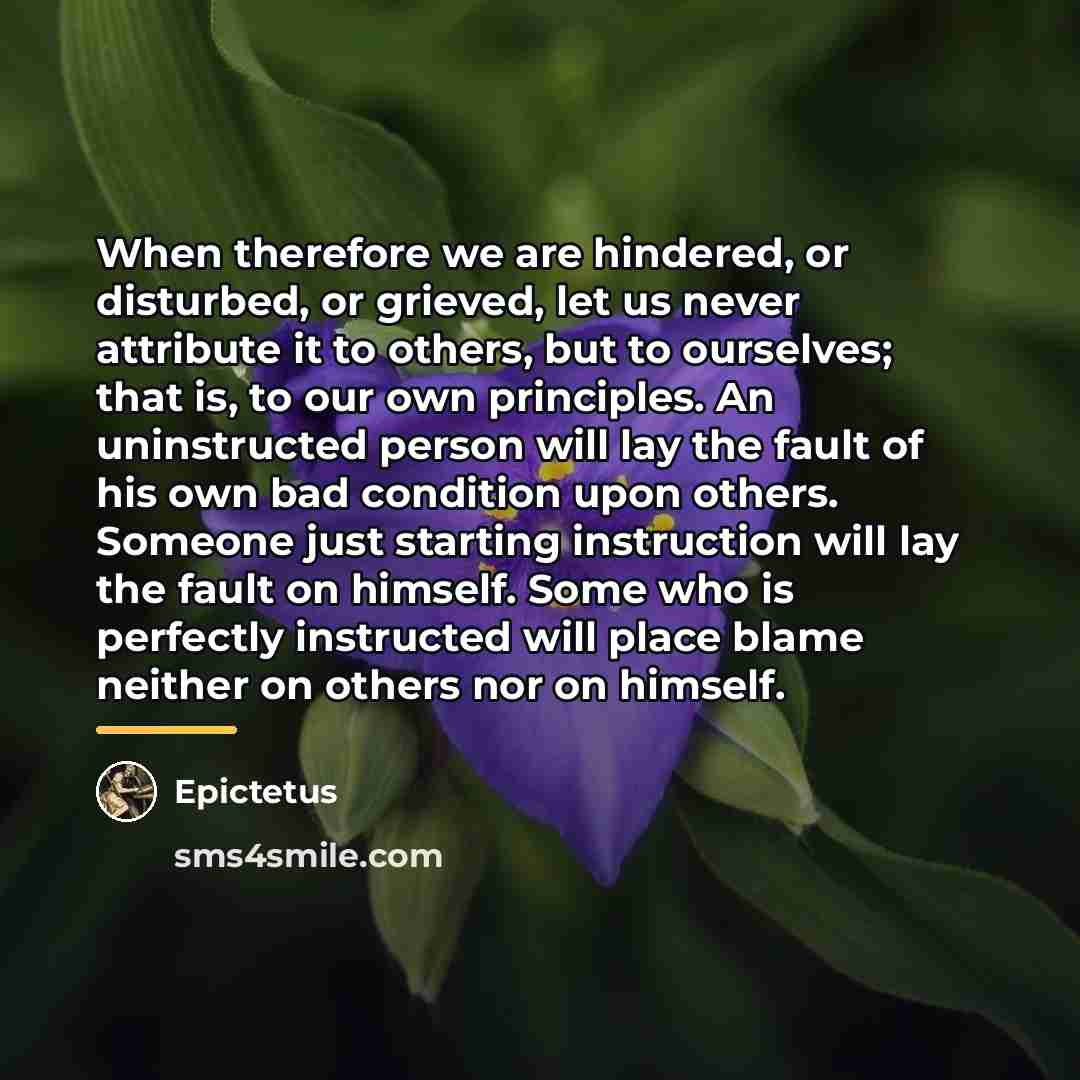
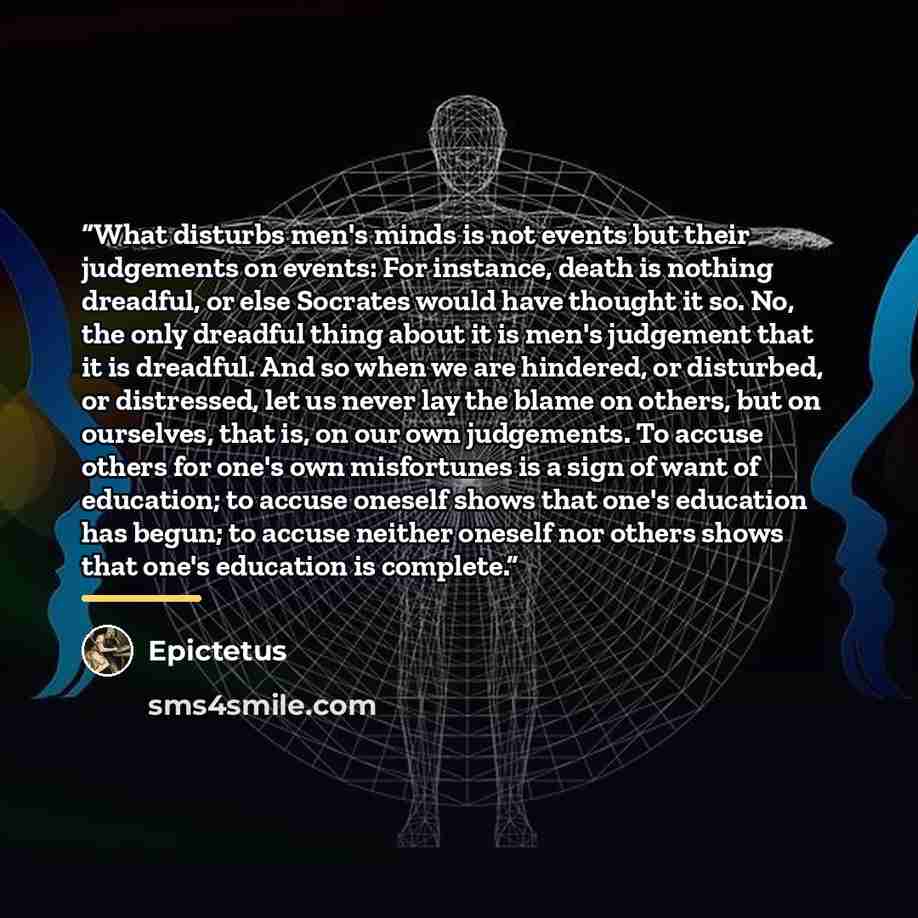
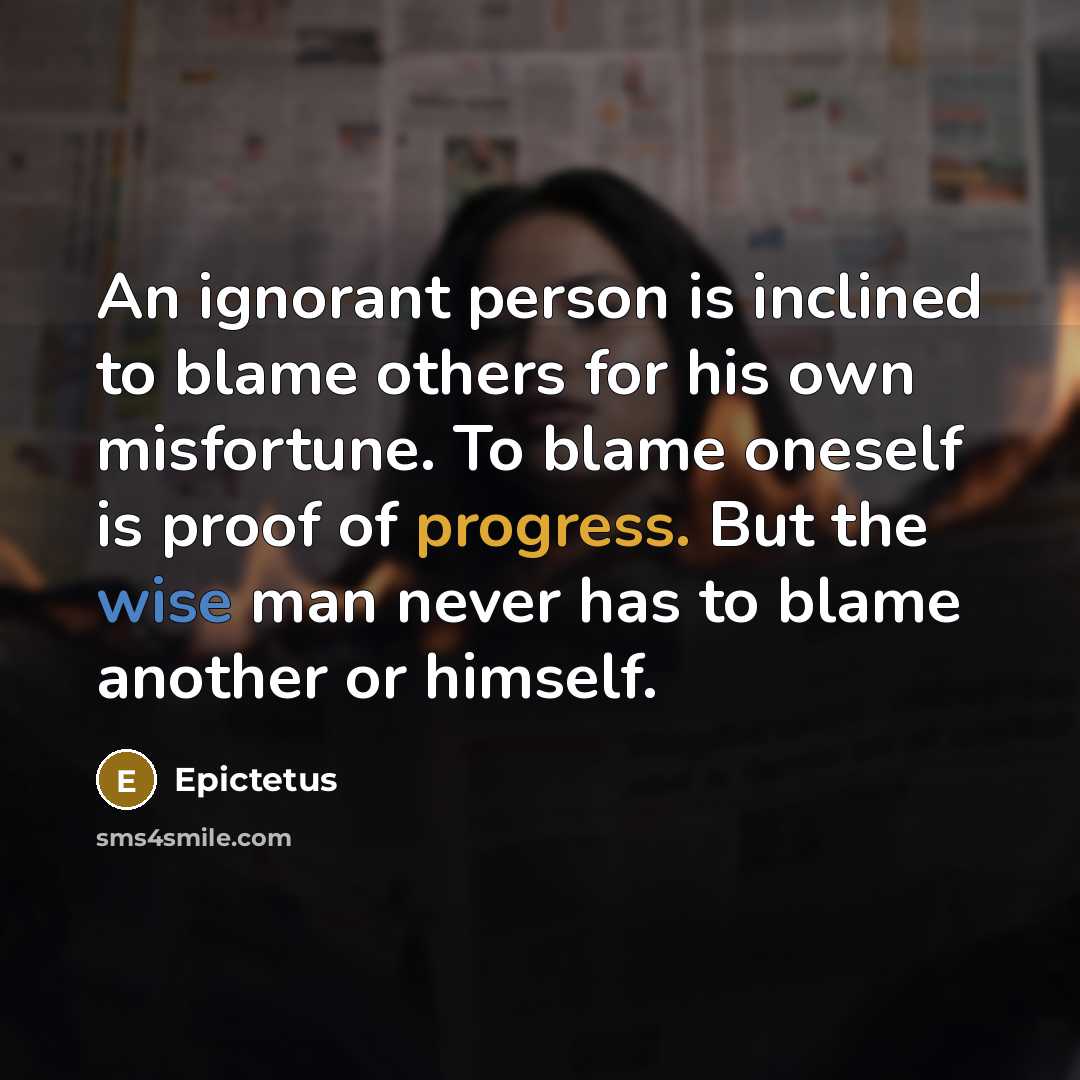
“When therefore we are hindered, or disturbed, or grieved, let us never attribute it to others, but to ourselves; that is, to our own principles. An uninstructed person will lay the fault of his own bad condition upon others. Someone just starting instruction will lay the fault on himself. Some who is perfectly instructed will place blame neither on others nor on himself.”
About This Quote
Source Philosophy: Enchiridion, 2nd century AD
We should blame ourselves for our reactions, not external events, and seek personal responsibility.
In simple terms: Own your feelings and actions, not circumstances.
Key Takeaway
Practice self‑reflection and accountability.
Themes
responsibility
self‑awareness
philosophy
resilience
Mood
thoughtful
serious
Type
philosophical
motivational
When to use this quote
- dealing with criticism
- overcoming setbacks
- conflict resolution
- personal development
Key Concepts
stoicism
ethics
personal growth
Questions to Reflect On
- What internal principle guides your reactions?
- How do you differentiate blame on self vs. others?
A Different Perspective
Self‑blame can lead to excessive guilt.