Active life Quote by Emily Esfahani Smith
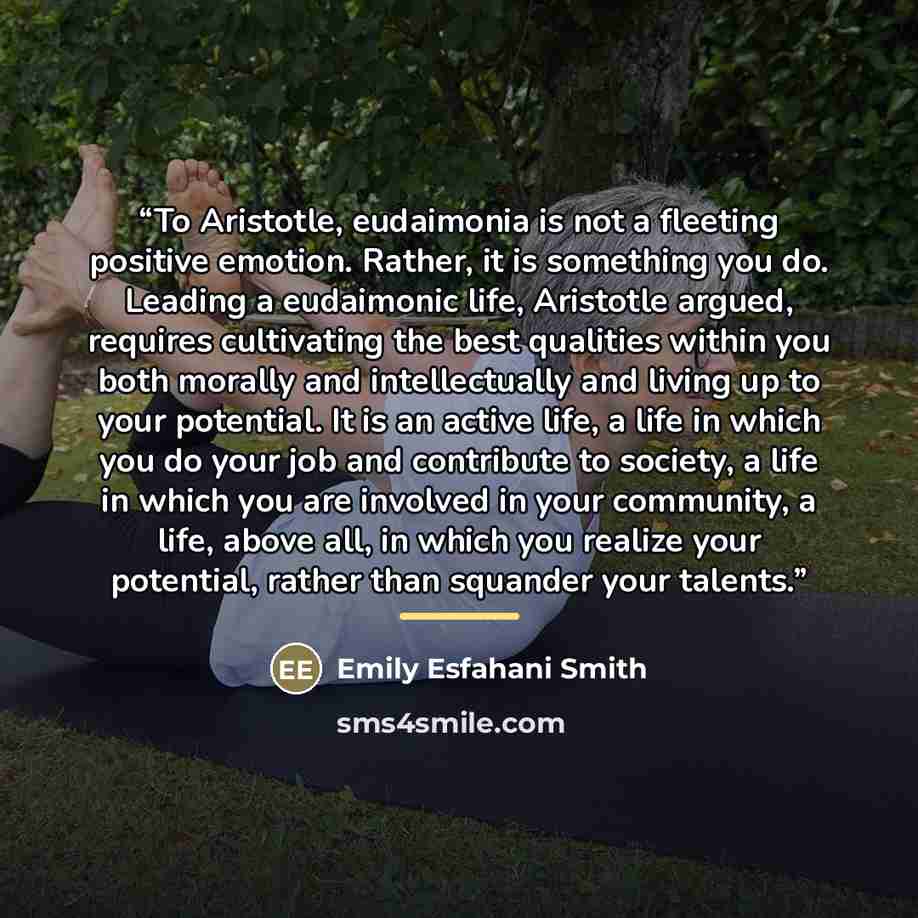
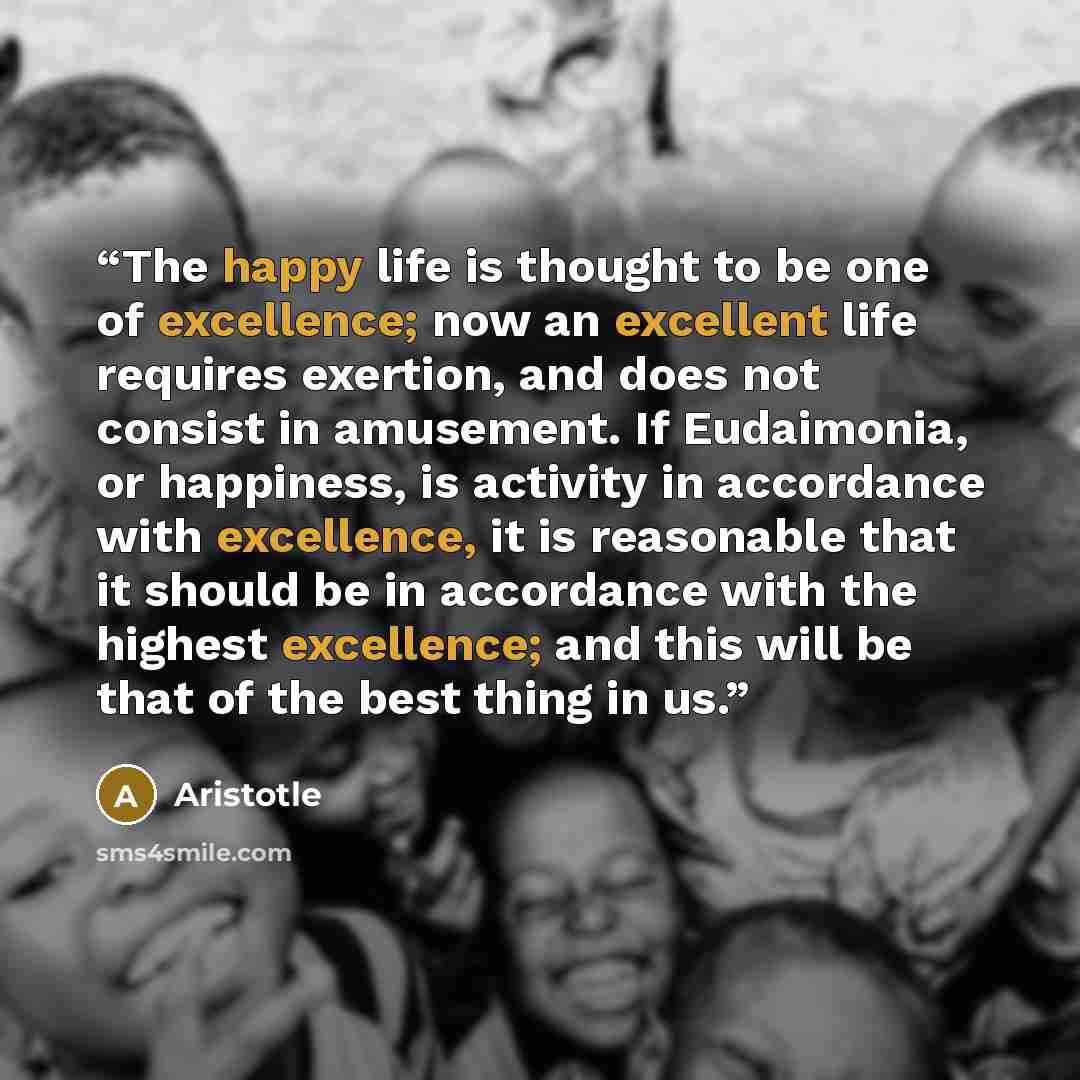
““To Aristotle, eudaimonia is not a fleeting positive emotion. Rather, it is something you do. Leading a eudaimonic life, Aristotle argued, requires cultivating the best qualities within you both morally and intellectually and living up to your potential. It is an active life, a life in which you do your job and contribute to society, a life in which you are involved in your community, a life, above all, in which you realize your potential, rather than squander your talents.””
About This Quote
Source Book: The Power of Meaning, 2017
Aristotle sees eudaimonia as an active pursuit of virtue and purpose, not just fleeting happiness.
In simple terms: Living well means developing virtues and fulfilling potential.
Key Takeaway
Cultivate virtues and engage purposefully.
Themes
purpose
virtue
fulfillment
growth
Mood
thoughtful
inspirational
Type
philosophical
motivational
When to use this quote
- career development
- community service
- education
- personal projects
Key Concepts
philosophy
ethics
human flourishing
Questions to Reflect On
- What virtues do you practice daily?
- How can you align work with your potential?
A Different Perspective
Achieving eudaimonia requires effort and may conflict with comfort.



![“as architect of choosing... choose. to. live. awakened. entirely. wholly. wildly powerful, deeply masterful, authentically creative, thriving. this is not a hoped-for possible self. [reminder: this is an immutable Law of your being] needing not to learn the skill of being whole, the antidote is to…” quote by LaShaun Middlebrooks Collier](https://sms4smile.com/quotes/img-quotes/21a/lashaun-middlebrooks-collier-1_aristotle_as-architect-of-choosing-choose-to-live_338016.jpg)