Apathy Quote by Elizabeth Goudge
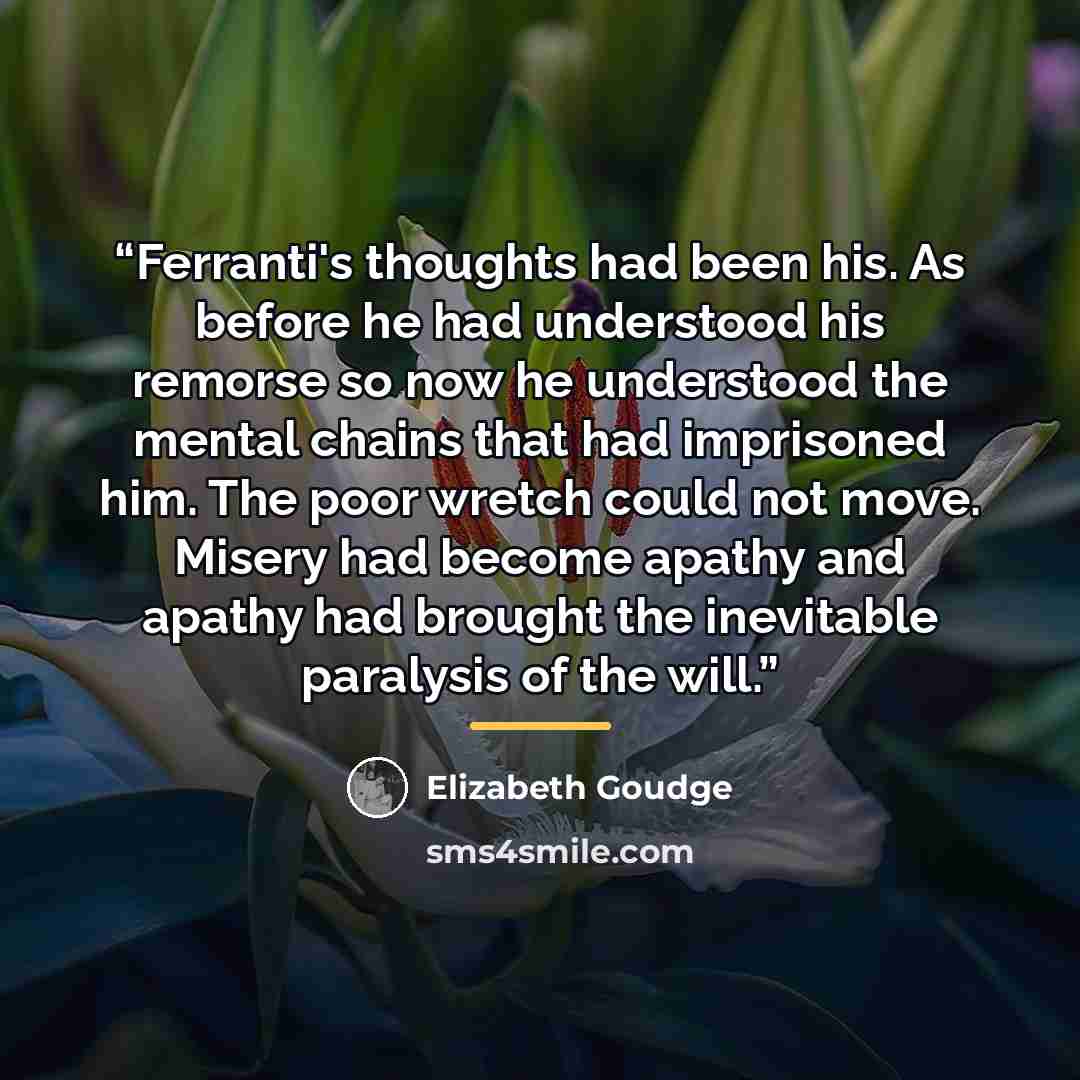
““Ferranti's thoughts had been his. As before he had understood his remorse so now he understood the mental chains that had imprisoned him. The poor wretch could not move. Misery had become apathy and apathy had brought the inevitable paralysis of the will.””
About This Quote
Source Novel: The Little White Horse by Elizabeth Goudge, 1946
A character becomes trapped by his own remorse, leading to apathy and eventual loss of willpower.
In simple terms: Remorse can paralyze and cause apathy.
Key Takeaway
Address remorse early to prevent stagnation.
Themes
remorse
paralysis
willpower
Mood
somber
introspective
Type
literary
psychological
When to use this quote
- personal crisis
- therapy
- creative blocks
- addiction recovery
Key Concepts
psychology
self‑control
mental health
Questions to Reflect On
- What steps can break the cycle of remorse?
- How does apathy manifest in daily life?
A Different Perspective
Focusing solely on internal chains may overlook external factors influencing behavior.


![“The critical question about regret is whether experience led to growth and new learning. Some people seem to keep on making the same mistakes, while others at least make new ones. Regret and remorse can be either paralyzing or inspiring. [p. 199]” quote by Mary Catherine Bateson](https://sms4smile.com/quotes/img-quotes/72f/mary-catherine-bateson-11582_critical_the-critical-question-about-regret-is-wh_20978.jpg)






![“[Salvation] is a curious process of divine burglary. The first thing to be wrested from one by a God who said 'Thou shalt not steal' is one's good opinion of one's self.” quote by Elizabeth Goudge](https://sms4smile.com/quotes/img-quotes/359/elizabeth-goudge-2888_burglary_salvation-is-a-curious-process-of-divine_266718.jpg)