Next day Quote by Edward E. Baptist
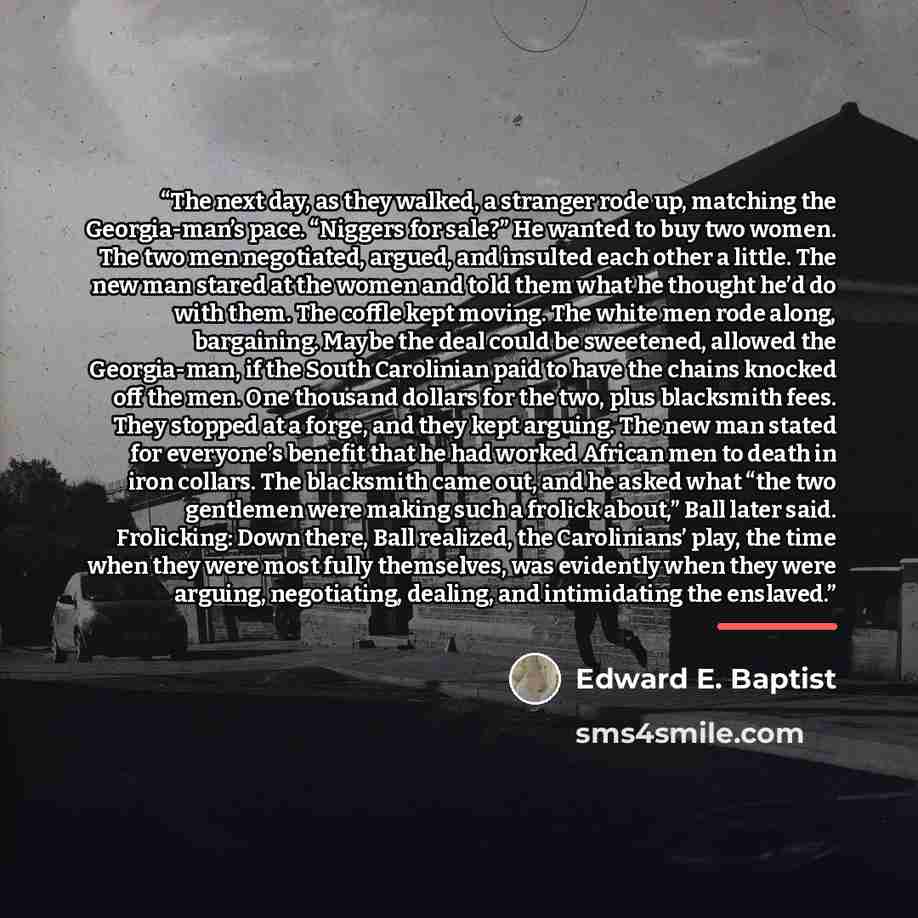
““The next day, as they walked, a stranger rode up, matching the Georgia-man’s pace. “Niggers for sale?” He wanted to buy two women. The two men negotiated, argued, and insulted each other a little. The new man stared at the women and told them what he thought he’d do with them. The coffle kept moving. The white men rode along, bargaining. Maybe the deal could be sweetened, allowed the Georgia-man, if the South Carolinian paid to have the chains knocked off the men. One thousand dollars for the two, plus blacksmith fees. They stopped at a forge, and they kept arguing. The new man stated for everyone’s benefit that he had worked African men to death in iron collars. The blacksmith came out, and he asked what “the two gentlemen were making such a frolick about,” Ball later said. Frolicking: Down there, Ball realized, the Carolinians’ play, the time when they were most fully themselves, was evidently when they were arguing, negotiating, dealing, and intimidating the enslaved.””
About This Quote
Source Book: The Half Has Never Been Told by Edward E. Baptist, 2016
The passage shows how enslaved people were treated as commodities, with traders bargaining over their lives and even negotiating the removal of their chains, highlighting the brutal economics of slavery.
In simple terms: Enslaved people were bought, sold, and bargained over like goods.
Key Takeaway
Recognize the dehumanizing logic of slavery and its lasting impact.
Themes
slavery
economics
humanity
violence
negotiation
Mood
somber
reflective
critical
Type
historical
analytical
educational
When to use this quote
- historical analysis
- education
- museum exhibit
- human rights advocacy
Key Concepts
commodity trade
human rights
racial oppression
Questions to Reflect On
- How does viewing enslaved people as commodities change our understanding of history?
- What moral responsibilities arise from this perspective?
A Different Perspective
The narrative may underplay the agency of the enslaved individuals.