Catholic Quote by E.A. Bucchianeri
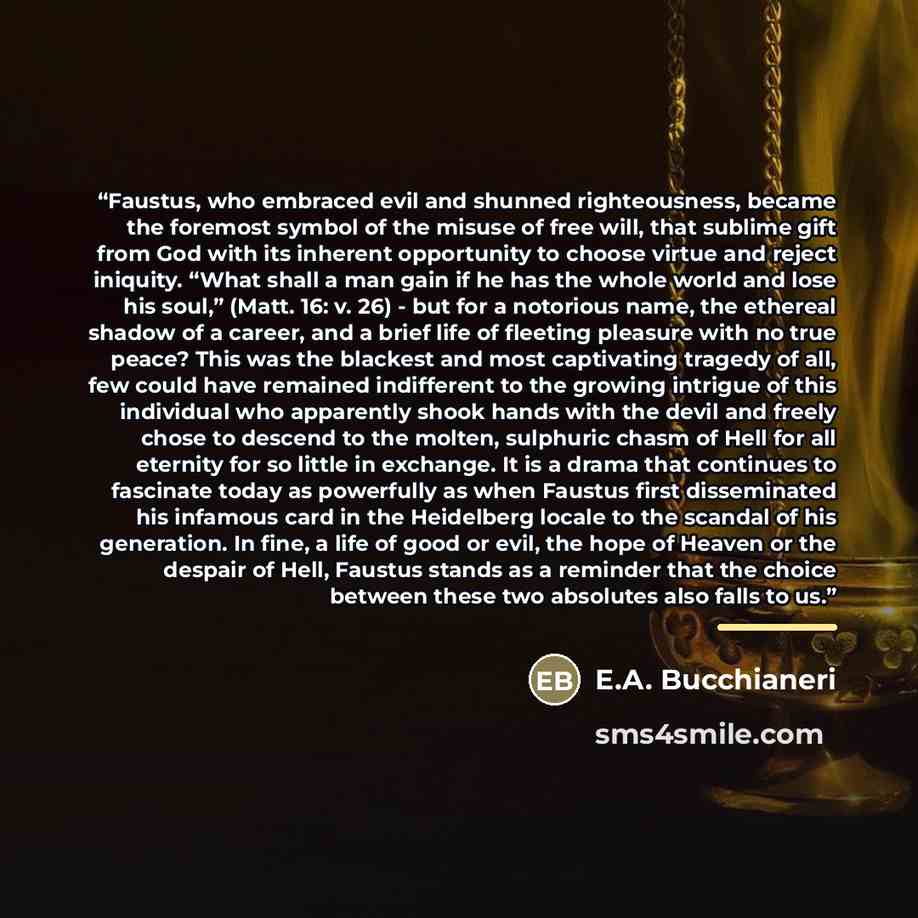
““Faustus, who embraced evil and shunned righteousness, became the foremost symbol of the misuse of free will, that sublime gift from God with its inherent opportunity to choose virtue and reject iniquity. “What shall a man gain if he has the whole world and lose his soul,” (Matt. 16: v. 26) - but for a notorious name, the ethereal shadow of a career, and a brief life of fleeting pleasure with no true peace? This was the blackest and most captivating tragedy of all, few could have remained indifferent to the growing intrigue of this individual who apparently shook hands with the devil and freely chose to descend to the molten, sulphuric chasm of Hell for all eternity for so little in exchange. It is a drama that continues to fascinate today as powerfully as when Faustus first disseminated his infamous card in the Heidelberg locale to the scandal of his generation. In fine, a life of good or evil, the hope of Heaven or the despair of Hell, Faustus stands as a reminder that the choice between these two absolutes also falls to us.””
About This Quote
Source Play: Doctor Faustus by Christopher Marlowe, 1592
A cautionary tale that misusing free will for selfish power leads to eternal loss of soul and peace.
In simple terms: Choosing evil over virtue brings ruin.
Key Takeaway
Guard your choices against selfish ambition.
Themes
morality
free will
consequences
ambition
Mood
reflective
somber
thoughtful
Type
literary
philosophical
When to use this quote
- career decisions
- personal ethics
- spiritual reflection
- leadership
- risk assessment
Key Concepts
theology
tragic hero
ethical dilemma
Questions to Reflect On
- What values guide your most difficult decisions?
- How do you balance ambition with integrity?
A Different Perspective
The quote dramatizes a mythic figure; real‑world choices may be less extreme.






![“The young man [Turgot] destined for an ecclesiastical career was placed within walls carefully designed to keep out all currents of new thought; his studies, his reading, his professors, his associates, all were combined to keep from him any results of observation or reflection save those…” quote by Andrew Dickson White](https://sms4smile.com/quotes/img-quotes/5d4/andrew-dickson-white-24254_associates_the-young-man-turgot-destined-for-an-ecc_3146.jpg)

![“Girded with faith and the performance of good works, let us follow in his [Jesus] paths by the guidance of the Gospel.” quote by Benedict of Nursia](https://sms4smile.com/quotes/img-quotes/a2f/benedict-of-nursia-29376_catholic_girded-with-faith-and-the-performance-of_6463.jpg)