Bad taste Quote by Denis Dutton
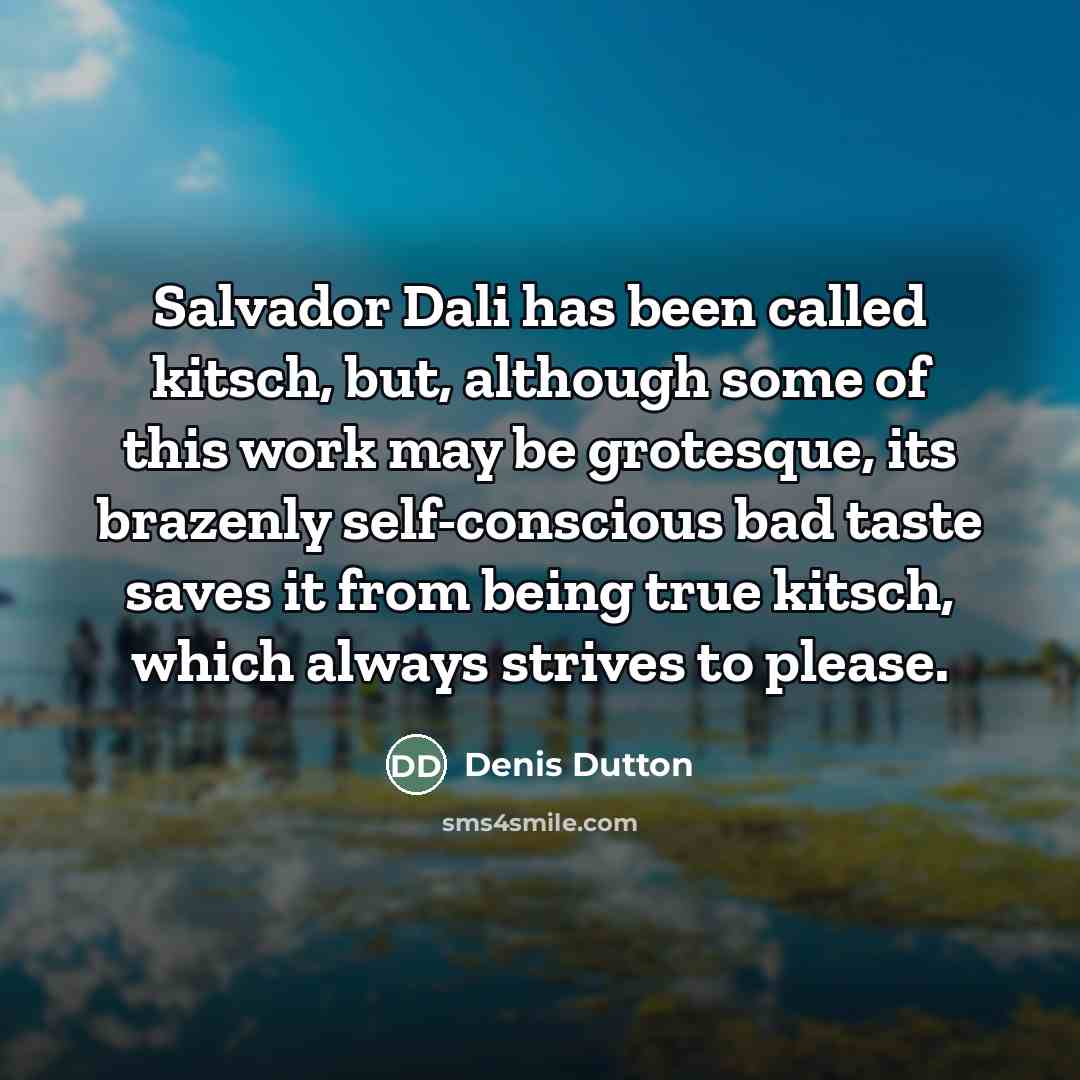
“Salvador Dali has been called kitsch, but, although some of this work may be grotesque, its brazenly self-conscious bad taste saves it from being true kitsch, which always strives to please.”
About This Quote
The quote argues that Dali's overtly bad taste, though potentially grotesque, prevents his work from being genuine kitsch because it is self‑aware rather than merely pandering.
In simple terms: Self‑conscious bad taste avoids true kitsch.
Key Takeaway
Awareness of bad taste changes its aesthetic value.
Themes
art criticism
kitsch vs. avant‑garde
self‑awareness
taste
aesthetic paradox
Mood
ironic
provocative
intellectual
Type
critical analysis
philosophical observation
When to use this quote
- museum curators evaluating modern art
- students studying 20th‑century surrealism
- critics comparing pop art to high art
- collectors assessing value of controversial works
Key Concepts
kitsch
self‑consciousness
grotesque
aesthetic judgment
Practical Applications
- art education curricula
- curatorial exhibition notes
Questions to Reflect On
- Does intentional bad taste elevate or diminish artistic merit?
- How does self‑consciousness affect our perception of authenticity?
A Different Perspective
Some may argue that any deliberate bad taste is still kitsch if it seeks shock over substance.









![“[Art] would have helped us survive in the Pleistocene - in the period, say, 1.6 million years ago until fairly recently. The kind of imaginative abilities that artists have and that we all have in the appreciation of art - to appreciate Jane Austen, the late quartets of Beethoven.” quote by Denis Dutton](https://sms4smile.com/quotes/img-quotes/4f8/denis-dutton-31778_ability_art-would-have-helped-us-survive-in-the_2609177.jpg)