First world war Quote by David Kenyon Webster
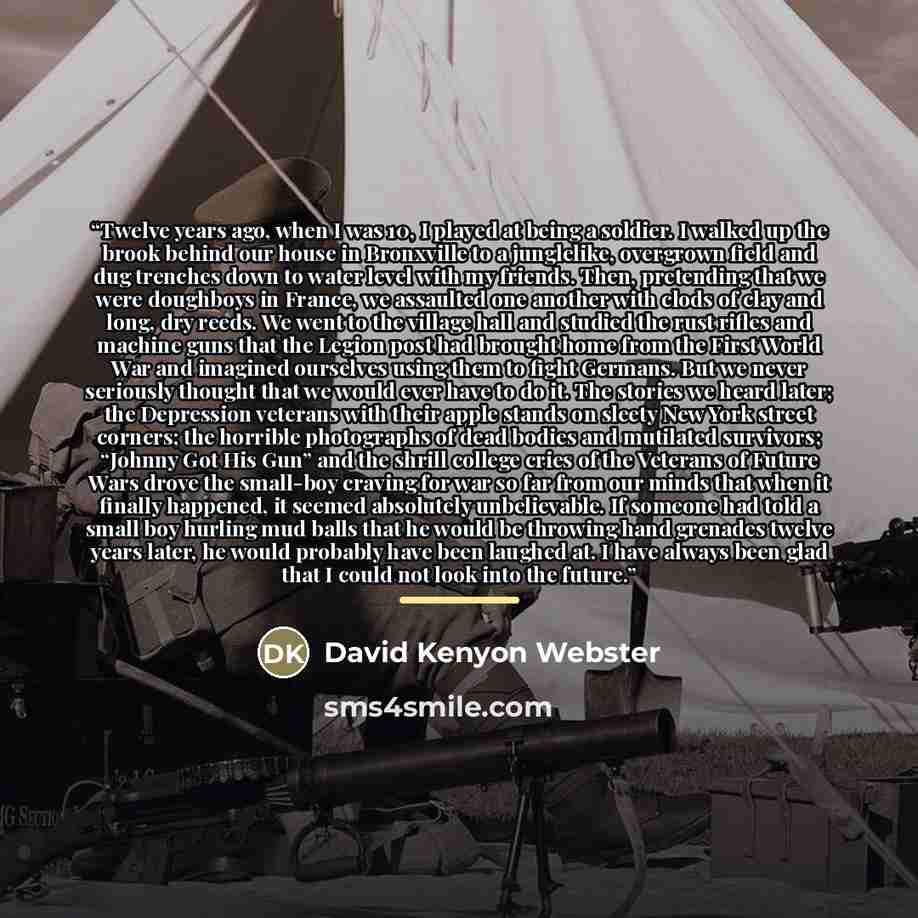
““Twelve years ago, when I was 10, I played at being a soldier. I walked up the brook behind our house in Bronxville to a junglelike, overgrown field and dug trenches down to water level with my friends. Then, pretending that we were doughboys in France, we assaulted one another with clods of clay and long, dry reeds. We went to the village hall and studied the rust rifles and machine guns that the Legion post had brought home from the First World War and imagined ourselves using them to fight Germans. But we never seriously thought that we would ever have to do it. The stories we heard later; the Depression veterans with their apple stands on sleety New York street corners; the horrible photographs of dead bodies and mutilated survivors; “Johnny Got His Gun” and the shrill college cries of the Veterans of Future Wars drove the small-boy craving for war so far from our minds that when it finally happened, it seemed absolutely unbelievable. If someone had told a small boy hurling mud balls that he would be throwing hand grenades twelve years later, he would probably have been laughed at. I have always been glad that I could not look into the future.””
About This Quote
Source Memoir: “The War of the Little Men” by David Kenyon Webster, 1944
Childhood play imagined war, but reality of combat shattered those fantasies, highlighting the gap between naive expectations and harsh truths.
In simple terms: Kids imagined war, but real war is terrible.
Key Takeaway
Recognize the difference between fantasy and reality.
Themes
war
memory
illusion
history
youth
Mood
reflective
somber
thoughtful
Type
personal narrative
historical reflection
When to use this quote
- school lessons
- military training
- peace activism
- mental health counseling
Key Concepts
psychology
trauma
historical perspective
Questions to Reflect On
- How do early experiences shape attitudes toward conflict?
- Can we prevent war through education?
A Different Perspective
The quote romanticizes war, ignoring its complex causes and the agency of societies.