Brain Quote by David Eagleman
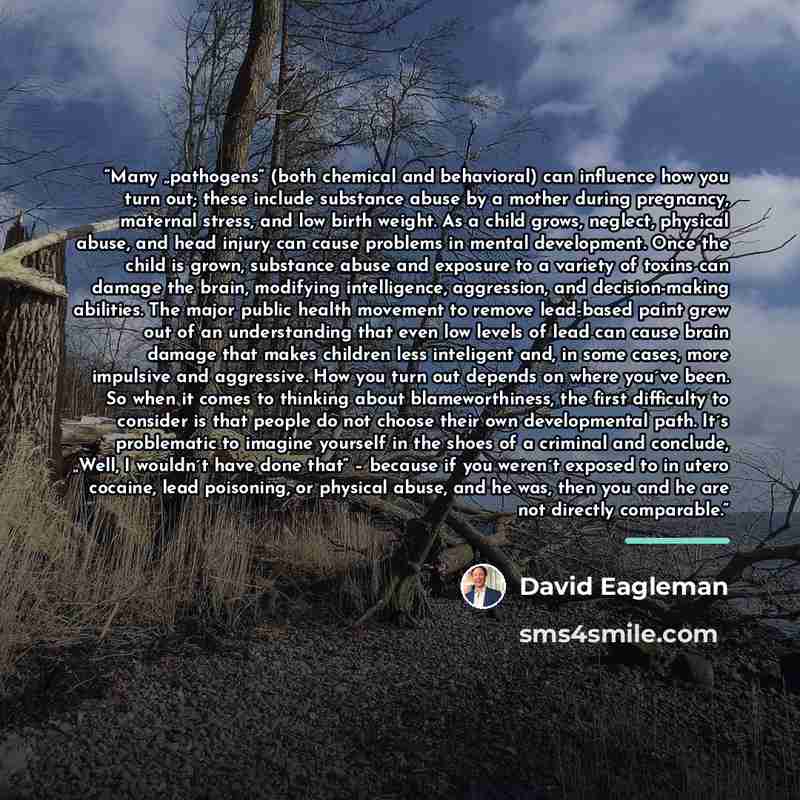
““Many „pathogens“ (both chemical and behavioral) can influence how you turn out; these include substance abuse by a mother during pregnancy, maternal stress, and low birth weight. As a child grows, neglect, physical abuse, and head injury can cause problems in mental development. Once the child is grown, substance abuse and exposure to a variety of toxins can damage the brain, modifying intelligence, aggression, and decision-making abilities. The major public health movement to remove lead-based paint grew out of an understanding that even low levels of lead can cause brain damage that makes children less inteligent and, in some cases, more impulsive and aggressive. How you turn out depends on where you´ve been. So when it comes to thinking about blameworthiness, the first difficulty to consider is that people do not choose their own developmental path. It´s problematic to imagine yourself in the shoes of a criminal and conclude, „Well, I wouldn´t have done that“ – because if you weren´t exposed to in utero cocaine, lead poisoning, or physical abuse, and he was, then you and he are not directly comparable.””
About This Quote
Source Interview: The Brain with David Eagleman, 2015
Explains that many environmental factors—from prenatal exposure to toxins to childhood trauma—shape brain development, influencing intelligence, aggression, and decision‑making, making personal blame for later behavior problematic.
In simple terms: Early life conditions affect brain and behavior.
Key Takeaway
Consider environmental influences on behavior.
Themes
neuroscience
developmental psychology
public health
ethics
social responsibility
Mood
thoughtful
empathetic
Type
educational
informative
reflective
When to use this quote
- public health policy
- criminal justice reform
- education
- parenting programs
- environmental regulation
Key Concepts
neuroplasticity
toxic exposure
social determinants of health
behavioral genetics
Questions to Reflect On
- What policies can mitigate harmful early exposures?
- How should the legal system account for developmental disadvantages?
A Different Perspective
May understate individual agency and resilience.