Language Quote by David Crystal
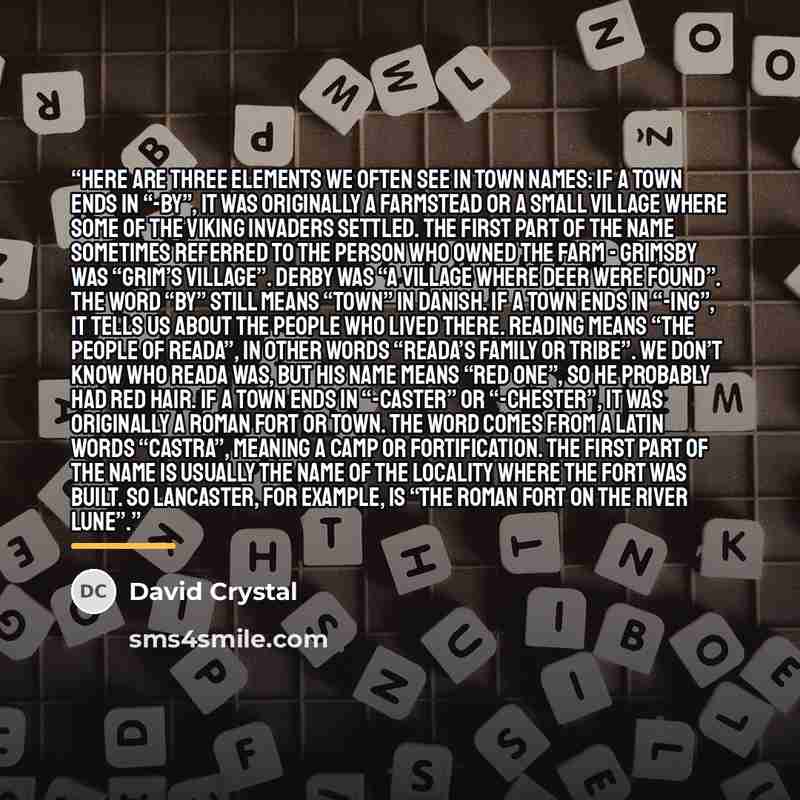
““Here are three elements we often see in town names: If a town ends in “-by”, it was originally a farmstead or a small village where some of the Viking invaders settled. The first part of the name sometimes referred to the person who owned the farm - Grimsby was “Grim’s village”. Derby was “a village where deer were found”. The word “by” still means “town” in Danish. If a town ends in “-ing”, it tells us about the people who lived there. Reading means “The people of Reada”, in other words “Reada’s family or tribe”. We don’t know who Reada was, but his name means “red one”, so he probably had red hair. If a town ends in “-caster” or “-chester”, it was originally a Roman fort or town. The word comes from a Latin words “castra”, meaning a camp or fortification. The first part of the name is usually the name of the locality where the fort was built. So Lancaster, for example, is “the Roman fort on the River Lune”.””
About This Quote
Source Book: The Stories of English, David Crystal, 2004
Town name suffixes reveal historical origins, indicating settlement type, ownership, or Roman military presence.
In simple terms: Town suffixes show history.
Key Takeaway
Explore local name origins.
Themes
lingistics
history
etymology
Mood
curious
educational
Type
informative
etymological
When to use this quote
- Genealogy research
- travel guides
- urban planning
- heritage tourism
Key Concepts
Viking settlement
Roman forts
tribal naming
Questions to Reflect On
- What does your town name reveal?
- How do suffixes affect identity?
A Different Perspective
Modern names may not reflect original meanings.


![“The main thing that distinguishes mealtimes with Jesus, as Conrad Gempf has shown, from the meals of his contemporaries are four verbs.[44] Whether it’s the feeding of the five thousand, the Last Supper, or the Emmaus meal, four things take place: First, Jesus takes something. Second, Jesus…” quote by Leonard Sweet](https://sms4smile.com/quotes/img-quotes/df1/leonard-sweet-10435_black-church_the-main-thing-that-distinguishes-mealti_1013192.jpg)