Books Quote by Chinua Achebe
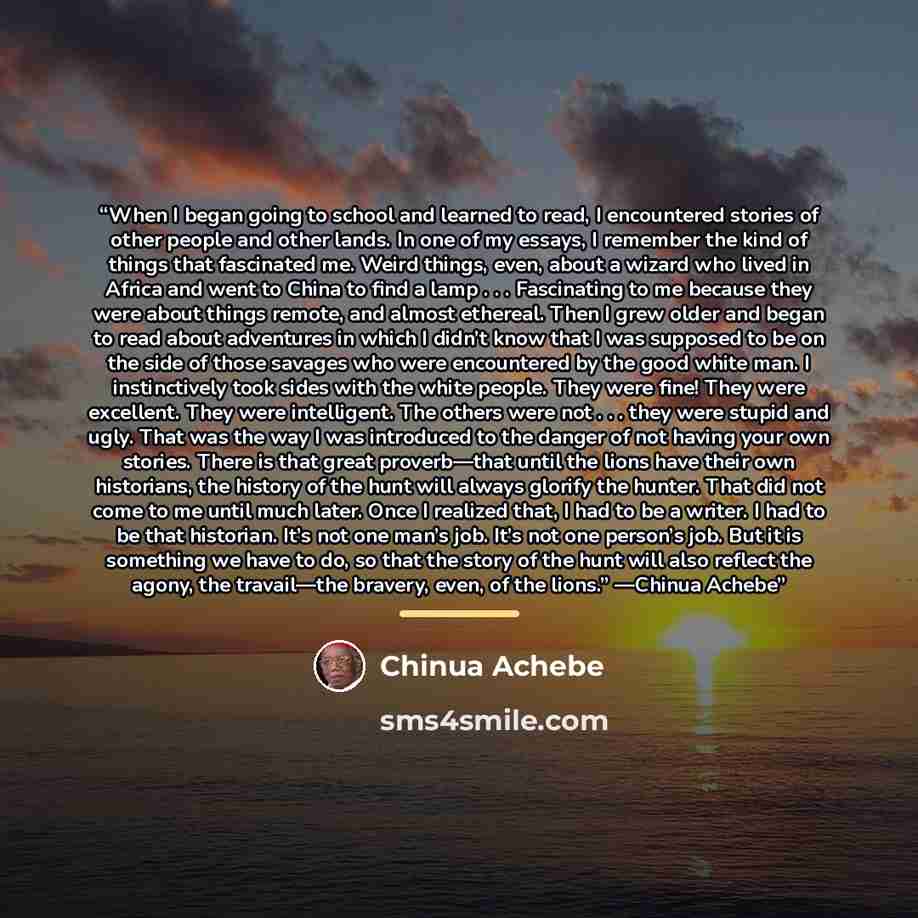
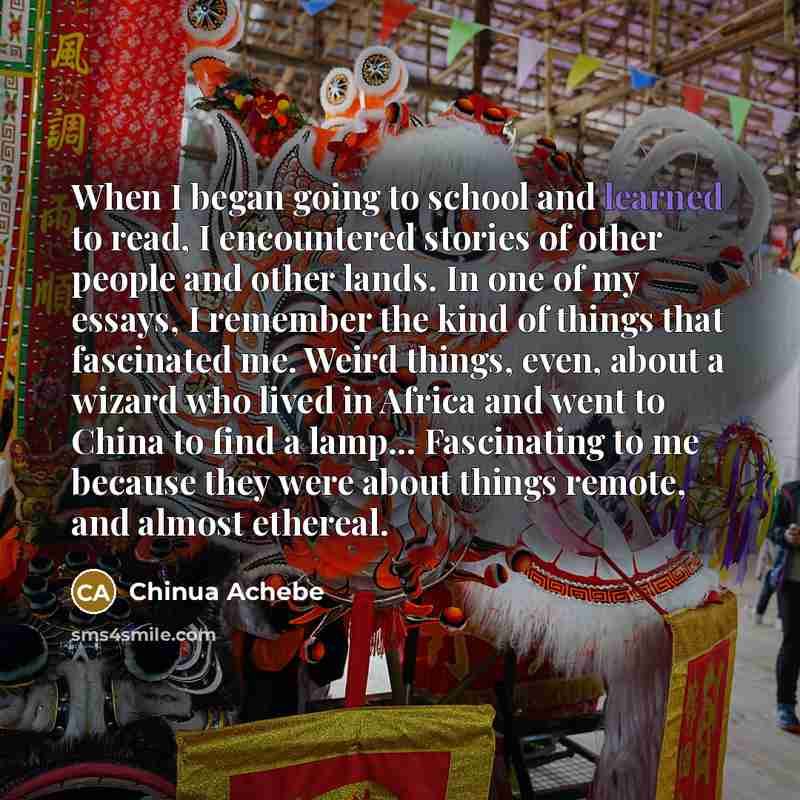
““When I began going to school and learned to read, I encountered stories of other people and other lands. In one of my essays, I remember the kind of things that fascinated me. Weird things, even, about a wizard who lived in Africa and went to China to find a lamp . . . Fascinating to me because they were about things remote, and almost ethereal. Then I grew older and began to read about adventures in which I didn’t know that I was supposed to be on the side of those savages who were encountered by the good white man. I instinctively took sides with the white people. They were fine! They were excellent. They were intelligent. The others were not . . . they were stupid and ugly. That was the way I was introduced to the danger of not having your own stories. There is that great proverb—that until the lions have their own historians, the history of the hunt will always glorify the hunter. That did not come to me until much later. Once I realized that, I had to be a writer. I had to be that historian. It’s not one man’s job. It’s not one person’s job. But it is something we have to do, so that the story of the hunt will also reflect the agony, the travail—the bravery, even, of the lions.” —Chinua Achebe””
About This Quote
Source Essay: Personal Reflections on Narrative, 1970s
Recognizing biased histories urges us to tell stories from marginalized perspectives.
In simple terms: Tell stories from all sides, not just the dominant one.
Key Takeaway
Include diverse voices in storytelling.
Themes
history
perspective
colonialism
storytelling
justice
Mood
thoughtful
determined
Type
philosophical
inspirational
When to use this quote
- education
- writing
- media production
Key Concepts
narrative bias
representation
cultural memory
Questions to Reflect On
- Whose story is missing in your field?
- How can you amplify unheard voices?
A Different Perspective
Dominant narratives can still dominate despite efforts.