Time Quote by Anonymous
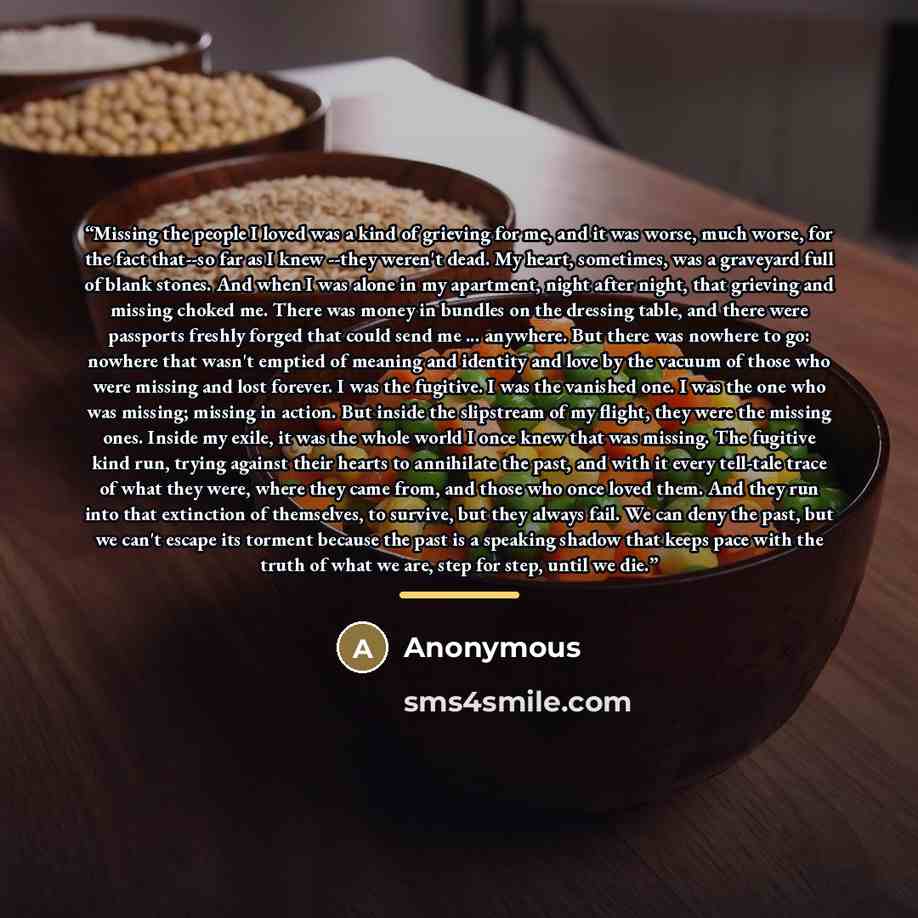
““Missing the people I loved was a kind of grieving for me, and it was worse, much worse, for the fact that--so far as I knew --they weren't dead. My heart, sometimes, was a graveyard full of blank stones. And when I was alone in my apartment, night after night, that grieving and missing choked me. There was money in bundles on the dressing table, and there were passports freshly forged that could send me ... anywhere. But there was nowhere to go: nowhere that wasn't emptied of meaning and identity and love by the vacuum of those who were missing and lost forever. I was the fugitive. I was the vanished one. I was the one who was missing; missing in action. But inside the slipstream of my flight, they were the missing ones. Inside my exile, it was the whole world I once knew that was missing. The fugitive kind run, trying against their hearts to annihilate the past, and with it every tell-tale trace of what they were, where they came from, and those who once loved them. And they run into that extinction of themselves, to survive, but they always fail. We can deny the past, but we can't escape its torment because the past is a speaking shadow that keeps pace with the truth of what we are, step for step, until we die.””
About This Quote
Source Novel: Unnamed literary work, contemporary existential prose
The narrator feels deep grief for living people who are absent, not dead, leading to a sense of exile and identity loss, unable to escape the past's haunting presence.
In simple terms: Grief for absent loved ones creates a painful exile and identity crisis.
Key Takeaway
Acknowledge loss and seek connection to heal.
Themes
grief
exile
identity
memory
loneliness
Mood
melancholic
reflective
somber
Type
literary
philosophical
When to use this quote
- loneliness
- therapy
- creative writing
- support groups
- mindfulness practice
Key Concepts
existentialism
psychology
attachment theory
Questions to Reflect On
- How does acknowledging absence change your sense of self?
- What practices can ground you in the present?
A Different Perspective
The narrative may romanticize suffering, overlooking practical coping strategies.