Character Quote by Alija Izetbegović
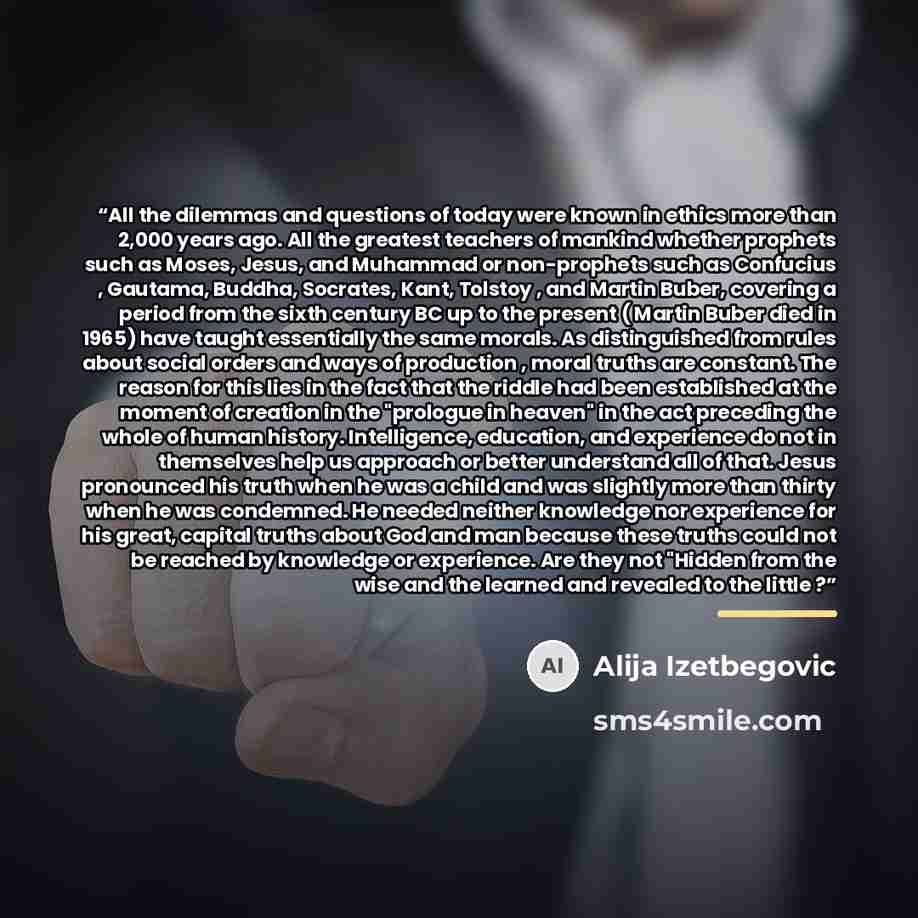
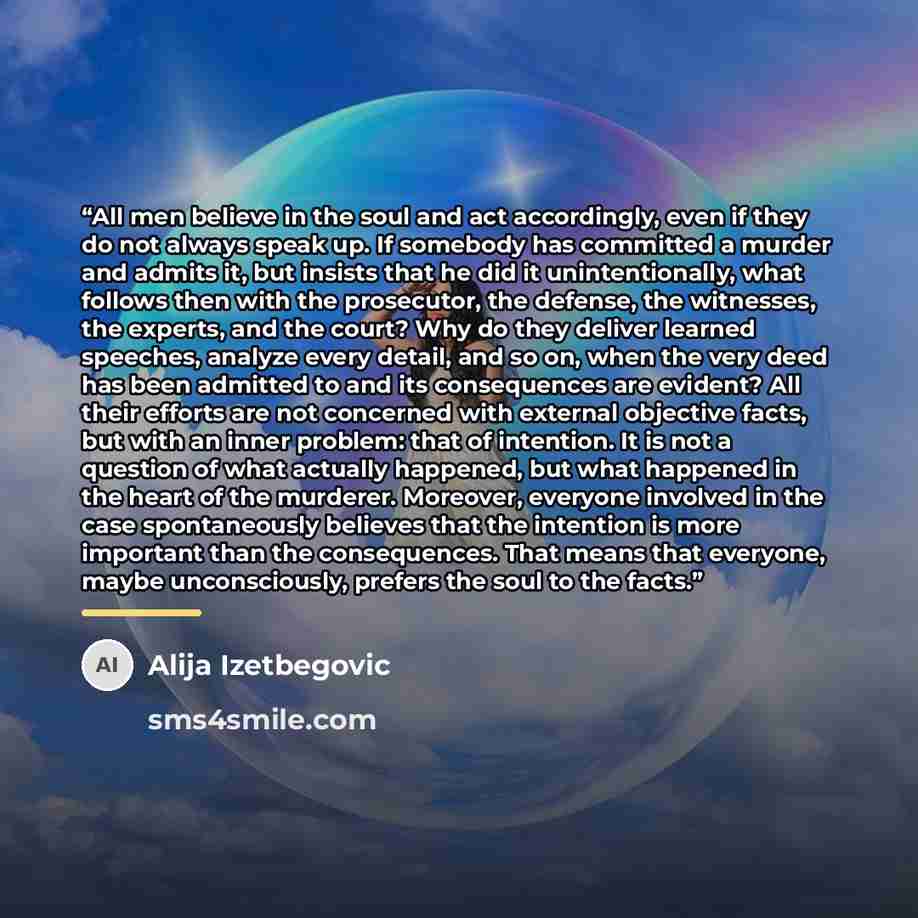
““All the dilemmas and questions of today were known in ethics more than 2,000 years ago. All the greatest teachers of mankind whether prophets such as Moses, Jesus, and Muhammad or non-prophets such as Confucius , Gautama, Buddha, Socrates, Kant, Tolstoy , and Martin Buber, covering a period from the sixth century BC up to the present ( Martin Buber died in 1965) have taught essentially the same morals. As distinguished from rules about social orders and ways of production , moral truths are constant. The reason for this lies in the fact that the riddle had been established at the moment of creation in the "prologue in heaven" in the act preceding the whole of human history. Intelligence, education, and experience do not in themselves help us approach or better understand all of that. Jesus pronounced his truth when he was a child and was slightly more than thirty when he was condemned. He needed neither knowledge nor experience for his great, capital truths about God and man because these truths could not be reached by knowledge or experience. Are they not "Hidden from the wise and the learned and revealed to the little ?””
About This Quote
Source Speech: Address to the United Nations, 1993
Moral principles are timeless, taught by diverse sages across ages, and cannot be fully grasped through knowledge alone.
In simple terms: Moral truths are constant and beyond mere intellect.
Key Takeaway
Seek humility and intuition over pure rationality.
Themes
ethics
timelessness
humility
Mood
contemplative
serene
Type
philosophical
inspirational
When to use this quote
- religious teaching
- personal reflection
- ethical education
Key Concepts
moral philosophy
spiritual insight
Questions to Reflect On
- How can we apply ancient morals today?
- What role does intuition play in ethics?
A Different Perspective
Moral truths may clash with modern societal norms.