Applause Quote by Alexander Pope
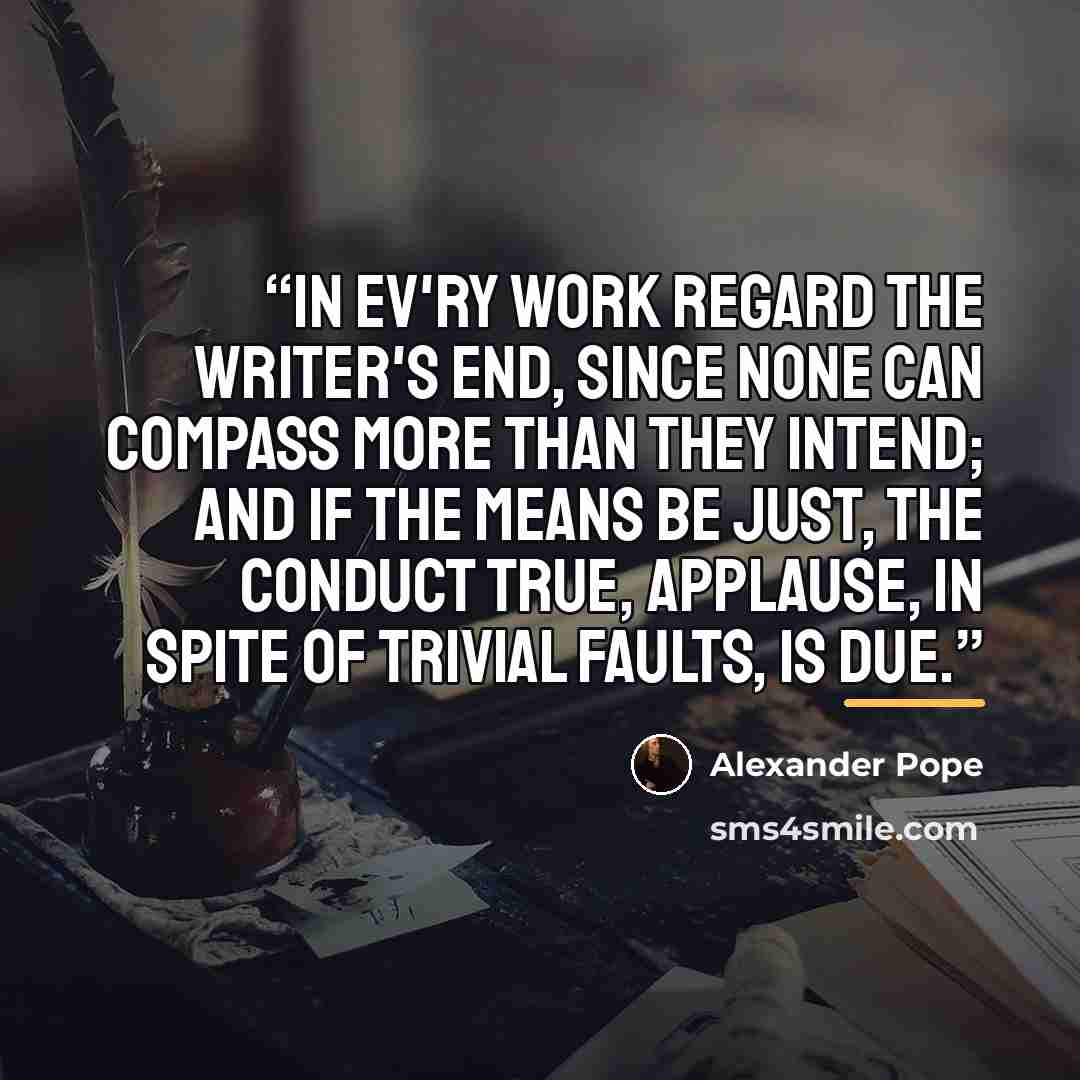
“Whoever thinks a faultless piece to see, Thinks what ne'er was, nor is, nor e'er shall be, In every work regard the writer's end, Since none can compass more than they intend; And if the means be just, the conduct true, Applause, in spite of trivial faults, is due.”
About This Quote
Source Poem: An Essay on Criticism, 1711
Critics should judge works by their intent and fairness, not by minor flaws.
In simple terms: Judge works by intent, not minor errors.
Key Takeaway
Evaluate fairness and purpose over trivial faults.
Themes
critique
fairness
artistic intent
Mood
thoughtful
balanced
Type
philosophical
inspirational
When to use this quote
- book reviews
- film analysis
- art exhibitions
Key Concepts
literary criticism
ethical judgment
Questions to Reflect On
- Do we often overlook a work’s purpose?
- How can we balance criticism with appreciation?
A Different Perspective
Overemphasis on minor faults can obscure overall merit.





![“All the shows we did pre-airdate, and I'd come out - "Rob Lowe!" - and it was [Offers bored applause.] After the show aired? I came out - "Rob Lowe!" - and the place was, like, bedlam. And then the next week, they wouldn't let anyone under the age of 20 into the audience. And I'm going, "So that's…” quote by Rob Lowe](https://sms4smile.com/quotes/img-quotes/66b/rob-lowe-855_age_all-the-shows-we-did-pre-airdate-and-i-d_31307.jpg)