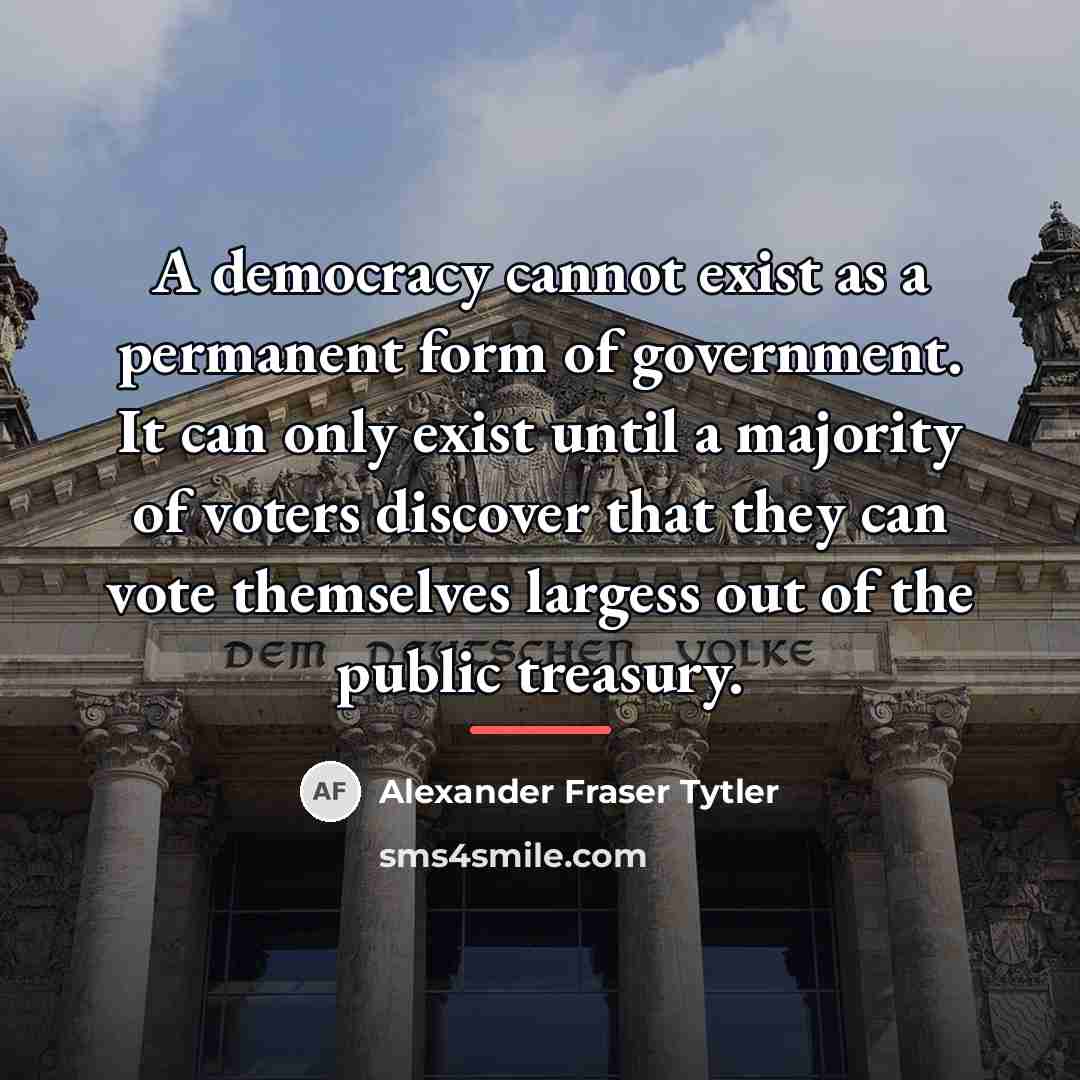
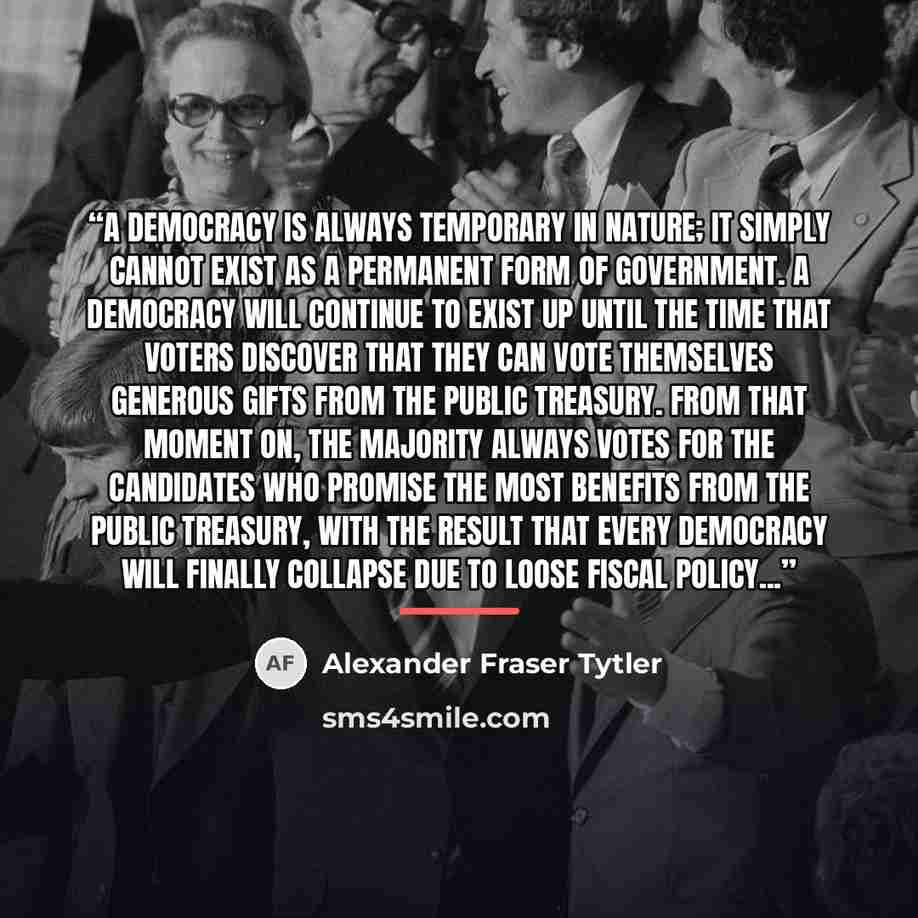
Contending Quote by Alexander Fraser Tytler
“It is not, perhaps, unreasonable to conclude, that a pure and perfect democracy is a thing not attainable by man, constituted as he is of contending elements of vice and virtue, and ever mainly influenced by the predominant principle of self-interest. It may, indeed, be confidently asserted, that there never was that government called a republic, which was not ultimately ruled by a single will, and, therefore, (however bold may seem the paradox,) virtually and substantially a monarchy.”
About This Quote
Source Treat: Essays on the Principles of Government, 1792
Pure democracy is unattainable because human nature mixes vice and virtue, and self‑interest dominates, making all governments effectively monarchic in practice.
In simple terms: Human flaws prevent perfect democracy; power concentrates.
Key Takeaway
Recognize limits of democracy and design checks.
Themes
politics
human nature
government
philosophy
Mood
cautious
analytical
Type
theoretical
critical
When to use this quote
- constitutional design
- civic education
- public policy
- leadership training
Key Concepts
social contract
self‑interest
monarchy
republic
Questions to Reflect On
- How can institutions mitigate self‑interest?
- Can true democracy exist in any context?
A Different Perspective
Assumes all societies are similar; cultural differences may allow different outcomes.