Armistice Quote by albert camus
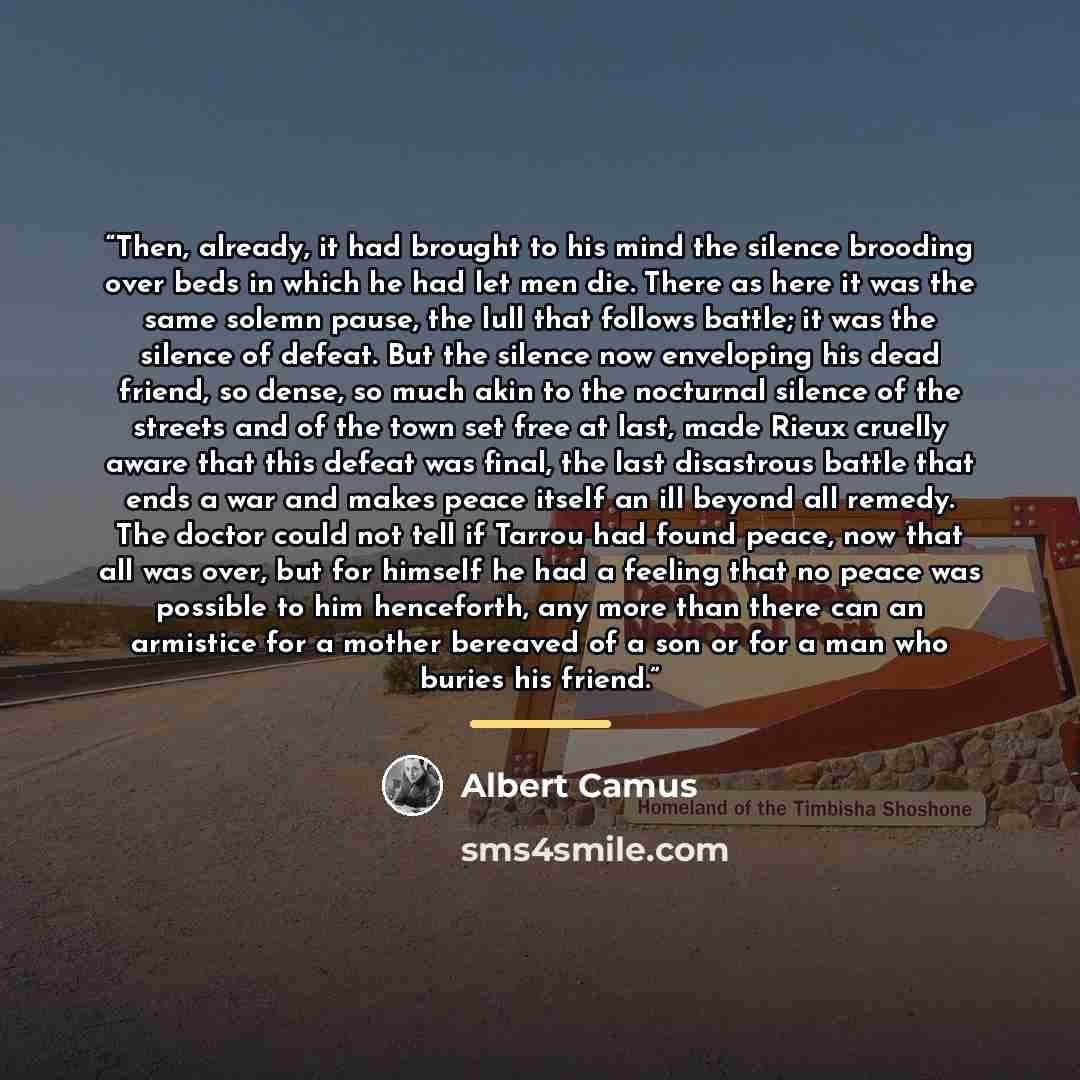
““Then, already, it had brought to his mind the silence brooding over beds in which he had let men die. There as here it was the same solemn pause, the lull that follows battle; it was the silence of defeat. But the silence now enveloping his dead friend, so dense, so much akin to the nocturnal silence of the streets and of the town set free at last, made Rieux cruelly aware that this defeat was final, the last disastrous battle that ends a war and makes peace itself an ill beyond all remedy. The doctor could not tell if Tarrou had found peace, now that all was over, but for himself he had a feeling that no peace was possible to him henceforth, any more than there can an armistice for a mother bereaved of a son or for a man who buries his friend.””
About This Quote
Source Novel: The Plague, 1947
Rieux reflects on the final, inevitable silence after death, realizing that peace is unattainable for those left behind.
In simple terms: Death brings an unending, painful silence.
Key Takeaway
Accept loss while honoring memory.
Themes
war
death
peace
grief
existence
Mood
somber
reflective
melancholic
Type
literary
philosophical
When to use this quote
- post‑war reflection
- medical duty
- friendship loss
Key Concepts
silence
finality
war trauma
bereavement
Questions to Reflect On
- How do you find peace after loss?
- Can silence ever become a space for healing?
A Different Perspective
The notion of “no peace” may ignore personal healing processes.